How INDI Alliance and Left-Ruled States Systematically Politicised and Obstructed National Education Reforms
Across decades, left-ruled states have treated education reform as a political battleground, prioritising ideological signalling over academic excellence and student welfare.
Total Views |


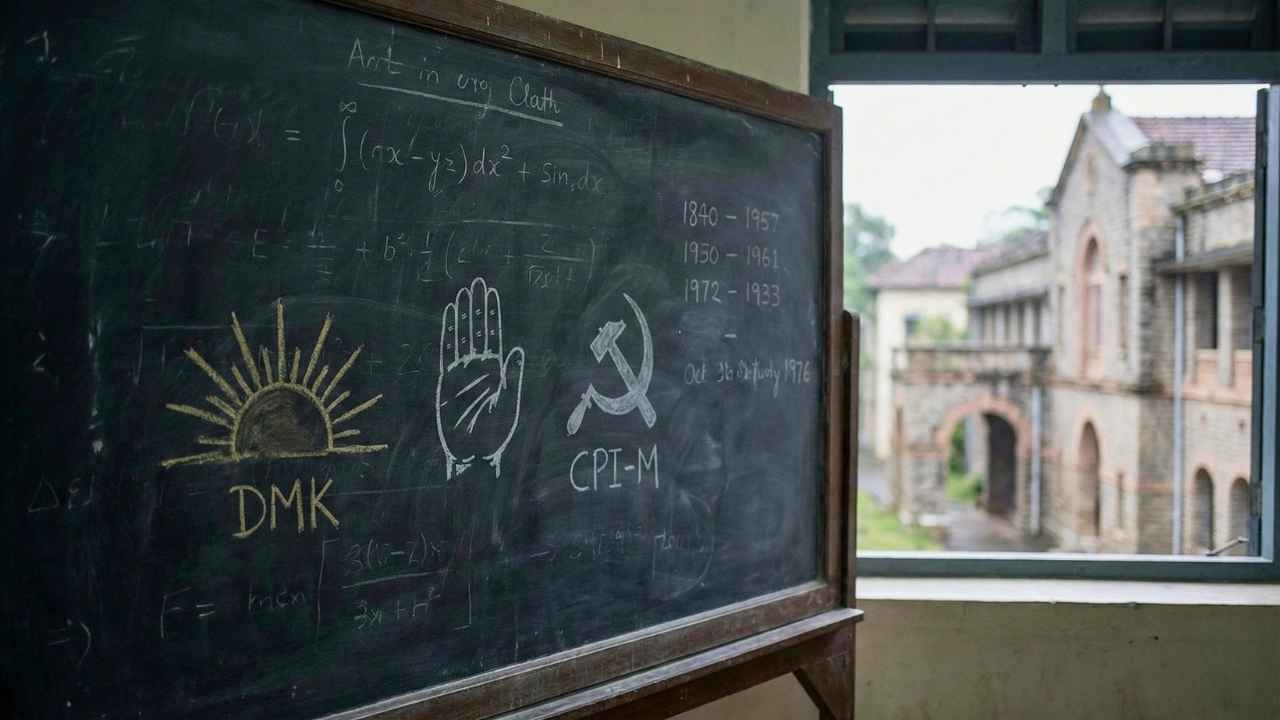
Academic freedom remains a central concern in contemporary Bharat and continues to dominate public debates on higher education. Rising interference from opposition parties, sustained political pressure, and a series of ideological curbs imposed by Left parties on teaching and research have directly affected the functioning of universities and academic institutions. A visible consequence has been the erosion of critical inquiry that underpins a vibrant and dynamic education system in Bharat.
Academic freedom encompasses the freedom of inquiry, the freedom to teach, the authority to determine who may teach and what may be taught, the liberty to conduct research, and the right to disseminate and publish findings without interference or censorship from external entities, including the state.

For over five decades, education policy in Bharat has repeatedly become a theatre of political resistance rather than cooperative reform, particularly in states governed by the Left and parties now grouped under the INDI alliance. From the National Policy on Education of 1968 to the National Education Policy 2020 and its allied reforms, a consistent pattern emerges. Centrally designed initiatives aimed at standardisation, equity, and national integration have faced opposition and outright rejection, often under the banner of federalism and driven substantially by ideological positioning and vote-bank politics.
Left-wing regimes, irrespective of geography, tend to adopt familiar strategies. One is the use of populist rhetoric that dismisses intellectual pursuits. This often draws upon selective narratives of past glory and gradually morphs into anti-intellectualism, a defining feature of such regimes. In Bharat, the combined impact of intolerance and anti-intellectualism is evident in concerted efforts to impose specific political agendas on higher education institutions, thereby narrowing academic discourse and limiting institutional autonomy.
A Longstanding Resistance Rooted in Ideology
Tamil Nadu’s opposition to national education frameworks predates contemporary political alignments. In 1968, the state rejected the National Policy on Education’s three-language formula, branding it as Hindi imposition. This position resurfaced in 1986, when Tamil Nadu opposed core elements of the revised policy and refused to implement Jawahar Navodaya Vidyalayas, a flagship initiative designed to provide quality residential education to talented rural students. The outcome remains stark, as Tamil Nadu continues to be the only large state without a single Navodaya Vidyalaya, depriving generations of rural students of opportunities available elsewhere.
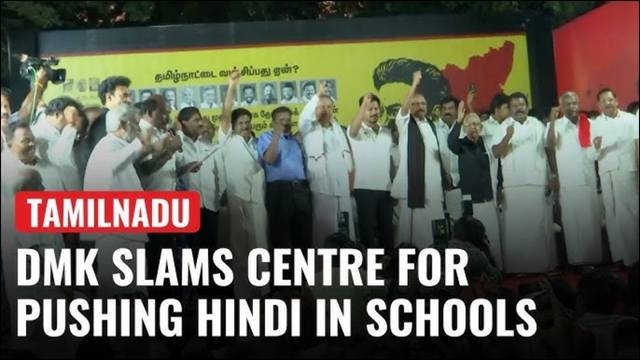
This ideological rigidity has persisted irrespective of whether the DMK or the AIADMK has been in power, indicating that resistance to national education reforms is embedded more in political culture than in party-specific governance.
NEP 2020 Reforms Rejected
The National Education Policy 2020, framed after extensive national consultation, aimed to introduce flexibility, multidisciplinary learning, and uniform quality benchmarks. However, Left and INDI alliance–ruled states responded not through constructive engagement but through categorical rejection.
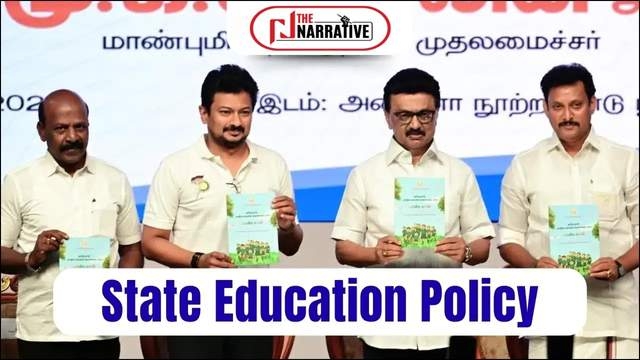
Tamil Nadu unveiled a separate State Education Policy in August 2025, explicitly rejecting the NEP’s three-language formula, common entrance tests, and structural reforms, projecting defiance as an assertion of state pride. The state also refused to implement PM-SHRI schools and objected to funding conditions under Samagra Shiksha, accusing the Centre of coercion while students continued to bear the cost of delayed reforms.
Karnataka, following a change in government, scrapped the NEP’s four-year undergraduate framework and passed a resolution rejecting NEET, demanding a return to state-level common entrance tests, despite NEET being upheld as a mechanism to ensure transparency and merit.
Undermining National Standards Through Institutional Resistance
Higher education governance has emerged as another battleground. In early 2025, Kerala, Tamil Nadu, Telangana, and Karnataka jointly rejected draft University Grants Commission regulations on vice-chancellor appointments, arguing that the role of Governors undermines federalism. Kerala went further by passing a unanimous Assembly resolution declaring the regulations unconstitutional.
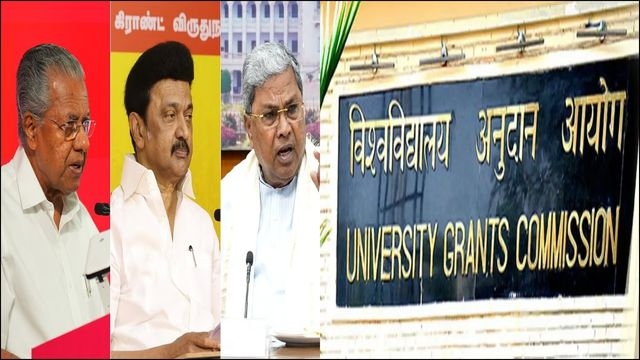
Critics, however, point to a clear contradiction. While these governments oppose what they term centralisation, they simultaneously resist accountability, merit-based selection, and national benchmarks, particularly where reforms threaten entrenched patronage networks within universities.
Opposition to central schemes has often been tactical rather than principled. Kerala, which initially rejected the PM-SHRI scheme as an imposition, ultimately signed the memorandum of understanding in October 2025 after years of delay that stalled much-needed infrastructure upgrades for students.
Tamil Nadu’s continued resistance to the Common University Entrance Test and repeated legislative attempts to bypass NEET, despite Presidential rejection and scrutiny by the Supreme Court, further illustrate this pattern. Even the ongoing Jawahar Navodaya Vidyalaya dispute, in which the Supreme Court in December 2025 asked Tamil Nadu and the Centre to find a solution, highlights how decades-old political positions continue to deny rural students access to proven and nationally recognised educational models.
Article by

Kewali Kabir Jain
Journalism Student, Makhanlal Chaturvedi National University of Journalism and Communication