Demographic Intrusion and Electoral Subversion: Bangladeshi Infiltration and the Expanding Menace of Fake Voters in Bharat
From border states to industrial hubs, illegal Bangladeshi infiltration is reshaping demographics, exploiting identity systems and raising serious concerns over voter integrity nationwide.
Total Views |


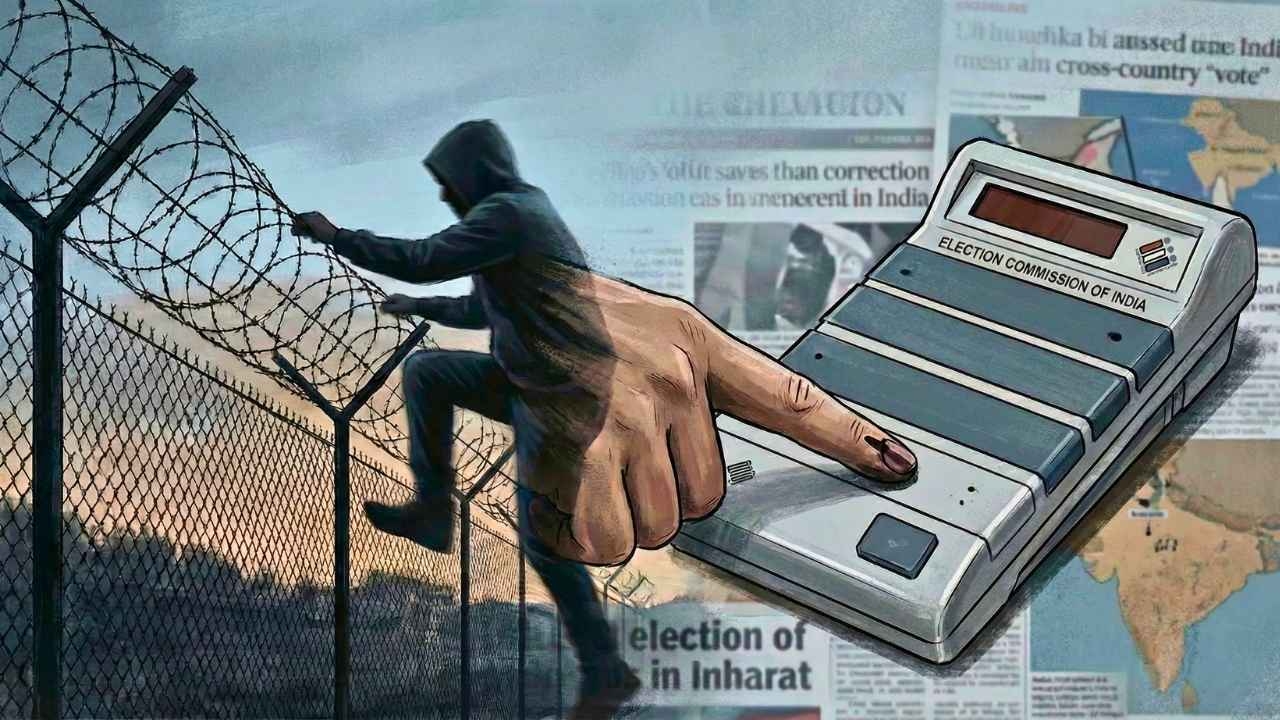
Bharat has long projected itself as a nation rooted in diversity and inclusion. However, these very principles now face sustained exploitation through illegal Bangladeshi infiltration. What was once perceived as a challenge limited to the eastern border states of Assam and West Bengal has gradually expanded deep into the country’s interior. Industrialised states such as Maharashtra and Gujarat now confront the same pressures. The issue no longer concerns porous borders alone. It represents a slow but persistent erosion of Bharat’s demographic balance, internal security and socio-political stability.
Maharashtra: Industrial hubs under pressure
Cities such as Mumbai, Pune and Nagpur, earlier considered insulated from illegal immigration, have increasingly emerged as centres of Bangladeshi settlement. In 2024 alone, the Pimpri-Chinchwad Police Commissionerate arrested 33 Bangladeshi and Rohingya nationals and cancelled 62 forged passports. Investigations revealed that many of those arrested resided in rapidly expanding industrial belts such as Bhosari, Chakan and Talegaon MIDC. These zones offer unregulated employment opportunities, informal housing and limited scrutiny, making them attractive for undocumented settlers.

The concern extends beyond unauthorised labour. Several infiltrators reportedly possessed forged Aadhaar and PAN cards, exploited gaps in rental housing systems and, in some cases, succeeded in enrolling as voters. A research paper published by the Tata Institute of Social Sciences highlighted visible demographic shifts in certain Maharashtra constituencies attributed to undocumented foreign settlers. These changes, the study suggested, have begun to influence local electoral outcomes. Such findings underline the seriousness of the problem and the risks of continued inaction.
Gujarat: Rapid demographic transformation
Gujarat presents a similar pattern. In Ahmedabad, the Chandola Talav locality, often referred to as “Mini Bangladesh,” reportedly contains over 8,000 illegal constructions. Authorities suspect many of these structures shelter Bangladeshi migrants. The demographic transformation in such pockets has been rapid and pronounced, giving rise to underground economies and black market property networks. Over time, these settlements have also started shaping local vote banks.

In response, the state has launched demolition drives under the now widely discussed ‘Kudaldwadi Pattern’, aimed at dismantling illegal settlements. While these actions have drawn attention nationwide, they also highlight the scale of the challenge faced by urban administrations.
Document fraud and identity manipulation
The proliferation of forged identity documents forms the backbone of this infiltration network. Fake Aadhaar cards, passports and voter identity cards have repeatedly surfaced in cases involving foreign nationals. In West Bengal, more than thirty illegal immigrants were reportedly found using fraudulent Aadhaar cards to re-enter the state, allegedly with assistance from local intermediaries. Recent reports further indicated that the Foreigners Regional Registration Office alerted election officials to five Bangladeshi citizens who had obtained fraudulent Indian identity documents, including one individual who allegedly held both Indian and Bangladeshi passports.
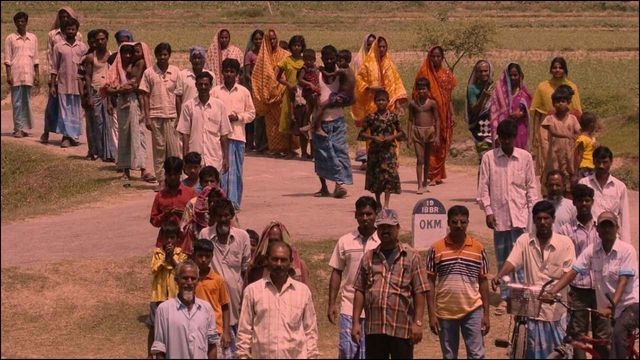
Such cases point to organised rackets that facilitate identity manipulation, undermining both national security and the integrity of public databases.
Special Intensive Revision and voter rolls
The Election Commission of India’s Special Intensive Revision drives have played a central role in addressing concerns over fake voter entries. In West Bengal, voter rolls in districts bordering Bangladesh reportedly showed a sharp increase in registrations, rising from around 100 per constituency per month to nearly 900. Critics argue that this spike suggests irregular inflows and anomalies in registration processes.
Through the SIR exercise, numerous names were removed from electoral rolls for reasons including death, permanent migration and duplicate entries. Official figures from a draft revision indicated that 1,83,328 names were classified as fake or ghost voters, a figure that fell short of some political claims of far higher numbers. In Bihar, similar revision exercises drew media attention to the presence of alleged foreign nationals from Nepal, Bangladesh and Myanmar on voter lists, prompting the Commission to flag these cases for verification.
A growing national challenge
Taken together, these developments reveal a pattern that extends well beyond isolated incidents or border districts. Illegal infiltration, supported by document fraud and lax oversight, increasingly threatens electoral integrity and social cohesion. As demographic shifts begin to influence political outcomes, the issue demands sustained policy attention, robust verification mechanisms and coordinated action across states. Without decisive intervention, the manipulation of identity and voter rolls risks undermining the foundations of Bharat’s democratic processes.
Article by

Kewali Kabir Jain
Journalism Student, Makhanlal Chaturvedi National University of Journalism and Communication