Bangladesh’s Mobocracy: How Hindus Are Being Targeted Under an Islamic Regime
From lynchings over blasphemy claims to mass attacks on temples, Bangladesh witnesses a growing pattern of mob violence against Hindus enabled by state inaction.
Total Views |


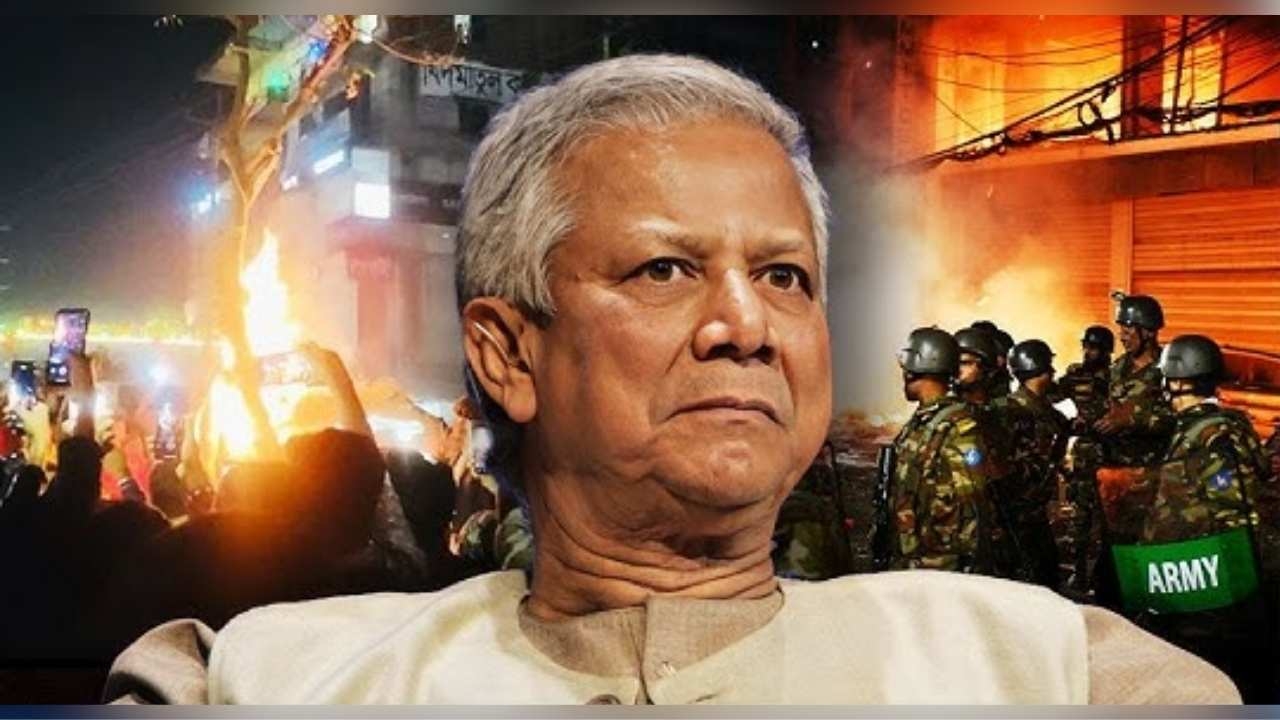
An Islamist mob has beaten a Hindu man to death on allegations of blasphemy in Bhaluka Upazila of Mymensingh district in Bangladesh, according to a report by BBC Bangla. After killing him, the attackers tied his body to a tree and set it on fire. The victim has been identified as Dipu Chandra Das. The brutal incident took place on the night of 18 December, Thursday, in the Dubalia Para neighbourhood of Square Master Bari.
Videos of the incident have since gone viral on social media. In these recordings, slogans of “Nare Takbir Allahu Akbar” can be clearly heard as the mob assaults Dipu Chandra Das. The footage shows members of the frenzied crowd murdering him while others record the act on their mobile phones, displaying a disturbing sense of impunity and collective participation in the violence.
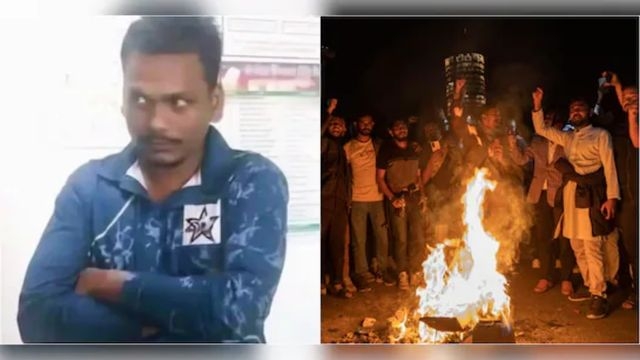
Recent developments in Bangladesh have raised serious alarm. The ongoing political instability and the visible decline of effective state policing have created an environment in which targeted attacks on minority communities, particularly Hindus, have intensified. Since 1947, the Hindu population in the region has sharply declined from nearly 30 percent to less than 9 percent today. This demographic collapse reflects decades of sustained pressure, violence, and forced migration.
The situation has deteriorated further since the fall of Sheikh Hasina’s government, which had remained in power since 2009. The present crisis highlights a long and painful history of both overt and covert persecution of Hindus, beginning in East Pakistan and continuing in present day Bangladesh. More than 205 reported attacks on temples and other sacred Hindu sites form part of this broader pattern of violence. The unrest that followed the alleged student protests in July 2024 has merely exposed deeper historical fault lines rooted in decades of religious polarisation.
1971: The Most Horrific Period
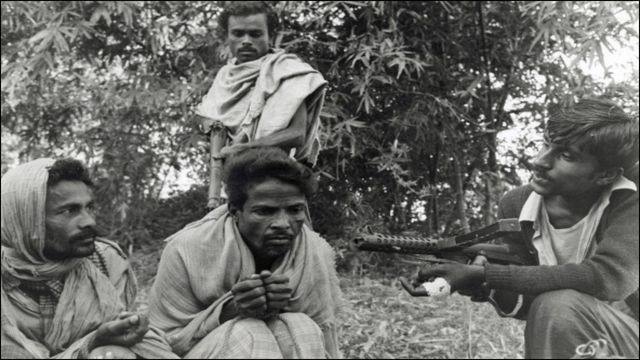
The 1971 War of Independence stands as the bloodiest chapter in Bangladesh’s history. Numerous historical accounts and human rights reports document widespread acts of genocide during this period. Several studies indicate that Hindus constituted a disproportionately large share of civilian casualties. While estimates vary, some researchers suggest that the number of Hindu victims may have reached into the millions, although no universally accepted figure has been established.
After 1971: Intermittent Violence
Violence against the Hindu community did not end with independence. In the decades that followed, especially during communal unrest in the 1980s and 1990s, attackers targeted temples, homes, and businesses belonging to Hindus. Human rights organisations also documented serious abuses during the 2001 election period. Reports during these years included murder, looting, forced occupation of property, and mass migration. Despite the scale of these abuses, the state failed to compile or release comprehensive national data on deaths and displacement.
Recent Reported Attacks on Hindus
In recent years, mobs have increasingly acted as judge, jury, and executioner, while law enforcement agencies often arrive late or take action against the victims instead of the perpetrators. In June 2025, elderly Hindu man Paresh Chandra Sheel and his son faced violent assault in Lalmonirhat. Police later arrested them, while those who attacked them remained at large.
Similar patterns have emerged elsewhere. Hindu students, teachers, traders, and artists, including Bikash Dhar Deept, Akhil Chandra Mondal, and Utsav Kumar Giyan, have faced arrests, suspensions, or physical violence based solely on accusations of “hurting religious sentiments”. These allegations frequently arise from social media posts or unverified claims.
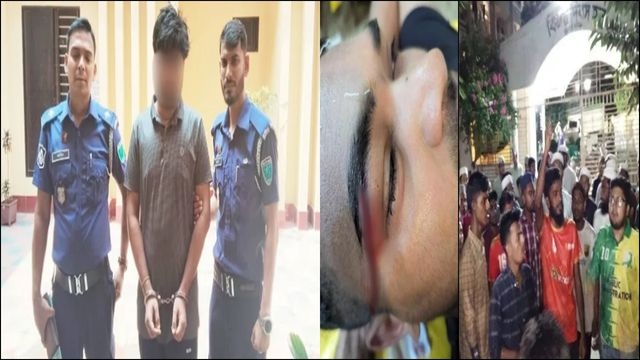
Equally troubling is the use of collective punishment against entire Hindu neighbourhoods. In places such as Sitakunda, Rangpur, Sunamganj, and Dinajpur, allegations of blasphemy against individuals have triggered organised attacks on dozens of homes and temples. These assaults have forced Hindu families into fear, displacement, and silence. In several cases, extremist groups have openly led marches, blocked highways, and attacked police stations, signalling growing confidence and operational freedom.
What makes this persecution systemic is the consistent pattern in state response. Authorities often arrest Hindu victims swiftly under cybercrime or blasphemy related laws, while violent mobs face little or no accountability. This imbalance has emboldened radical elements to exploit social media, misinformation, and religious sentiment to settle personal disputes or impose ideological dominance.
Bangladesh was founded on secular principles, yet the lived reality of its Hindu citizens increasingly contradicts that foundational promise. The sustained erosion of minority rights demands urgent attention. The international community, global human rights organisations, and India as a civilisational neighbour cannot afford to look away. Silence in the face of such violence risks normalising persecution and legitimising mob rule.
Article by
Kewali Kabir Jain
Journalism Student, Makhanlal Chaturvedi National University of Journalism and Communication