Babasaheb Ambedkar: A Staunch Nationalist and Visionary Bharatiya
Babasaheb’s rejection of divisive theories and his call for a culturally rooted nationalism continue to shape Bharat’s modern identity.
Total Views |


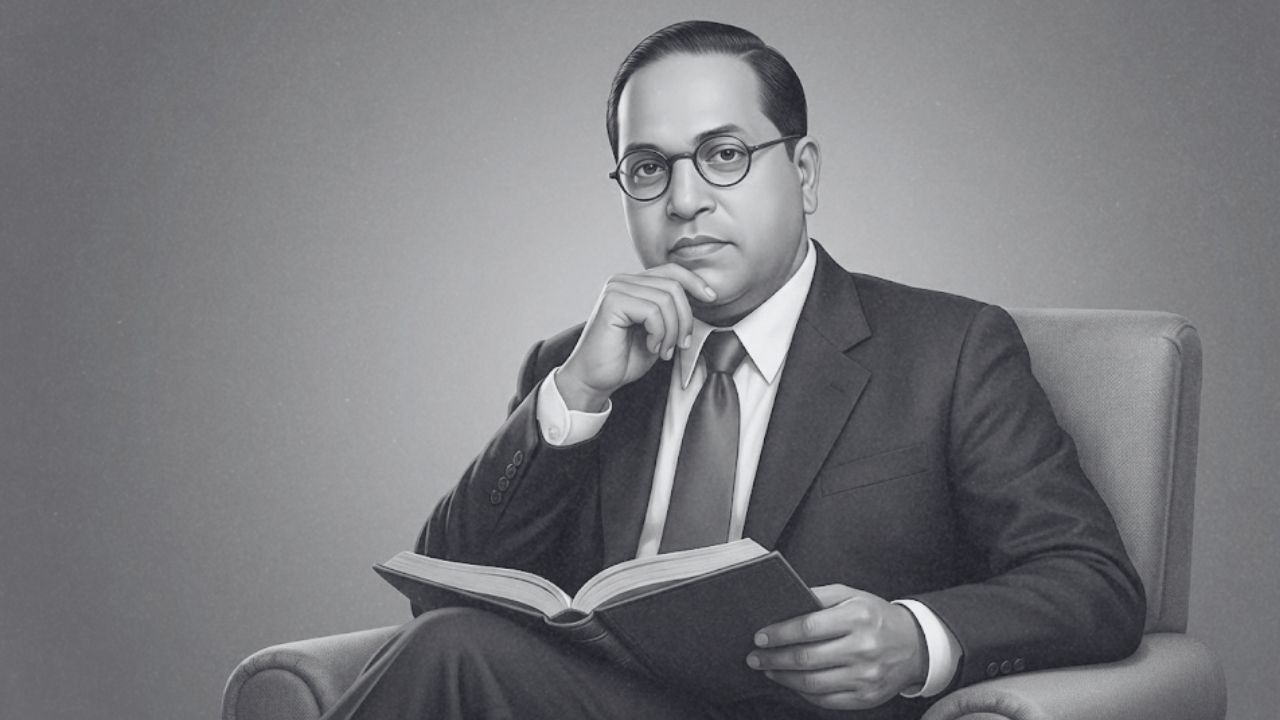
Babasaheb Ambedkar, the principal architect of the Indian Constitution and a visionary social reformer, dedicated his life to justice, equality and human dignity. His relentless struggle against caste discrimination and his commitment to building an inclusive society continue to inspire generations. Ambedkar’s contributions to law, economics, education and social reform laid the foundations of modern Bharat. The nation remembers his extraordinary legacy and his thoughts which remain a guiding light for a progressive and equitable nation.
Babasaheb, a worshipper of Bharat’s unity
For every nationalist, there are two legends who stand out as figures of reverence Swami Vivekananda and Babasaheb Ambedkar. Both believed deeply in the spiritual and cultural unity of this great country. In a paper he presented at Columbia University, Babasaheb outlined the cultural unity of Bharat. According to him, Bharat possessed a deeper and more fundamental unity, the indubitable cultural unity that covers the land from end to end. He said that spirituality is the binding fabric of this nation.
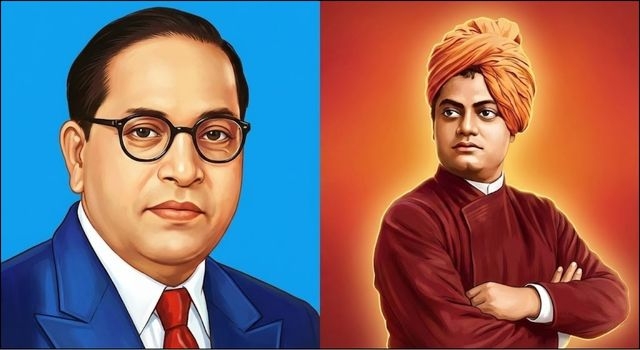
Swami Vivekananda expressed a similar view when he said that the national union of Bharat must be a gathering up of its scattered spiritual forces. He added that a nation in Bharat must be a union of those whose hearts beat to the same spiritual tune. The idea of Bharat envisioned by both Babasaheb and Swami Vivekananda was therefore one rooted in spirituality and religion, where the unity of this land transcends race and language.
Contrary to the views promoted by divisive groups such as Dravidian and Left organisations, Ambedkar opposed the idea of geographical nationalism as the basis for defining nationhood. He also rejected the Aryan Invasion Theory, a subject that has long been dear to the Dravidian machinery comprising sections of the media, cinema, politicians and intellectuals. According to Dr Ambedkar, both Aryans and Dravidians are original descendants of Bharat. This position was also held by personalities like Swami Vivekananda and Dayanand Saraswati.
Having studied the Vedas, Ambedkar concluded that there is no evidence in the Vedas of any invasion of Bharat by an Aryan race. He viewed the Rig Veda as having a sense of unity and consciousness that merged different tribes to form an Indo Aryan nation. He even supported the proposal to make Sanskrit the official language of Bharat. The proposal was moved by LK Maitra in the Constituent Assembly, and Ambedkar endorsed it. Had he been alive today, he would likely place his head in his hands on seeing the anti Sanskrit rhetoric propagated by the Dravidian machinery.
Babasaheb referencing Sanatan Dharma’s literature as the guiding light
BR Ambedkar pointed out that the rights of women in property were stated by Smritikars such as Rishi Manu. During the Constituent Assembly debate on 24 February 1949, he said, “There is no doubt about it that the two Smritikars whom I have mentioned Yagnavalkya and Manu, rank the highest among the 137 who had tried their hands in framing Smritis. Both of them have stated that the daughter is entitled to a one fourth share. It is a pity that somehow for some reason custom has destroyed the efficacy of that text otherwise, the daughter would have been, on the basis of our own Smritis, entitled to get one fourth share.”
He further criticised the Privy Council for prioritising customs over law, which had prevented Manusmriti from empowering women and securing their inheritance rights long ago.
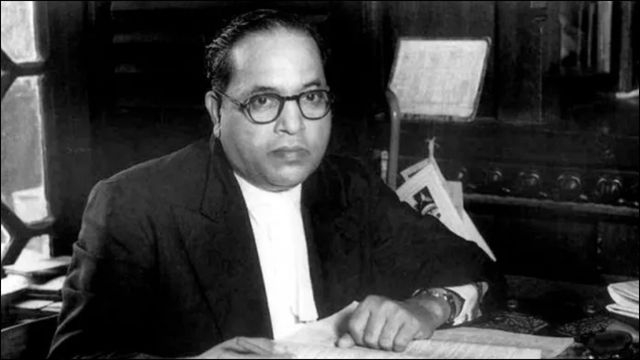
He said, “I am very sorry for the ruling which the Privy Council gave. It blocked the way for the improvement of our law. The Privy Council in an earlier case said that custom will override law, with the result that it became quite impossible to our Judiciary to examine our ancient codes and to find out what laws were laid down by our Rishis and by our Smritikars. I have not the least doubt about it that if the Privy Council had not given that decision, that custom will override text, some lawyer, some Judge would have found it quite possible to unearth this text of Yagnavalkya and Manusmriti, and women today would have been enjoying, if not more, at least one fourth of the share of their property.”
Ambedkar and his social constructivism
Dr Bhimrao Ramji Ambedkar stands as one of the most consequential nation builders of modern Bharat. His contributions to social welfare were grounded in pragmatism, discipline and an unshakeable belief in national unity. While his legacy is often framed solely through the lens of caste by leftist and divisive anti Bharat writers, a closer reading of his work shows that Ambedkar recognised that a society burdened by internal inequities could never achieve genuine sovereignty or progress. His fight for the upliftment of marginalised communities was a call for national consolidation rooted in justice.
As Chairman of the Drafting Committee of the Constitution, he ensured that fundamental rights, equality before law and constitutional safeguards were shaped into instruments that empowered citizens while reinforcing the stability of the state.
Ambedkar’s work in labour reforms, maternity benefits, education access and economic planning demonstrated his belief that welfare should foster self reliance rather than dependency. His advocacy for industrial development, modern infrastructure and water management underscored his conviction that Bharat’s social liberation required economic strength to shed the weight of colonialism imposed by the British Raj.
Article by

Kewali Kabir Jain
Journalism Student, Makhanlal Chaturvedi National University of Journalism and Communication