Sharjeel Imam: A Chronicle of Jihad
A detailed account of how radical rhetoric, student activism and strategic disruption allegedly merged around Sharjeel Imam in the months before the riots.
Total Views |


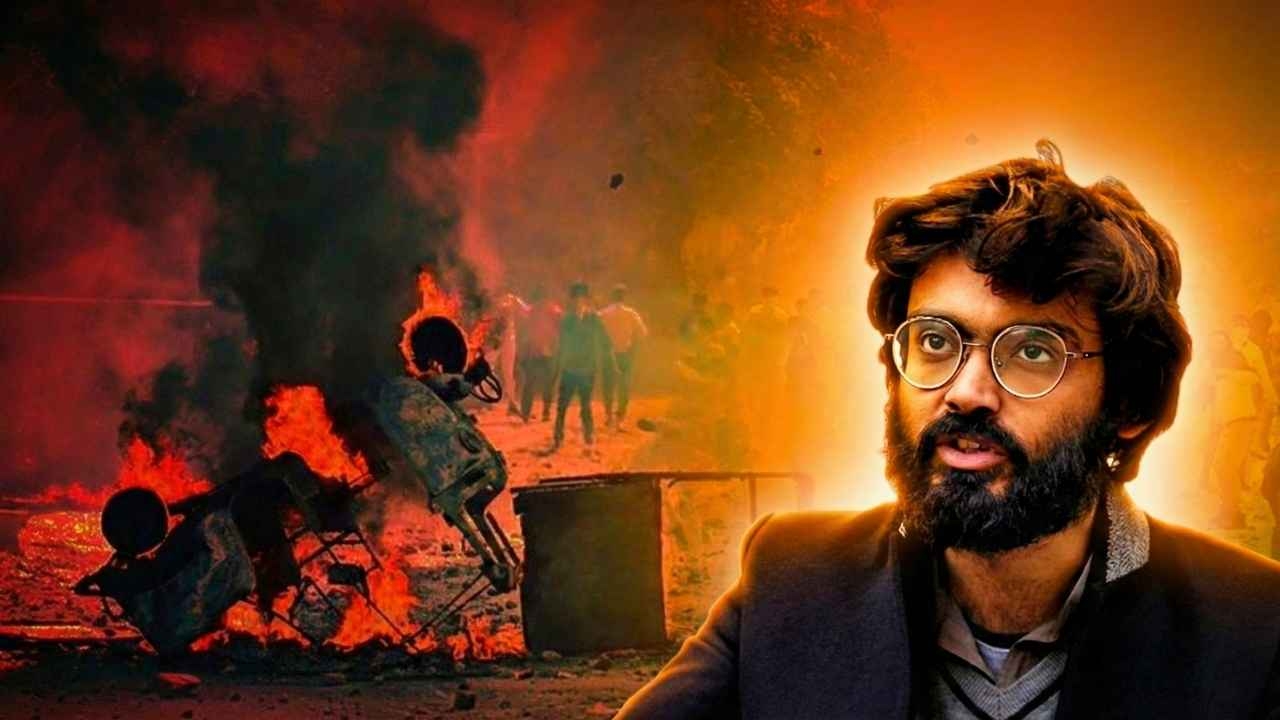
The trajectory of Sharjeel Imam from an IIT graduate and JNU research scholar to one of the most prominent jihadis in the 2020 Delhi riots conspiracy offers a revealing window into how radical political rhetoric, campus activism, and street mobilisation for jihad converged during the anti-CAA agitations. Court records, public speeches, and investigative findings over the last decade collectively sketch the profile of an individual whose words and actions repeatedly crossed from dissent into alleged incitement and conspiracy.
Early Life and Academic Journey
Born in 1988 in the Kako village of Bihar’s Jehanabad district, Sharjeel Imam hails from a politically aware family. His father, Akbar Imam, contested the 2005 Bihar Assembly election as a JD(U) candidate. Sharjeel’s schooling at Delhi Public School, Vasant Kunj, and his subsequent admission to IIT Bombay for a B.Tech in Computer Science placed him among India’s academic elite. After brief professional stints in Bengaluru and abroad, he enrolled at Jawaharlal Nehru University (JNU), pursuing an M.A. in Modern History and later a PhD focusing on partition and Muslim politics.
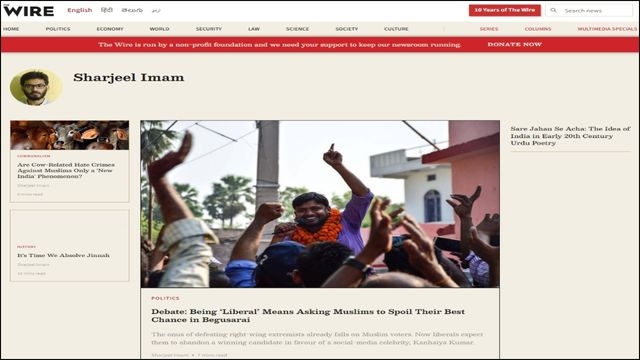
During his JNU years, Imam aligned with leftist student politics, contesting the JNUSU elections under the AISA banner. Though unsuccessful electorally, he remained active in ideological circles, contributing opinion pieces to platforms such as The Wire, Firstpost, TRT World, and The Quint. The turning point came post-2016, when he distanced himself from AISA following the Najeeb Ahmed episode and began charting a more overtly sectarian and confrontational political line.
From Protest to Provocation
Imam’s name entered national discourse during the anti-Citizenship Amendment Act (CAA) protests of late 2019 and early 2020. At Shaheen Bagh and other venues, he emerged as a key mobiliser. However, it was his speech at Aligarh Muslim University on 16 January 2020 that became a defining moment. On record, Imam called for blocking railways and “cutting off” Assam by exploiting the Siliguri Corridor, popularly known as the Chicken’s Neck. And these remarks cited a direct call to disrupt India’s territorial integrity.
Subsequent videos and posts attributed to Imam show repeated exhortations for “chakka jam” in Muslim-majority urban centres, advocating the paralysis of cities to force the government’s hand. These were not isolated remarks but part of a sustained campaign to escalate protests beyond peaceful dissent.
Delhi Riots and the Conspiracy
The violence that engulfed Northeast Delhi in February 2020, leaving over 50 dead, forms the gravest chapter in Imam’s profile. According to the Delhi Police chargesheet, the riots were not spontaneous but the outcome of a planned conspiracy involving road blockades, mobilisation networks, and coordinated messaging. Imam is alleged to have played a central ideological and organisational role, including through the formation of the “Muslim Students of Jamia” (MSJ) group.
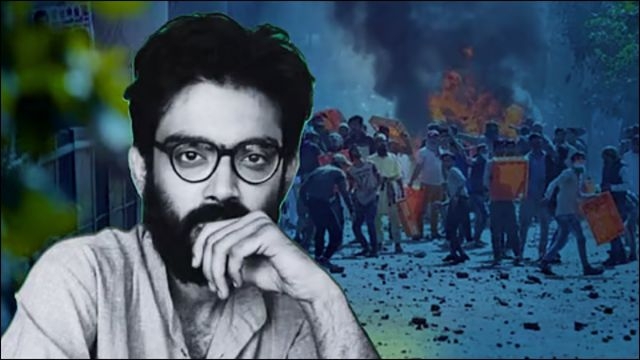
Investigators have also pointed to overlaps in rhetoric and timing between Imam’s calls for internationalising the anti-CAA protests, particularly ahead of then US President Donald Trump’s February 2020 India visit, and speeches by other accused activists. Videos showing Imam in proximity to political figures such as AAP MLA Amanatullah Khan further fuelled controversy, though these associations remain a subject of legal scrutiny.
Ideology and Controversial Positions
Beyond campus politics, Imam’s social media history reveals a rigid ideological worldview. Posts denouncing idol worship as “shirk”, equating nationalism with religious transgression, and expressing admiration for Pakistani cricketing heroes over India’s national team have drawn sharp criticism. His past writings defending convicted terrorists like Afzal Guru and Yakub Memon added to perceptions of ideological extremism.
Judicial Proceedings and Current Status
Arrested initially on 28 January 2020 for his inflammatory speeches, Imam was later re-arrested in August 2020 under the Unlawful Activities (Prevention) Act (UAPA) in connection with the Delhi riots conspiracy. While he secured conditional bail in a separate sedition case in 2022 after prolonged incarceration, he remained behind bars due to pending UAPA cases.
And on 5 January 2026, the Supreme Court rejected Imam’s bail pleas, noting that his alleged role was graver than that of several co-accused who were granted relief. The Court also imposed a one-year bar on filing a fresh bail application while directing that the trial be expedited.
Article by
Kewali Kabir Jain
Journalism Student, Makhanlal Chaturvedi National University of Journalism and Communication