10 Counter-Terror Initiatives That Reshaped Bharat’s Security Strategy
An analysis of landmark counter-terror initiatives that strengthened intelligence sharing, tightened borders and weakened terror financing across Bharat.
Total Views |



By any objective measure, Bharat’s counter-terrorism posture between 2017 and 2025 marks a decisive break from the past. Moving away from reactive responses and fragmented intelligence systems, the central government pursued a doctrine of zero tolerance anchored in legal reforms, technological integration, institutional restructuring and sustained kinetic operations. The outcome has been a sharp decline in terror incidents, civilian casualties and security force fatalities, alongside the systematic dismantling of terror ecosystems across the country.
This report traces ten landmark initiatives that collectively reshaped Bharat’s security strategy, culminating in the launch of the National IED Data Management System in January 2026.
From Fragmentation to Integration: NIDMS and the Digital Turn
On January 9, 2026, the Union Home Minister inaugurated the National IED Data Management System at the National Security Guard campus in Manesar. Developed by the NSG, NIDMS is a first-of-its-kind digital platform designed to counter one of terrorism’s most lethal tools: improvised explosive devices.
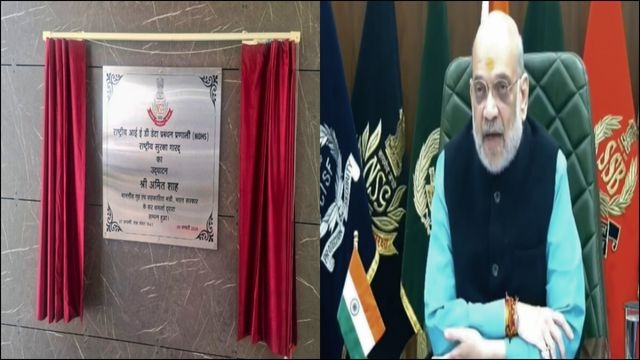
For decades, IED-related data in Bharat remained scattered across states and agencies. NIDMS replaces this patchwork with a secure, real-time national database accessible to authorised police units, state Anti-Terrorism Squads, central armed forces and agencies such as the National Investigation Agency. By enabling pattern recognition, tracking of explosive materials, cross-state case linkage and detailed analysis of terror groups’ modus operandi, the platform marks a shift from post-blast investigation to predictive prevention.
Intelligence as the First Line of Defence: MAC Revamp
This digital integration builds on earlier intelligence reforms. In May 2025, the government inaugurated the revamped Multi-Agency Centre at a cost of ₹500 crore. The new MAC connects police districts across the country with 28 intelligence and enforcement agencies, deploying artificial intelligence tools, GIS mapping and predictive analytics to identify threats in real time.
Crucially, this upgrade was complemented by a 25-point anti-terror financing strategy first rolled out in 2020. The plan targeted the financial lifelines of terror groups, Left Wing Extremist organisations and organised crime syndicates. Enhanced coordination between the Financial Intelligence Unit, the Enforcement Directorate and the NIA enabled decisive action against hawala networks, crypto-based funding channels and shell companies.
Legal Muscle: NIA and UAPA Amendments
A key pillar of the new security architecture was legal empowerment. In July 2019, Parliament passed the National Investigation Agency Amendment Act, expanding the NIA’s jurisdiction beyond Bharat’s borders and adding offences such as cyber-terrorism, human trafficking and illegal arms trade.

Simultaneously, amendments to the Unlawful Activities Prevention Act allowed authorities to designate individuals, and not just organisations, as terrorists, and to attach properties linked to terror activities. These provisions shifted the focus from reactive prosecution to early disruption of networks and financing.
Sealing the Borders: Anti-Drone Systems and CIBMS Deployment
As Pakistan-backed terror groups adapted their tactics, Bharat responded with technology-driven countermeasures. From 2020 onwards, anti-drone defence systems were deployed along the Punjab and Jammu and Kashmir borders to counter UAV-based smuggling of arms, narcotics and explosives. Laser detectors, jammers and kinetic neutralisers led to the neutralisation of more than 100 drones and the recovery of large consignments of weapons, heroin and IED components.
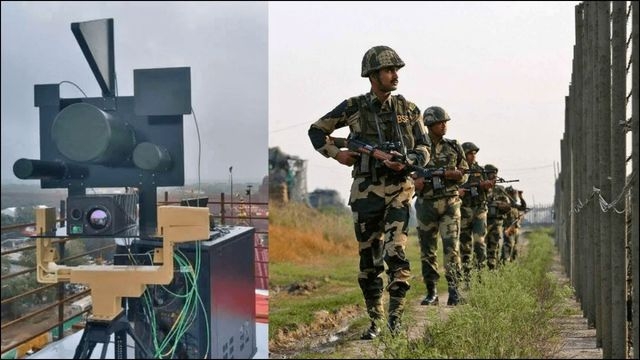
In parallel, the rollout of the Comprehensive Integrated Border Management System after 2019 transformed border surveillance. Smart fencing, thermal imagers, anti-tunnel radars and automated surveillance towers reduced infiltration attempts to near-zero levels by 2023, particularly in the Jammu and Punjab sectors.
Hitting the Money Trail: The Terror Financing Crackdown
Since 2014, Bharat has pursued an aggressive strategy against terror financing. Enforcement actions under UAPA and the Prevention of Money Laundering Act resulted in the seizure of assets worth over ₹16,500 crore. The Enforcement Directorate intensified operations against Naxal and terror financiers, while the 25-point plan targeted jihadist, narco-terror and arms trafficking networks.
In 2024, the Financial Action Task Force acknowledged Bharat’s high level of compliance with global anti-money laundering and counter-terror financing standards, underscoring the credibility of this approach.
Coordination and Conviction: BHARATPOL and Targeted Operations
Between 2024 and 2025, Bharat launched a new MAC framework alongside the BHARATPOL portal, integrating national agencies with INTERPOL databases to tackle terrorism, organised crime, drug trafficking and human smuggling.

This institutional synergy translated into operational success on the ground. Operations Sindoor and Mahadev dismantled terror infrastructure and neutralised key perpetrators of major attacks, reflecting political resolve, precise intelligence and coordinated execution. During this period, the NIA reported a conviction rate of 95 percent, supported by intensified extradition and deportation efforts.
Jammu and Kashmir: The Decline of the Terror Ecosystem
The most visible impact of the zero-tolerance policy has been in Jammu and Kashmir. Between 2018 and 2023, terrorist-initiated incidents fell from 228 to 43. Security force fatalities declined from 91 to 25, while civilian deaths reduced from 55 to 13. Overall terror-related fatalities in 2023 were the lowest recorded since 2012.
This transformation was driven by sustained counter-terror operations, intelligence dominance and systematic ecosystem disruption that severed recruitment pipelines, logistics chains and financial support.
Operation All Out: Sustained Pressure Since 2017
Launched in 2017, Operation All Out became the backbone of counter-terror operations in Jammu and Kashmir. Jointly executed by the Army, the Central Reserve Police Force, Jammu and Kashmir Police, the Border Security Force and intelligence agencies, the campaign targeted both terrorists and their overground support networks.
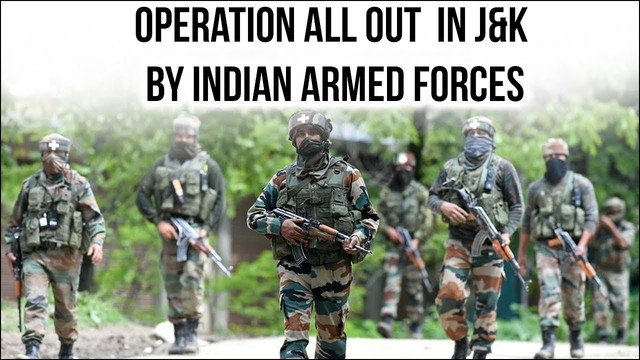
Since its inception, more than 1,000 terrorists have been neutralised. Local recruitment and stone-pelting incidents declined by over 90 percent, dismantling the narrative of a mass uprising that terror groups had previously sought to exploit.
The Numbers Tell the Story
The cumulative impact of these initiatives is reflected in national data. Terrorist incidents dropped from 7,217 between 2004 and 2014 to 2,242 between 2014 and 2024. Total deaths declined by 70 percent, civilian deaths by 81 percent and security force casualties by 50 percent.
In 2004, Bharat recorded 1,587 terror incidents. By 2024, the figure had fallen to just 85. Organised stone-pelting incidents, which averaged over 2,600 annually between 2010 and 2014, fell to zero in 2024.
Towards a National Anti-Terror Grid
At the Anti-Terrorism Conference 2025, the Home Minister articulated the next phase of Bharat’s security doctrine: a nationwide anti-terror grid and a common Anti-Terrorism Squad structure across states, backed by mandatory intelligence sharing and unified databases. The call for a 360-degree strike against terrorism and organised crime reflects continuity rather than departure from the approach pursued over the past decade.
Written by

Kewali Kabir Jain
Journalism Student, Makhanlal Chaturvedi National University of Journalism and Communication