India’s Strong Grain Reserves Offer a Shield Against Global Food Risks
India’s wheat and rice reserves cushion global supply shocks, while resilient farming and reduced import dependence can strengthen its long-term food security.
Total Views |


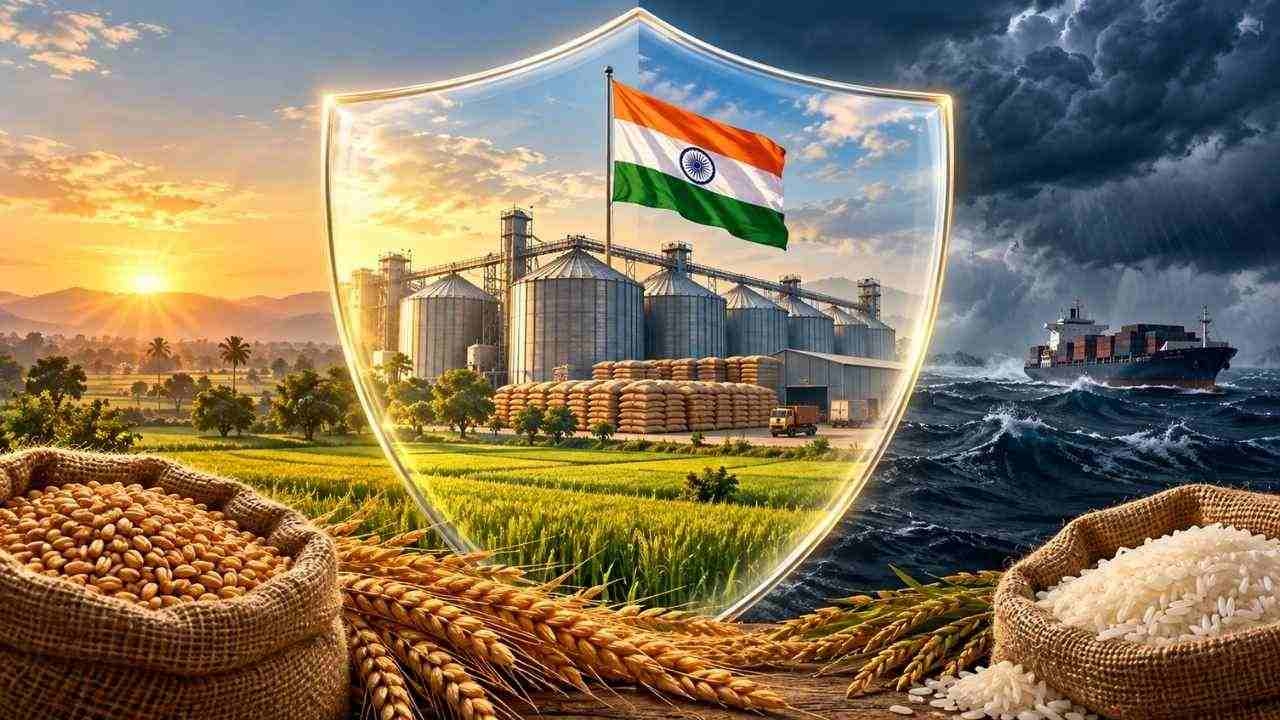
As geopolitical conflicts continue, the world is facing growing concerns over a possible food supply crisis as disruptions in international trade and changing weather patterns threaten agricultural production. While several countries remain vulnerable to food shortages and rising prices, India appears to be in a better position to handle an immediate crisis because of its strong foodgrain reserves and government-backed food security programmes.
The Russia-Ukraine war, tensions in the Middle East and the effects of El Niño are creating uncertainty in global agricultural markets. El Niño is a climate pattern marked by unusually warm surface waters in the central and eastern tropical Pacific Ocean, which can disrupt rainfall and crop production. Together, these pressures threaten food production, transportation and distribution, making affordable supplies harder to secure for countries that depend on imports.
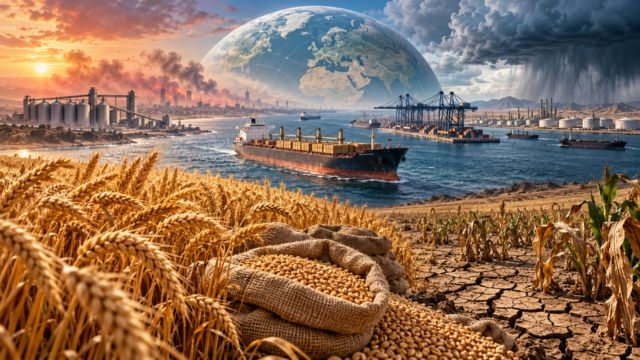
According to the estimates from the Food and Agriculture Organization (FAO), global cereal production is projected to decline from approximately 3,043 million tonnes in 2025 to around 2,980 million tonnes in 2026. Meanwhile, international food prices have continued to rise.
Global Conflicts Threaten Food and Fertiliser Supplies
Disruptions to international trade routes are a major concern as fears of a food crisis grow, particularly because Russia and Ukraine are among the world’s leading wheat exporters. The continuing conflict has affected ports and shipping operations in the Black Sea region, creating difficulties for countries that are dependent on imported wheat.
At the same time, tensions around the Strait of Hormuz have raised concerns about fertiliser shipments from the Gulf region. Fertilizers play an important role in agricultural production, and any disruption in their availability could affect future harvests.
_202610101122043736_H@@IGHT_360_W@@IDTH_640.jpg "image 3 (4)")
Rising transportation costs and uncertainty in global trade have further increased the risk of food inflation. Even when sufficient food is produced globally, disruptions in transportation and distribution can make it difficult for countries who are dependent on imports.
India’s Strong Foodgrain Reserves Offer Protection
Despite these global challenges, India’s substantial grain reserves give it a stronger buffer against food shortages than many countries that rely heavily on imports.
According to Food Corporation of India (FCI) data, the country held approximately 48 million tonnes of wheat and 39.1 million tonnes of rice in its central pool as of September 1, 2026. Additional unmilled paddy further strengthens the country’s foodgrain availability.
_202610101122270299_H@@IGHT_360_W@@IDTH_640.jpg "image 4 (4)")
These reserves remain substantially above the government’s prescribed buffer requirements, providing an important safeguard against immediate shortages.
India’s public distribution system helps vulnerable households access essential food. Together, domestic production, government procurement and food distribution provide a strong buffer against sudden disruptions in global food markets.
Dependence on Imports Remains a Major Challenge
India’s wheat and rice production provides a strong food security buffer, but reliance on imports for other staples remains a concern. The country imports a substantial share of its edible oil needs, exposing consumers to global price swings. Pulse imports also help bridge the gap between domestic production and demand.
Rising global prices or shipping disruptions could make cooking oil, pulses and other essential foods more expensive for Indian households.
The government has taken measures such as maintaining pulse reserves and adjusting certain import duties to manage domestic prices. However, global market conditions, shipping costs and currency fluctuations continue to influence food affordability.
India’s Role in Global Rice Trade
_202610101122463581_H@@IGHT_360_W@@IDTH_640.jpg "image 5 (3)")
India is the world’s largest rice exporter, accounting for more than 40% of global rice exports. Many countries depend on India to meet their rice requirements. If India reduces or restricts rice exports to ensure sufficient food for its own population, other countries dependent on Indian rice may face shortages and rising prices.
On the other hand, if India continues exporting large quantities of rice when domestic production is low due to weak harvests, it could increase pressure on India’s domestic market.
So, India needs to maintain a balance between supplying rice to other countries and ensuring enough affordable rice is available for its own population.
Can India Withstand a Prolonged Global Food Crisis?
India’s wheat and rice reserves provide a strong buffer against immediate shortages. However, unpredictable rainfall, rising fertiliser costs, international conflicts and supply chain disruptions could strain agricultural production and push up food prices. One poor harvest may not cause a major food crisis, but if crop production continues to decline over several seasons, India might face greater challenges in the upcoming years.
To prevent this, India needs to improve agricultural production, strengthen irrigation facilities, ensure affordable fertilizers for farmers and reduce dependence on imported food products.
India must not only ensure that enough food is available but also that it remains affordable for ordinary people, even during global conflicts and climate-related disruptions.
India’s strong grain reserves, farmers and public distribution network provide a solid foundation for facing global food uncertainty. With sustained investment in irrigation, resilient farming and domestic production of pulses and edible oils, India can strengthen this advantage and keep essential food available and affordable for its people.
Written by
Geetanjali Naik
Intern, The Narrative