Human Online: The Shadowy ‘Diaspora’ Portal with Deep Pakistani Links Pushing Anti-India Narratives
Pakistan-linked digital portal masquerades as global diaspora media while amplifying anti-India narratives, platforming Hinduphobic voices and providing PR cover to ideologically aligned foot soldiers during CJP protests against the CEC
Total Views |


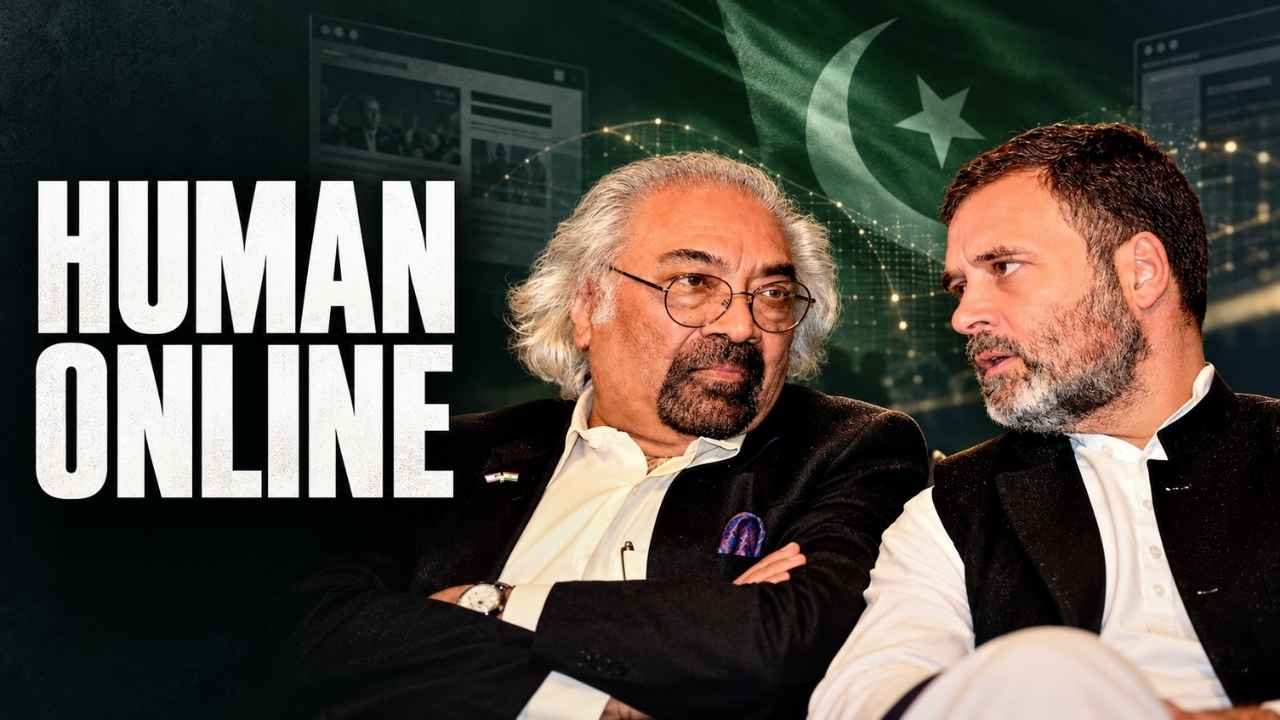
In the wake of protests orchestrated by the Cockroach Janata Party against Chief Election Commissioner Gyanesh Kumar over the Special Intensive Revision of electoral rolls, a digital platform calling itself Human Online has drawn sharp scrutiny. Presenting itself as an independent global news outlet focused on the diaspora, the portal has actively amplified Opposition-aligned coverage while revealing troubling operational ties to Pakistan and a consistent pattern of anti-India messaging.
Launched in November 2023 by Mohammed Jahangir, described as an Indian national, Human Online claims to serve communities from India, Pakistan, Bangladesh and other nations living abroad. Its “About Us” section speaks of responsible reporting for the global diaspora. Yet daily operations and editorial support are managed by ePage Global under a formal agreement. Jahangir himself serves as General Manager of ePage Global, while its CEO – Iman Khan, also functions as Grievance Officer for Human Online in Saudi Arabia and the UAE. The platform’s Global Grievance Officer is based in South Africa.
_202610171019561156_H@@IGHT_360_W@@IDTH_640.jpg "image 1 (3)")
More revealing are the personnel handling core functions. Search Engine Optimization (SEO) and online publishing at ePage Global are overseen by Muhammad Asim Pervez, a Pakistani national based in Khyber Pakhtunkhwa. The outlet maintains a dedicated Pakistan Desk staffed by writers and editors from Multan, Peshawar, Khyber Pakhtunkhwa and Islamabad.

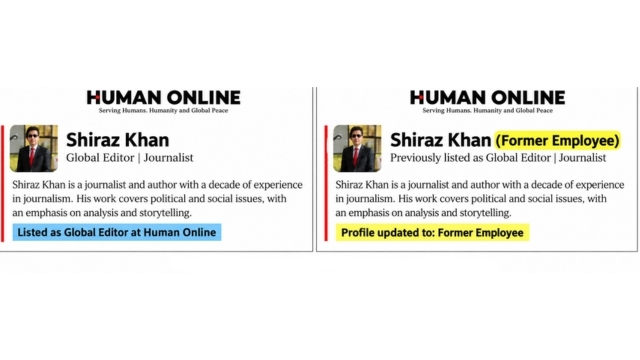
Until recently, its Global Editor was Shiraz Khan, a Pakistani national holding a journalism degree from Peshawar and residing in Islamabad. As Indian netizens highlighted these connections, Khan’s LinkedIn profile was deactivated and the portal reclassified him as a former employee.
Social media footprints further expose the pattern. Before the backlash, Human Online’s X and Facebook pages were operated from Pakistan, with advertising campaigns run in Pakistani rupees and administrators based in Pakistan and Saudi Arabia. Only after criticism mounted did the X location shift to “South Asia” and the Facebook page to South Africa.
In public statements, the platform insisted it is a borderless digital entity owned by an Indian citizen and dismissed claims of Pakistani affiliation as baseless. Yet it never denied employing multiple Pakistan-based personnel in editorial and technical roles.
On the ground, the portal deployed reporter Garima Singh, who describes herself as a part-time journalist, to cover the CJP protests in Delhi. Videos of her reporting circulated widely. What stood out was the coordinated praise she received not only from certain Indian ideological circles but also from Pakistani commentator Rauf Klasra, who hailed her as a fearless Gen Z journalist in successive posts.
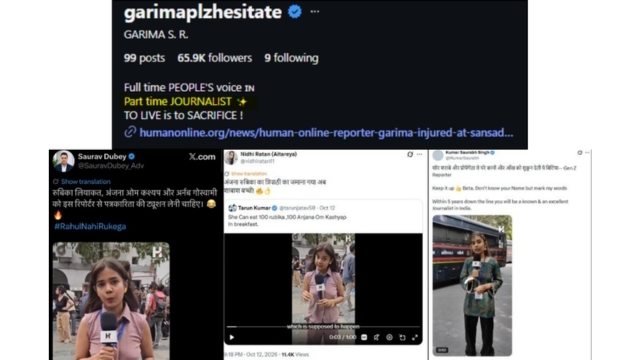
Another reporter who was also allegedly associated with the platform was observed raising inflammatory slogans during the protest. Such coverage aligns with a broader pattern of selective amplification rather than neutral reportage.
The platform’s content history reinforces the concern. During the May 2025 India-Pakistan conflict, Human Online repeated Pakistani military claims that an Indian MQ-9 Reaper drone had been shot down and that the majority of casualties from Indian strikes were civilians, including allegations of destroyed mosques. It also amplified assertions that five Indian fighter jets had been downed, claims that remain unsupported by credible evidence.
_202610171021373347_H@@IGHT_360_W@@IDTH_640.jpg "image 5 (4)")
An earlier article framing the Kumbh Mela as having shifted from a universal gathering to a “Hindu-centric festival” was later removed. Commentaries attributed to the founder have displayed clear hostility toward India’s institutional decisions and leadership.
Human Online has also provided platforms to voices known for anti-Hindu and divisive rhetoric. It hosted self-proclaimed Ambedkarite activist Lakhshya Lakey, against whom a cyber complaint alleging caste-based abuse was filed. It invited Islamist cleric Mufti Shamail Nadwi, who has publicly declared Islam the only true religion, warned Muslim women against marrying Hindus, and promoted the so-called “Bhagwa Love Trap” narrative.
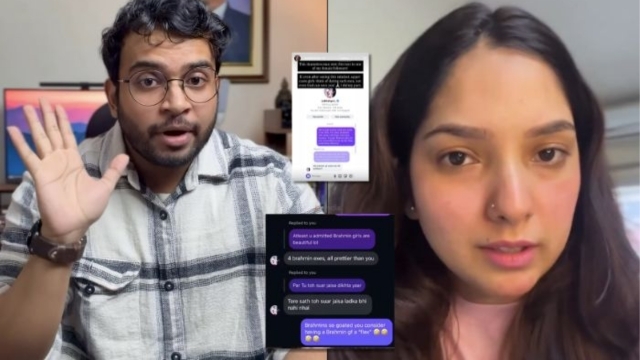
Leftist historian Ram Puniyani appeared in a podcast on “Hindutva vs History,” consistent with his earlier writings that have sought to contextualize attacks on Hindus in neighbouring countries as primarily political. The presence of Sam Pitroda, Chairman of the Indian Overseas Congress, among its listed authors adds another layer of political alignment.
-with-Rahu-Gandhi_202610171022464130_H@@IGHT_360_W@@IDTH_640.jpg "Chairman of Overseas Congress Sam Pitroda (left) with Rahul Gandhi")
Taken together, the evidence points to a carefully constructed operation that uses the language of diaspora journalism and global peace while functioning as a conduit for anti-India propaganda. Its Pakistani operational links, selective amplification of narratives hostile to India’s institutions, and willingness to platform ideologues who target Hindu society reveal an agenda far removed from independent reporting.
In an era of information warfare, platforms that mask foreign influence and ideological subversion under the banner of “borderless” media demand rigorous public scrutiny. National security and the integrity of democratic institutions cannot afford the luxury of treating such networks as mere online noise.
Written by
Kewali Kabir Jain
Journalism Student, Makhanlal Chaturvedi National University of Journalism and Communication