From CAA-NRC in Bharat to France’s street riots: The politics of perpetual protest demands scrutiny
From communist flags to street clashes, the Left’s politics of agitation raises a hard question: when does protest for change become a politics of chaos?
Total Views |


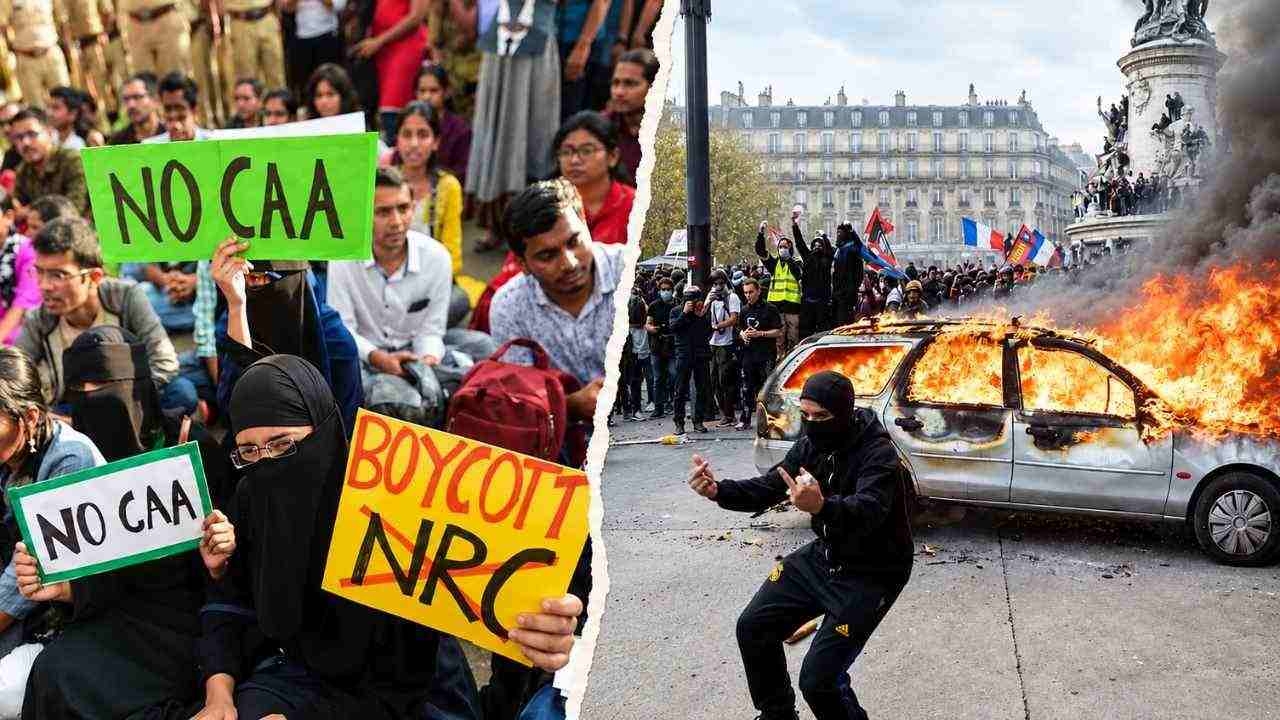
A familiar script plays out whenever a government introduces a new law or policy. Sections of the Left mobilise swiftly, framing the measure as an existential threat to democracy, minorities or civil liberties. Street campaigns follow, rhetoric escalates, and in too many cases disruption and violence become the language of dissent. Worst-case predictions are treated as established facts long before any law takes effect. The pattern deserves examination without romanticising those who damage public property or attack the police.
India saw this clearly during the anti-CAA and anti-NRC agitation of 2019-20. The Citizenship Amendment Act offered a pathway to citizenship for specified persecuted religious minorities from Afghanistan, Bangladesh and Pakistan who had entered India by a cut-off date. It did not revoke the citizenship of any Indian Muslim. Yet claims that Muslims would automatically lose their rights spread widely.
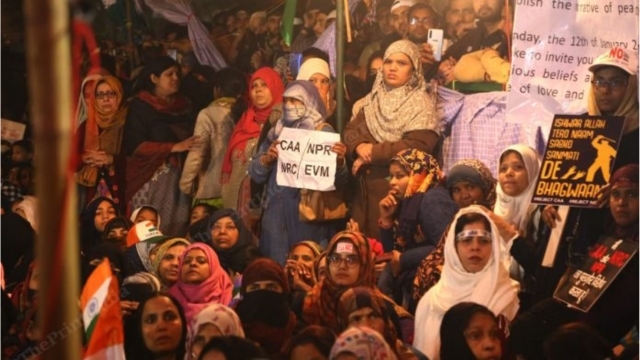
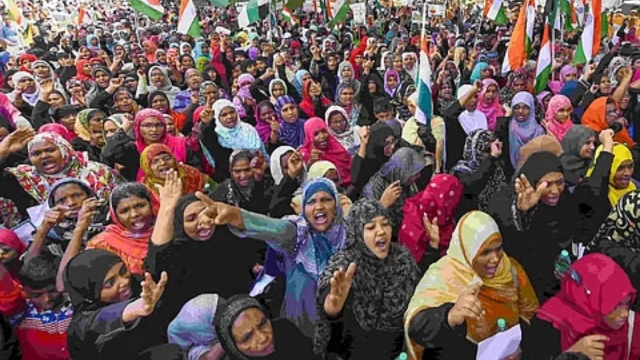
Universities, political parties, left-wing student groups and civil-society networks sustained prolonged sit-ins, including the 101-day occupation at Shaheen Bagh. Legitimate questions about the law’s interaction with a possible nationwide NRC were overtaken by polarising narratives that extended far beyond the statute’s text.
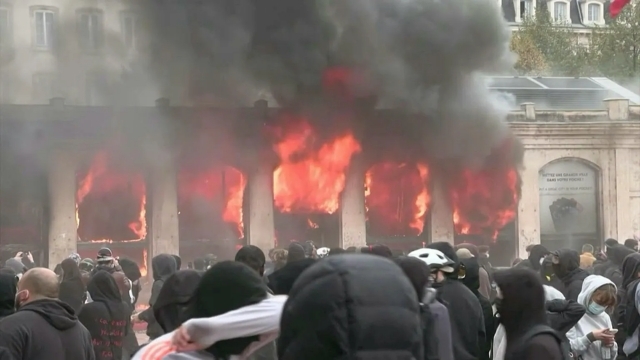
The same questions arise when organised movements convert policy disagreement into permanent confrontation. France provides a recent illustration. On 17 October 2026, demonstrations over education, living costs and public services drew between 5.5 lakh and 8 lakh people nationwide. Many protested peacefully. Fringe elements, however, turned to looting, arson and clashes with police. More than 1,200 arrests were reported and over 150 officers injured.
In Lyon, masked groups set fire to the municipal tourism office at Place Bellecour – an act the local authorities rightly described as exceptionally serious. French Prime Minister Sebastien Lecornu pointed to ultra-left extremists; President Emmanuel Macron condemned the disorder. A demand for better schools does not license the burning of public buildings. Anger over inflation does not justify looting shops or assaulting the forces of order.
Germany’s experience reinforces the point. The federal government’s 2025 domestic intelligence report, released in June 2026, recorded a rise in left-wing extremist violence, including the January 2026 arson attack on Berlin’s electricity infrastructure. Radical-left and autonomous networks have repeatedly used demonstrations and direct-action tactics to challenge institutions. Where evidence shows arson, assault on police or deliberate damage to property, investigation and prosecution must follow – exactly as they should for any other ideological strand.
Closer to home, the recent mobilization involving the Cockroach Janata Party (CJP) illustrates how a specific institutional grievance can expand into a broader campaign. Protests against Chief Election Commissioner ‘Gyanesh Kumar’ and the (SIR) Special Intensive Revision of electoral rolls drew in Left student organizations such as AISA and DYFI. Delhi Police registered multiple FIRs after the 16 October march for violations of prohibitory orders and obstruction of public servants; more than 100 protesters were detained.
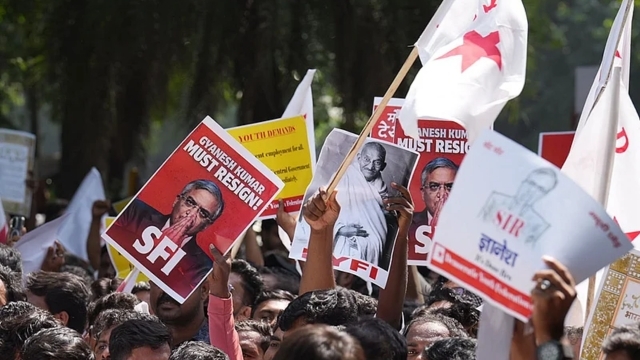
Earlier, CJP leaders faced judicial custody after a Jantar Mantar demonstration that crossed barricades. The participation of organized Left groups alongside opposition parties shows how coalitions form around shared targets even when agendas differ. The legitimate question is whether organisers seek a defined reform or use one dispute to sustain continuous opposition to an elected government.
Violence has accompanied several of these campaigns. Buses were set ablaze near Jamia Millia Islamia in December 2019. The February 2020 northeast Delhi riots claimed lives and caused extensive property damage; investigators coordination by certain individuals. Leaders and organizations that mobilise crowds cannot claim democratic immunity when rhetoric or inaction contributes to disorder. Peaceful dissent is protected. Using democratic freedoms as a shield against scrutiny of unlawful conduct is not.
Modern activism excels at mobilising against what a policy might do before its effects can be measured. Preventive dissent has its place. The problem arises when predictions are sold as certainties, misleading claims circulate unchecked, and positions remain frozen even as facts emerge. The CAA-NRC debate linked two related but distinct issues into a single narrative of existential threat. French unrest showed how genuine economic grievances can provide cover for opportunistic criminals and violent fringes.
Communist parties, left-wing student unions and radical groups have long organised around labour, education and economic questions. Some of those campaigns have forced neglected issues into the open. That history does not place them beyond criticism.
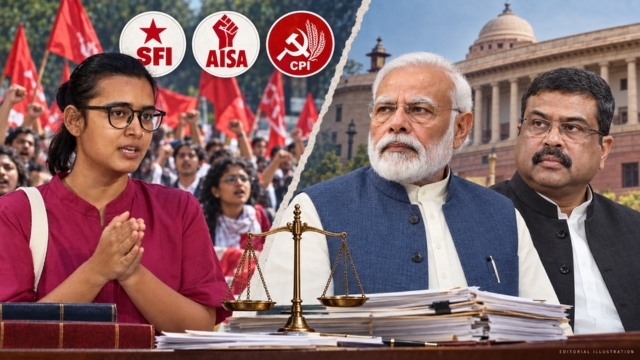
Organizations that routinely accuse the government of authoritarianism must explain their own interpretation of democratic rights when protests obstruct essential services, intimidate opponents or slide into violence. Calling for a demonstration, advocating civil disobedience and encouraging violence are distinct acts with different legal and ethical consequences. Allegations of incitement require evidence, not mere ideological inference.
Written by

Kewali Kabir Jain
Journalism Student, Makhanlal Chaturvedi National University of Journalism and Communication