Chaos and Violence Grip France as Far-Left Mobs Storm City Halls and Torch Streets
Rioters invaded municipal buildings in Marseille and Lille, set fire to Lyon’s tourist office, and looted Paris shops while roughly 550,000 people took to the streets and police recorded about 400 arrests.
Total Views |


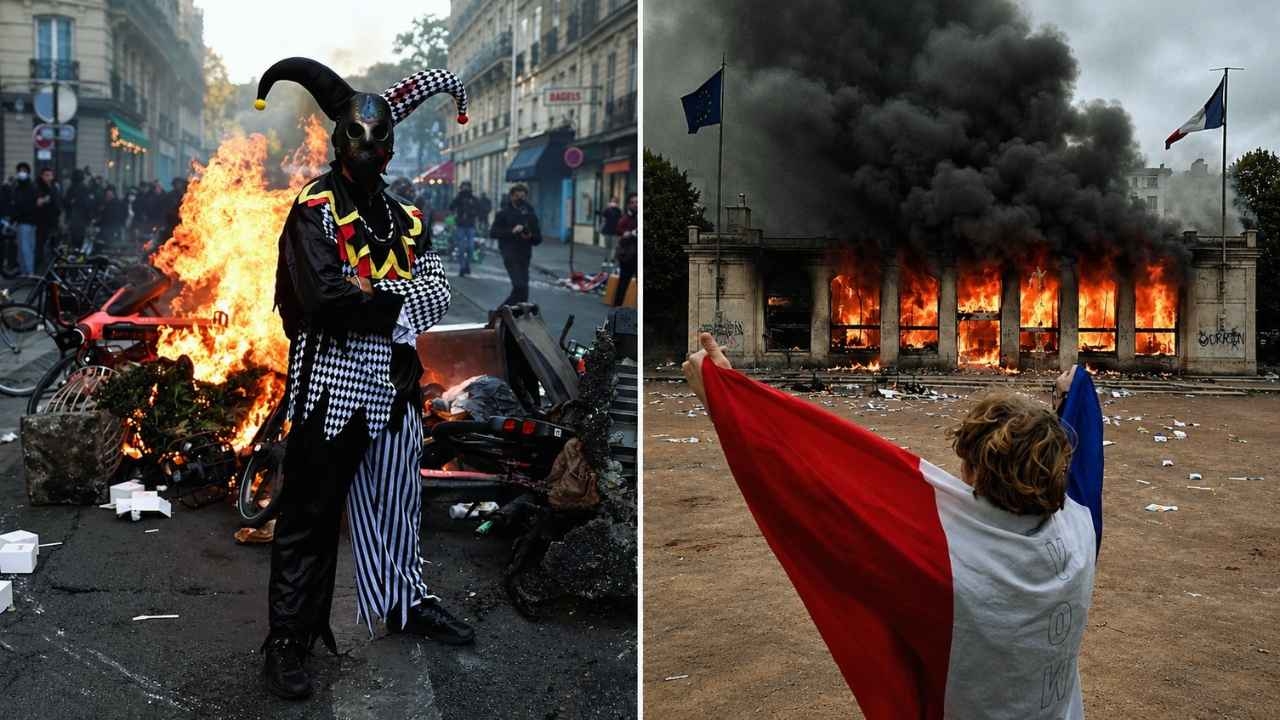
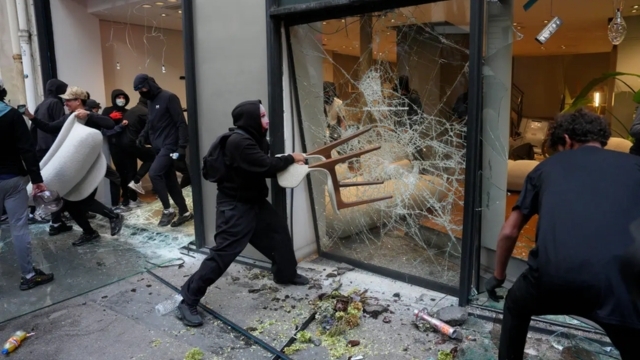
Violence erupted across France on Saturday as far-left militants turned ‘cost-of-living’ demonstrations into ‘attacks’ on police and public property, public buildings, and businesses. What began as protests against rising prices quickly descended into arson, looting, and direct assault on symbols of the state.
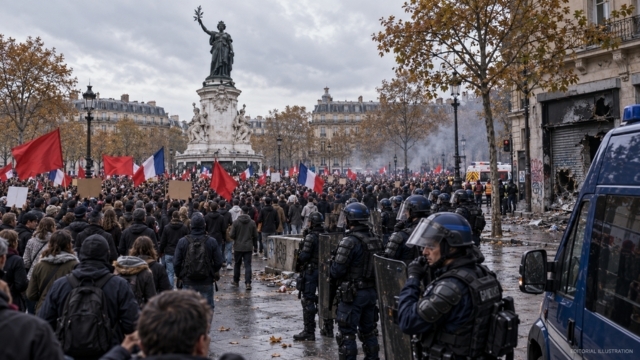
In Paris, black-clad, masked agitators were already hurling stones and fireworks at officers in Place de la République before the main march formally started. By early afternoon a car burned in the square, street furniture and a news kiosk were set alight, and looters smashed into a nearby Monoprix supermarket. Crowds chanted “Everyone hates the police,” “Revolution,” and “We are all anti fascist,” while others targeted President Emmanuel Macron with the explicit threat: “Louis XVI: We beheaded him. Macron: We can do it again!”
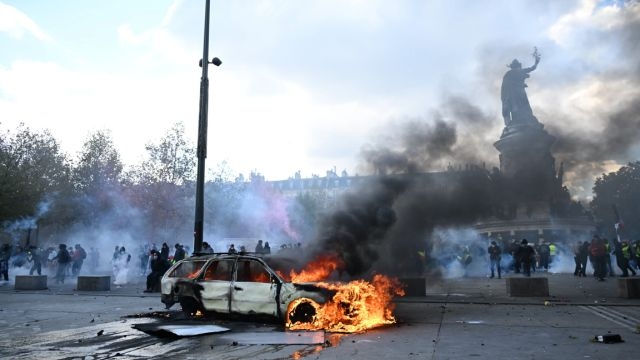
Bands of rioters then peeled away from approved routes and pushed toward Place de la Madeleine, Place Vendôme, and the Champs-Élysées areas where demonstrations had been prohibited. Police blocked one group near the Élysée Palace. On Boulevard Haussmann, looters forced their way into Galeries Lafayette. Tear gas drifted through the Opéra district as shoppers fled and businesses slammed down shutters.
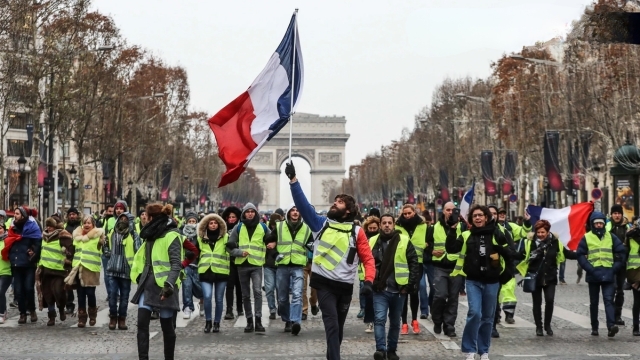
Organizers had tried to market the day as a Yellow Vest revival. Several prominent figures from the 2018 movement rejected that claim. Benjamin Cauchy told Europe 1 that Jean-Luc Mélenchon’s France Unbowed party was using the Yellow Vest label as a Trojan horse. Other veterans described an outright takeover by the far left, from the Communist Party to LFI.
Prime Minister Sébastien Lecornu placed responsibility squarely on radical left networks. “Ultra-left groups organized the violence in several cities,” he posted. He warned those treating the unrest as a rehearsal for the 2027 presidential election that the government would not be intimidated and pledged legislation forcing rioters to pay for the damage they cause. Macron vowed that those who attacked prefectures and looted city halls would be prosecuted and punished.
Interior Ministry figures put nationwide turnout at approximately 550,000 across 110 demonstrations, including 110,000 in Paris. Organizers claimed closer to 800,000. Roughly 400 people were arrested, the great majority adults. At least 60 police and gendarmes were injured, two of them left unconscious. More than 10,000 officers had been deployed in advance. Authorities said they would pursue those responsible for the looting without exception.
The pattern repeated outside the capital. In Marseille, dozens of protesters forced open the doors of city hall overlooking the Old Port, shouting that they were “taking the Bastille.” Earlier they had attacked a municipal police station with smoke bombs. Central shopping streets saw bakeries, jewelry stores, and an Hermès boutique looted. In Lyon, masked rioters fired fireworks at police, then ransacked and set fire to a tourist office annex on Place Bellecour, blocking firefighters from reaching the blaze.
Bordeaux saw attacks on the chamber of commerce and the prefect’s residence, with elite tactical units called in as shops were ransacked. In Lille, protesters smashed through the glass doors of city hall and looted the Apple Store. In Limoges a fire that began during an assault on city hall spread through one wing and reached the roof. Further looting was reported in Nantes, Caen, and Valence.
National Rally leaders backed the police and accused the far left of hijacking legitimate grievances. Marine Le Pen said social discontent had “once again been taken hostage by the far left” and charged LFI lawmakers with trying to “precipitate the country into chaos.” Party president Jordan Bardella described a “convergence of ultra-left terrorism and delinquent populations from the banlieues.”
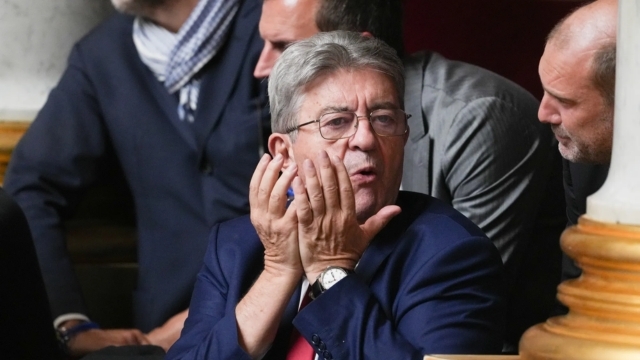
Mélenchon, for his part, blamed police command for allowing the situation to spiral and told his own supporters they had “no business” joining the looting.
Saturday’s event marked a sharp escalation of a protest wave that began nearly a month earlier with school blockades in the Paris suburbs and was rapidly amplified by far-left activists. By mid-October officials had already recorded hundreds of injuries among police, students, and school staff.
The nationwide disorder on October 17 showed how quickly economic discontent can be weaponized by radicals intent on turning streets into battlegrounds ahead of next year’s presidential contest.
Written by

Kewali Kabir Jain
Journalism Student, Makhanlal Chaturvedi National University of Journalism and Communication