Communism: The Ideology That Justifies Evil and Give Its Perpetrator Resolve
Behind the glamour of revolutionary slogans lies a history of Soviet repression. This commentary questions the romanticization of communism and its implications for democracy and freedom
Total Views |


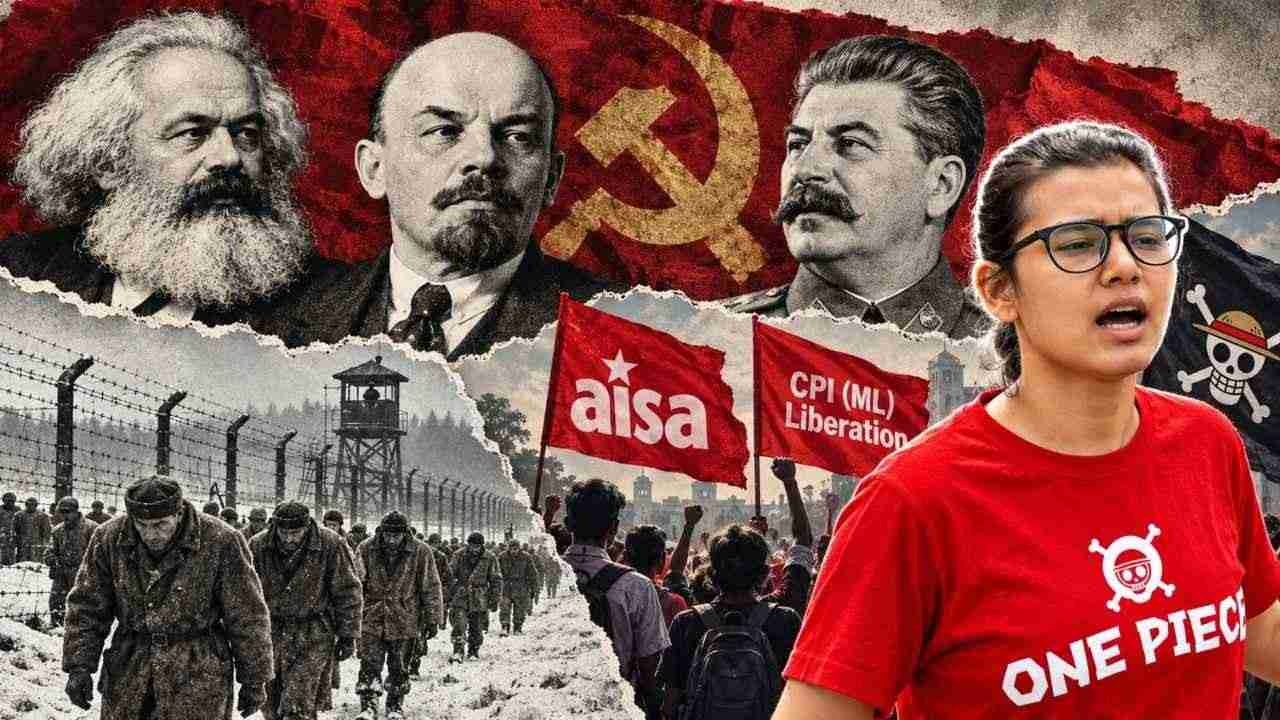
From Lenin’s Soviet Union to today’s revolutionary rhetoric in India, this commentary examines how Marxist ideology justified repression and mass violence, arguing that romanticising revolution obscures its historical consequences for democracy, freedom and future generations.
When the newly minted ‘celebrity’ Neha Bora hoists the pirate flag of a skull wearing a straw hat with two crossed bones on her red T-shirt emblazoned with ‘One piece’, it may become a fashion statement. The Japanese anime has travelled a long way, symbolising the ‘revolution’ in Indonesia, Nepal, Bangladesh and several other countries, overthrowing democratically elected governments and leaving a trail of violence and destruction, unparalleled in recent history.

For genuine concerns and reasons, of course. But, is it the final solution?
Behind the glamour of revolution that Neha Bora and her far-left organization AISA espouse, hides a bloodied history that every Indian should know, even a glimpse of what beholds when the ‘Azadi’ that they seek is achieved! Ask anyone from the red revolutionary flock, what the means are to the end? They have tried their brand of ‘revolution’ in the forests of the erstwhile ‘Red Corridor’, running from Nepal through Bihar, Jharkhand, Chattisgarh, Odisha and Telangana, trying to stop education, hospitals, roads, transport and development coming to these backward areas to help the poor tribals climb the economic ladder. And they failed miserably, after unleashing armed violence and terror for 50 years!
The inspiration for AISA (All India Students Association) affiliated to the CPI (ML) Liberation (Communist Party of India Marxist-Leninist Liberation) are Marx and Lenin, as to any other splinter group of communism.
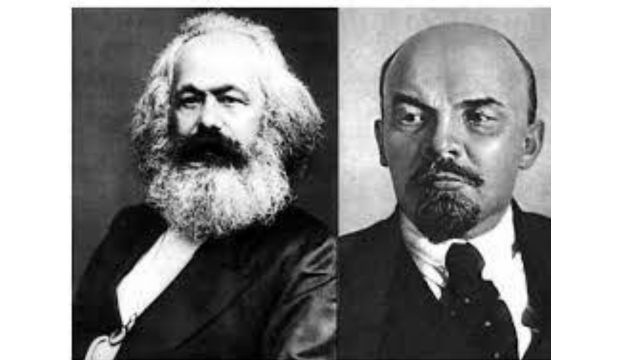
What Lenin had to say about Marxism and what the likes of AISA and CPI (ML) Liberation would like to hide from all of us is this:
“When we are reproached with cruelty, we wonder how people can forget the most elementary Marxism” – Vladimir Lenin.
“How long will you keep killing people?” asked Lady Astor of Stalin in 1931. Replied Stalin, “The process would continue as long as was necessary to establish a communist society”.
Let us know the bloodied history of Vladimir Lenin and the Communist rule of the Soviet Union in brief: Authors of ‘The Black Book of Communism estimate roughly 20 Million deaths during the 74 years dictatorship of Communists in the history of the Soviet Union. Lenin alone might have accounted for 5 Million deaths during his regime.
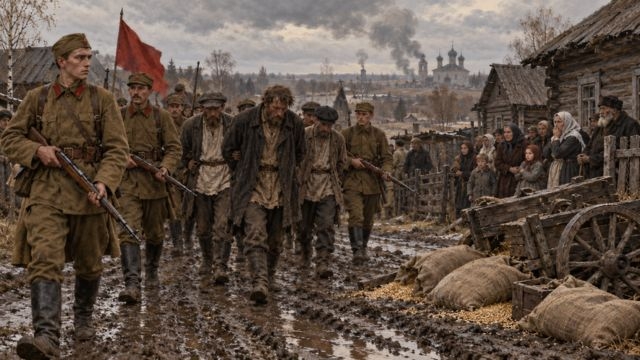
The Red Terror: Execution, deaths in prisons due to starvation and torture and suppression of free voices by the ‘Cheka’ (Bolshevik Secret Police) span from 1Million to 1.3 Million.
The Russian Famine of 1921-22/ The Povolzhye Famine: The man-made famine triggered by Lenin’s economic policies, war-time policies and ‘War Communism’ requisitions ended up in estimated 5 Million deaths.
Crushing civil war and rebellions: Movements for free voice like the Tambov Rebellion were crushed mercilessly under military boots, ending up with a pile of dead numbering in several thousands.
R J Rummel writes in his book ‘Lethal Politics’ as under: roughly 6.19 Million people were murdered by the Communist Party and the Government of the Soviet Union.
In fact, we have witnessed in the Soviet Union a true egalitarian social cleansing and flushing: no group or class escaped. Almost anyone was arrested, interrogated, tortured and after a forced confession, shot or sentenced to the dry guillotine slow death by exposure, malnutrition and overwork in a forced labour camp.
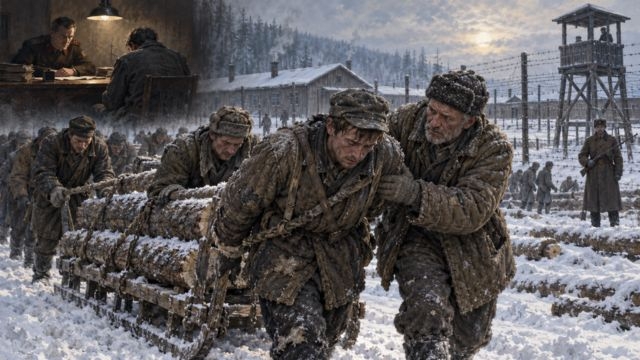
Part of this mass killing was genocide, as in the wholesale murder of hundreds of thousands of Don Cossacks in 1919, the international starving of about 50,00,000 Ukrainian peasants to death in 1932-33 or the deportation to mass death of 50,000 to 60,000 Estonians in 1949. Part was mass murder, as of the wholesale extermination of 65,00,000 ‘Kulaks’ from 1930-37, the execution of perhaps a million party members in the Great Terror of 1937-38 and the massacre of the Trotskyites in the forced labour camps.
And part of the killing was so random and idiosyncratic that journalists and social scientists have no concept of it, as in hundreds of thousands of people being executed according to preset, government quotas, says Vladimir Petrov who defected in 1954. From time to time, these quotas were generally assigned for the numbers to be arrested throughout the Soviet territory. Solzhenitsyn makes these quotas basic to the Great terror of 1936-38.
Where to find the ‘enemies of the people’ to shoot was a particularly acute problem. They had to resort to shooting those arrested for the most minor civil crimes, those previously arrested and released and even mothers and wives of the arrested.
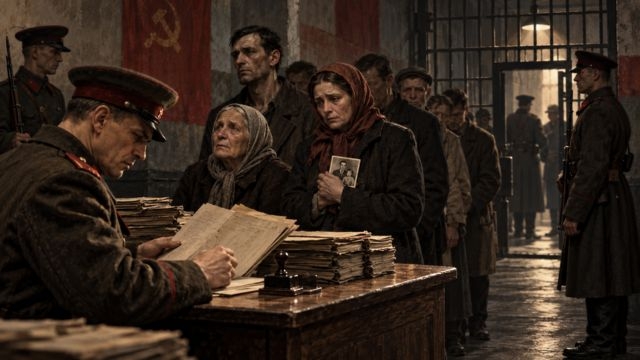
Under Stalin, repression operated through officially sanctioned execution quotas. NKVD Order No. 00447 assigned regional limits for executions and imprisonment, which were subsequently increased. The August 1932 decree also prescribed execution for theft of collective-farm property, commutable under mitigating circumstances to ten years’ imprisonment. However, the specific claim that starving peasants were executed merely for fishing without Party permission remains unverified.
In The Gulag Archipelago, Solzhenitsyn recounts how a factory director received a ten-year sentence on another pretext after becoming the first to stop applauding Stalin – an account that should be explicitly attributed to him.
To understand how such a system of repression emerged, we must return to the Bolshevik seizure of power in November 1917. Lenin led his small Bolshevik Party in a very risky, but successful coup against the democratic socialist government of Aleksandr Kerensky. This was not just a seizure of power and change of leadership, but a revolutionary transformation in the nature and world-view of governance. And the institution of an utterly cold-blooded social engineering view of the State’s power over its people. The history of the Soviet Union since the Bolshevik coup has been a protracted, total, engineering application of State power to demolish and then rebuild all social institutions – to create its model utopia.
The key ideology behind it all is: Marxism. Ideology – that which gives evil-doing its justification and gives the evil-doer the necessary steadfastness and determination. That is the social theory which helps to make deadly acts seem good instead of bad and to receive praise and honours instead of reproaches and curses. That was how the agents of the inquisition fortified their wills, by invoking Christianity; the conquerors of foreign lands by extolling the grandeur of their Motherland; the colonisers, by civilisation; the Nazis, by race; and the Jacobins, by equality, brotherhood and the happiness of the future generations, as Rummel concludes in his book.
Behind the veil of the smiling anime of a skull with a straw hat, lies the lurking danger of a bloodied ideology, scheming to trample democracy, freedom and civilization – that is Communism. We have not talked about Maoism at all, the Chinese variant of Communism, which is much worse and barbaric in the killing fields.
So, those who choose AISA, the Communists, the Naxals of every hue and the dynasts driven crazy by the greed for power, beware – your future generations may inherit, not a Utopian Motherland but a land vivisected and devastated by the most dangerous ideology of Marxism, Leninism and Maoism.
Written by
Sahadev Bharti