Missionary Renewal or Soul Harvesting? Why Tamil Nadu Is Emerging as a Major Centre of Christian Missionary Activity in India
Why does Tamil Nadu matter to Christian missionary networks?
Total Views |


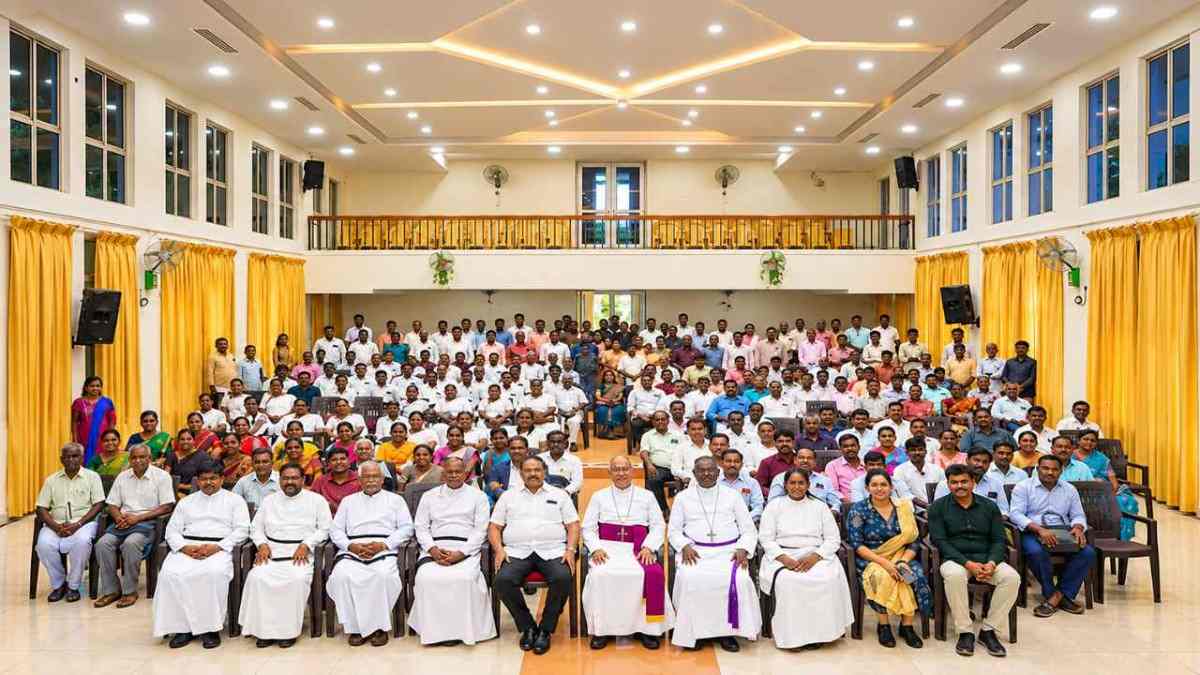
In November 2026, the Church of South India brought about 200 missionaries to Chennai to discuss support for missionaries, outreach to migrants and digital evangelism. The gathering offers a glimpse into Tamil Nadu’s nationwide networks.
The Church of South India's regional mission conference in Chennai raises a larger question about the changing character of Christian missionary activity in India. Behind the language of renewal, solidarity and social service lies a broader institutional question: why is Tamil Nadu becoming such an important centre for organising, sustaining and expanding Christian missionary networks?
Chennai, India: The gathering of approximately 200 missionaries from the Tamil region of the Church of South India (CSI) at the CSI Centre on 3-4 November 2026 may appear to be an ordinary internal church conference. Organised by the CSI Synod's Department of Mission and Evangelism in partnership with the Diocese of Madras, the meeting focused on missionary welfare, institutional support, migrant communities, ethical leadership, digital evangelism and environmental responsibility.
However, the conference deserves attention beyond its official theme of renewal. It reflects a wider transformation in the way Christian missionary institutions organise their activities in India. Rather than concentrating exclusively on conventional preaching and public evangelistic campaigns, contemporary mission structures increasingly discuss institutional sustainability, professional training, healthcare networks, digital communication, community engagement and the welfare of existing missionary personnel. The central question is therefore not simply what happened in Chennai, but what the gathering reveals about the evolving missionary landscape of Tamil Nadu and its relationship with the rest of India.
The changing geography of missionary activity: Why Tamil Nadu?
Tamil Nadu occupies a distinctive position in the history of Christianity in India. Its importance is not merely the presence of established churches but the depth of its missionary infrastructure, theological institutions, educational networks and trained persons .
1. A historical missionary foundation
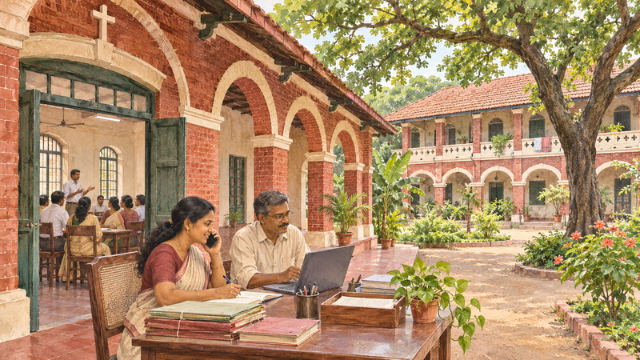
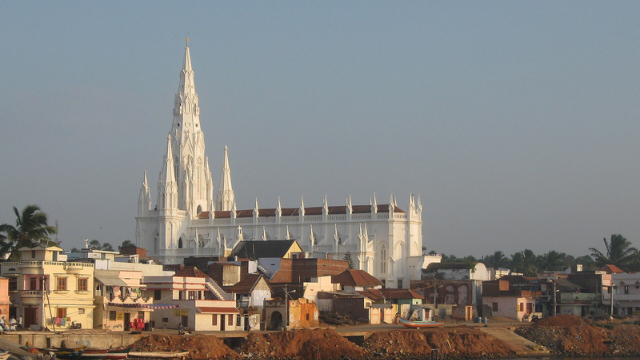
Christian missionary activity in Tamil Nadu has a history extending back several centuries. European missionary societies established churches, schools, printing presses, seminaries, hospitals and charitable institutions in different parts of the former Madras Presidency. The American Arcot Mission, the London Missionary Society, the Church Missionary Society, the Wesleyan Mission and various Catholic missionary organisations helped create a substantial institutional foundation. Vellore, Nagercoil, Tirunelveli, Madurai, Trichy and Chennai became important centres of Christian education, healthcare and religious organisation.
This historical foundation matters today because missionary activity does not begin from zero. Existing institutions provide trained personnel, accommodation, communication networks, administrative experience and connections with communities in other states.
2. Tamil Nadu as a missionary resource and training centre
One important but less discussed aspect of Tamil Nadu's missionary landscape is its role as a source of personnel for Christian outreach beyond the state. Research on Christian ministry among scheduled caste in South India has documented how Tamil Christian networks have contributed to outreach in tribal regions of Bihar, Uttarakhand and Gujarat, including the Dang region. This illustrates an important development: missionary activity is not necessarily restricted to the geographical location where an organisation originated. Tamil Nadu can therefore function as a resource centre from which trained evangelists, pastors, theological workers and mission organisations establish connections with communities elsewhere. The distinction is important. The question is not simply how many missionaries are working in Tamil Nadu, but how many networks based there participate in activities across India's other regions.
3. The demographic and geographical factor
According to the 2011 Census, Tamil Nadu had approximately 44.18 lakh Christians, representing 6.12 per cent of its population. The Christian population was not evenly distributed. Certain districts have historically had much higher Christian concentrations, particularly in Kanniyakumari, Thoothukudi, Tirunelveli, The Nilgiris & Chennai and its surrounding districts.
Kanniyakumari, in particular, has a substantial historic Christian presence. These geographical concentrations have helped sustain established church institutions, local leadership structures and intergenerational religious communities. However, demographic concentration should not be confused with evidence of recent conversion. The 2011 Census describes religious affiliation, not the number of conversions or the scale of present-day missionary campaigns.
4. From traditional evangelism to institutional mission
The Chennai conference offers an interesting illustration of how missionary organisations are redefining their priorities. The programme included missionary healthcare, family welfare, migrant ministry, displaced communities, digital communication, leadership accountability and environmental protection. These are not necessarily separate from evangelism. They can also become part of a wider understanding of mission in which religious institutions combine spiritual outreach with social engagement.
The digital dimension deserves particular attention. Digital platforms allow religious organisations to distribute sermons, Bible-study material, testimonies, theological courses and evangelistic content across geographical boundaries. A missionary organisation no longer needs a large physical presence in every location to maintain contact with potential audiences. The conference's session on the new frontier of mission is therefore significant. It reflects the recognition that communication technology has changed the possibilities of religious outreach. But it also raises questions about transparency: Are communities informed when social programmes are connected to evangelistic objectives? Are religious and welfare activities clearly distinguished? Is participation genuinely voluntary? These are legitimate questions for any religious organisation, irrespective of its denomination.
5. The question of soul harvesting: Social service or religious expansion?
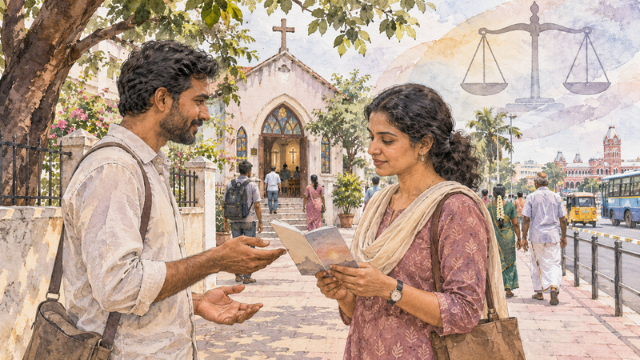
The expression soul harvesting is often used critically to describe organised efforts to bring people from other religious backgrounds into Christianity. Within evangelical theology, the language of winning souls, making disciples and spreading the Gospel has a long history. There is nothing inherently unlawful about preaching Christianity, distributing religious literature, establishing churches or inviting people to embrace a faith. Article 25 of the Indian Constitution protects freedom of conscience and the right to profess, practise and propagate religion, subject to constitutional limitations.
However, the ethical boundary becomes important when religious outreach involves vulnerable populations. If healthcare, education, financial assistance, employment opportunities or disaster relief are made conditional upon religious participation or conversion, serious questions of consent, exploitation and institutional accountability arise. There is an important distinction between providing humanitarian assistance to everyone, irrespective of religion, and using a person's economic or social vulnerability as an opportunity to secure religious allegiance.
The Chennai conference discussed solidarity with vulnerable communities. That commitment deserves to be assessed through transparent institutional practices rather than simply accepting or rejecting its religious objectives. A church that genuinely serves vulnerable people should be willing to demonstrate that its assistance is not conditional on conversion.
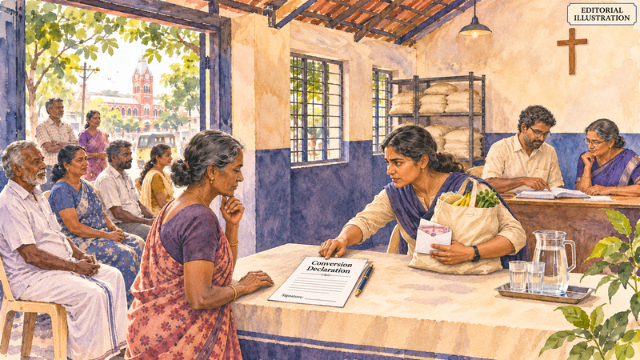
6. Why is Tamil Nadu important to missionary expansion beyond South India?
There are several structural reasons for Tamil Nadu's continuing importance.
First, institutional continuity: Generations of missionary activity have produced established churches, seminaries, schools, hospitals and administrative structures.
Second, human resources: The state has a substantial pool of pastors, theological educators, evangelists and experienced church workers.
Third, inter-state connections: Tamil Christian organizations have historically participated in outreach beyond Tamil-speaking regions. Research on Dalit and tribal ministry documents connections with communities in Gujarat and other parts of India.
Fourth, urban communication networks: Chennai and other urban centres offer access to publishing, media, education, transport and digital communication.
Fifth, organisational diversity: The missionary landscape is not limited to the CSI. Catholic institutions, historic Protestant denominations, Pentecostal churches, independent evangelical organizations and other Christian ministries operate through different structures and theological approaches.
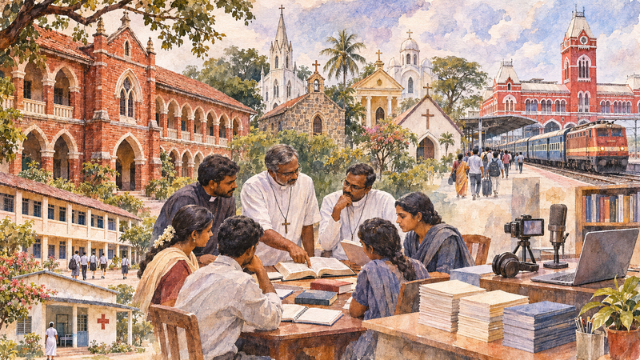
This diversity makes Tamil Nadu an important centre of Christian institutional activity. However, there is insufficient comparative evidence to establish that it is currently India's most active state for missionary expansion. That claim would require systematic information on missionary personnel, organizational expenditure, new congregations, outreach programmes and documented conversions across states.
7. The uncomfortable question: Who defines the success of a mission?
The most revealing aspect of the Chennai conference is perhaps what it did not publicly emphasise. The conference account highlighted missionary welfare, healthcare, institutional solidarity, digital opportunities and ecological responsibility. It did not provide figures on new congregations, conversions, evangelistic targets, mission expenditure or the geographical expansion of missionary networks. This does not establish that such activities are absent. It means that the public account does not provide sufficient information to assess them.
If the objective is missionary renewal, what does renewal actually mean? Does it mean better healthcare and protection for existing missionaries? Does it mean strengthening churches that already exist? Does it mean reaching communities that have never encountered Christianity? Does it mean increasing the number of converts? Answer is, These are different objectives, although they can coexist within a missionary organisation.
The CSI should be encouraged to publish transparent information about its mission programmes, funding, institutional partnerships, outreach priorities and safeguarding mechanisms. Such transparency would help distinguish genuine humanitarian engagement from religious activities that might exploit vulnerable populations. There is also a question of accountability towards the communities in which missionaries work. Indigenous traditions, local cultural practices and religious identities deserve respect. Development and humanitarian assistance should strengthen people's dignity and freedom rather than create dependency.
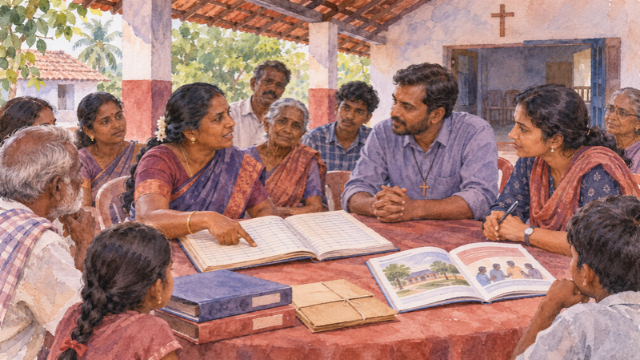
8. Missionary activity and India's religious pluralism
India’s religious diversity has taken shape over generations through the interaction of philosophical traditions, local customs and community identities. In Tamil Nadu, Christian missionary organisations have historically worked in education, healthcare, literature and social welfare. Their historical record and present-day conduct each deserve scrutiny on the evidence. Christian organisations should meet the same standards of transparency, accountability and legal compliance as any other religious institution.
The same standards must apply to every religious institution: transparency in funding, voluntary religious participation, protection of children, respect for local cultures and unconditional humanitarian assistance. Neither unrestricted suspicion of Christian institutions nor unquestioning acceptance of missionary claims serves the public interest.
At end, a conference about renewal, but a larger debate about religious expansion
The November 2026 Church of South India (CSI) conference in Chennai illustrates how Christian missionary organisations in India are broadening their agenda. Mission discussions now encompass healthcare, migration, social solidarity, environmental responsibility, digital communication and welfare programmes. Tamil Nadu’s long-established missionary infrastructure, Christian communities, theological institutions and interstate networks make it a key centre for this shift. The broader agenda raises questions about how these activities are funded, governed and linked to religious outreach.
Written by
Rupkunvar Ghelot