New Age Joshua in Bihar: Christian Missionaries Turn to Artificial Intelligence for Digital Evangelization
Catholic Church representatives in Bihar recently completed a two day hands on workshop to master digital evangelization and religious communication
Total Views |


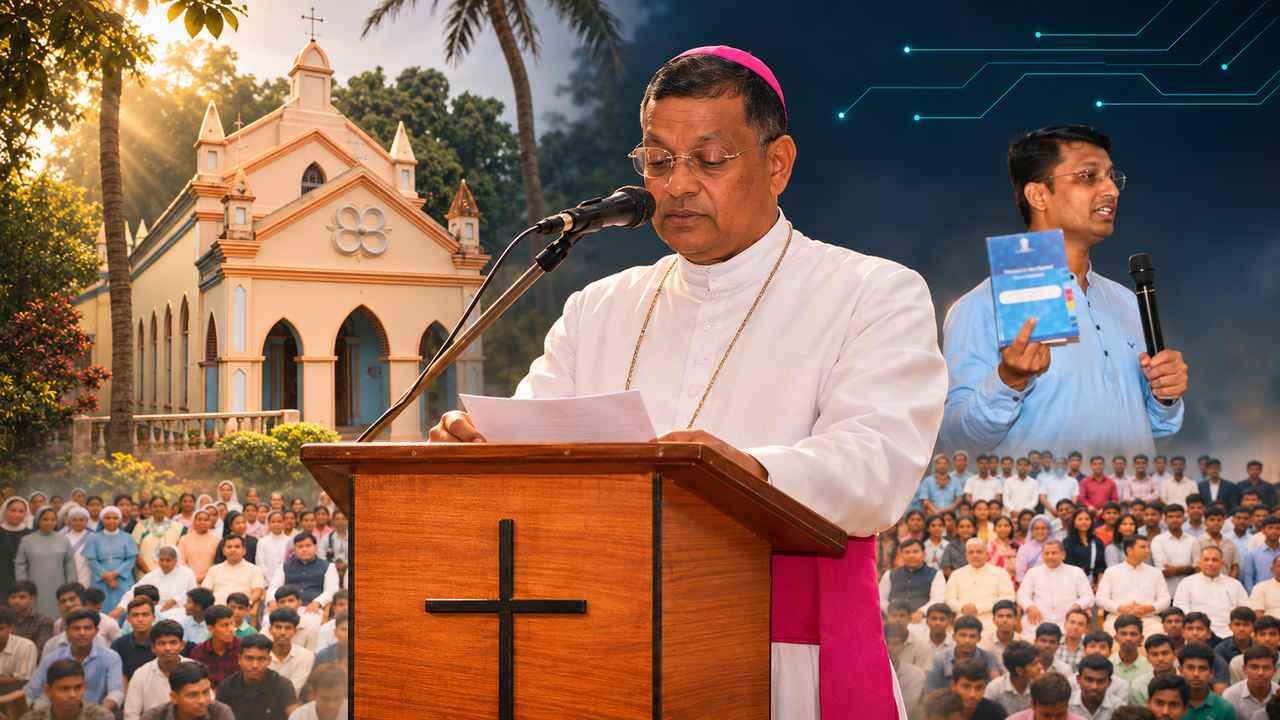
From traditional missionary outreach to AI-powered religious communication, the Church is preparing for a new digital mission strategy. Is India ready for the emerging intersection of technology, religion and cultural influence? A new chapter in Christian missionary outreach appears to be unfolding in India. This time, the mission field is not limited to villages, churches, schools or remote tribal settlements. It is expanding into smartphones, social media platforms, artificial intelligence and the digital communication networks that increasingly influence everyday life.
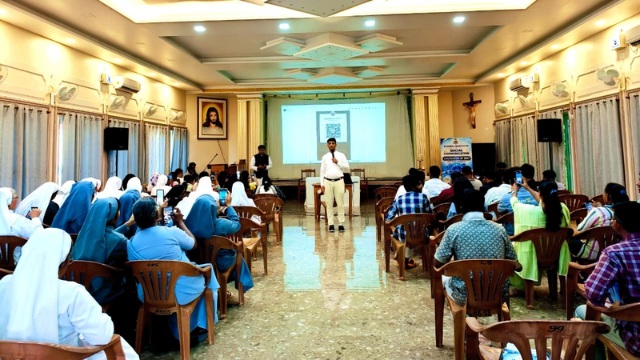
On November 11, 2026, titled “Bihar Church Communicators Explore AI for Digital Evangelization,” reveals how Catholic Church representatives from across Bihar are receiving specialised training in artificial intelligence to strengthen their digital evangelization activities. The two-day regional seminar, titled “ChurchCom AI 2027 – AI for Mission: Transforming Church Communication in the Digital Age,” was organised by the Diocese of Bhagalpur on November 10 and 11 at the R.C. Bishop’s House.
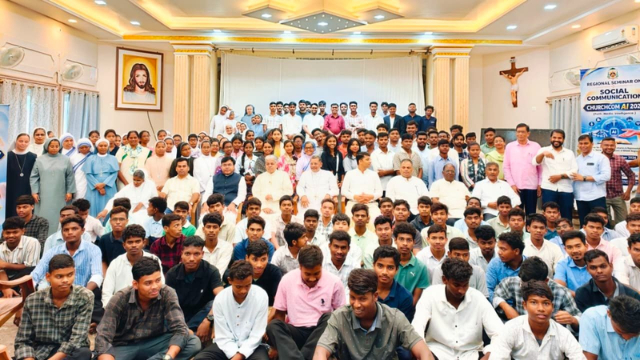
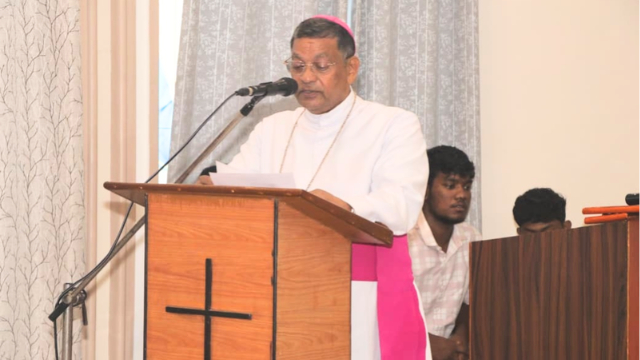
The programme brought together diocesan communication representatives, youth leaders, religious sisters and seminarians. Bishop Kurian Valiakandathil, Chairman of the Media Commission of the Bihar Regional Bishops' Council, inaugurated the seminar.
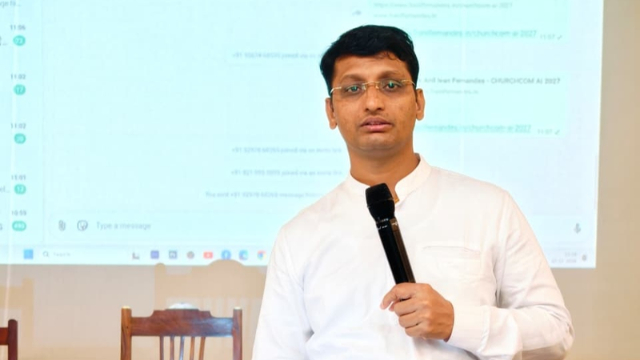
The training was conducted by Fr Anil Ivan Fernandes, Director of the Canara Communication Centre of the Diocese of Mangalore and a Google-certified AI coach. Participants were introduced to artificial intelligence platforms including ChatGPT, Google Gemini and Canva, with practical demonstrations of AI-powered content creation and digital evangelisation. The seminar concluded with participants preparing action plans to incorporate artificial intelligence into their respective communication ministries. This development deserves wider public attention because it indicates that sections of the institutional Church are moving beyond conventional missionary communication towards organised, technology-assisted religious outreach.
The New Age Joshua: From Physical Mission Fields to Digital Territories

The biblical figure Joshua is remembered for leading the Israelites into new territories. In the contemporary missionary context, the idea of entering new territories has acquired a different dimension. Digital platforms have become another space in which religious organizations seek visibility, communication and influence. The emerging concept of AI-powered evangelisation raises an important question: Are missionary organizations preparing for a new generation of digital missionaries who can communicate religious messages across geographical, linguistic and cultural boundaries?
Artificial intelligence makes this possibility considerably easier.
A single communication team can potentially generate religious articles, Bible explanations, devotional messages, videos, posters, social media campaigns and translated content in multiple languages. Material that previously required separate writers, translators, designers and communication teams can now be produced with the assistance of AI tools.
The reach of such communication can extend far beyond the geographical boundaries of an individual diocese. This is why the Bhagalpur seminar should not be dismissed as merely another technology workshop. It represents an institutional effort to integrate emerging technologies into the Church's communication and evangelization activities.
Local Languages: The Next Frontier of Digital Evangelisation?
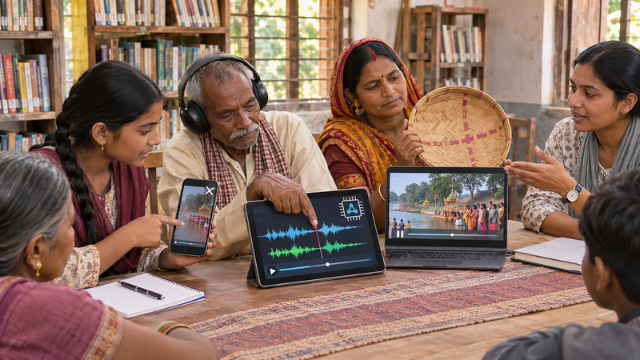
India's linguistic diversity presents both an opportunity and a challenge for digital communication. Bhojpuri, Magahi, Maithili, Angika, Santhali, Hindi and numerous other regional languages connect communities that are often underserved by mainstream digital content.
AI translation and voice-generation technologies can make communication in these languages faster and less expensive. Religious organisations can potentially use these tools to produce local-language Bible explanations, prayer material, religious videos, educational content and social media messages. However, an important distinction must be maintained: the Bhagalpur seminar report does not establish that the Church has conducted systematic research into every local language or community activity. Nevertheless, the use of AI for multilingual communication creates a legitimate public-interest question about how local-language content is developed, targeted and distributed.
Who decides which messages are translated? Who identifies the intended audiences? How are local customs, festivals, traditional knowledge and indigenous cultural practices represented in the resulting content?

These questions become especially important when digital communication reaches rural and tribal communities with distinct linguistic and cultural identities. Local languages are not simply communication channels. They carry collective memory, cultural heritage, traditional knowledge and community identity. Their use in religious communication should therefore be accompanied by transparency and respect for cultural autonomy.
AI: A Powerful Instrument for Religious Persuasion
Artificial intelligence is not inherently religious or political. It is a technology that can be used for education, healthcare, agriculture, scientific research, public awareness and communication. But its ability to personalise messages, translate information, generate persuasive narratives and produce attractive multimedia content also makes it a powerful instrument for religious communication.
The Question of Tribal and Indigenous Cultural Identity
Bihar has communities with rich indigenous traditions, oral histories, local languages, festivals and systems of traditional knowledge. These cultural identities deserve protection and recognition. The expansion of digital religious communication into culturally diverse regions raises questions that should concern educators, parents, community leaders and policymakers.
Are AI-generated religious materials clearly identified? Are translations checked by competent local-language speakers? Are indigenous traditions represented accurately? Are young audiences being encouraged to critically evaluate digital religious content? Are community members aware of the objectives behind organised communication campaigns?
No religious organisation should be presumed to be violating cultural rights simply because it uses modern technology. However, neither should religious communication strategies be exempt from public scrutiny. The same standards of transparency, informed choice and cultural sensitivity should apply to every religious institution.
Children and Young People: The Most Important Digital Audience
One of the most significant concerns surrounding AI-assisted religious communication is its potential reach among children and young people. Today's younger generation increasingly receives information through Instagram, YouTube, WhatsApp, short-form videos and AI-assisted applications.
Religious messages presented through animation, music, storytelling, attractive graphics and interactive digital experiences can become part of everyday online engagement. Parents and educational institutions should therefore encourage digital literacy, helping young people distinguish between educational information, religious expression, advertising and persuasive communication. The objective should not be to prevent children from encountering different religious perspectives. It should be to ensure that they develop independent thinking, understand the diversity of India's cultural traditions and can make informed choices.
Who Controls the Data and Digital Narrative?

The most important issue may not be artificial intelligence itself, but the data and communication infrastructure surrounding it. AI-based communication can involve audience analytics, engagement measurements, content preferences and information about how people interact with digital material. This raises questions about data protection and accountability.
What information is collected during digital outreach? Are individuals informed about its use? Are personal details shared with third-party platforms? How are minors protected? Who is responsible if AI-generated religious information contains misleading claims?
Religious institutions, like other organisations, must respect applicable data-protection laws and responsible digital practices. India needs a broader public discussion about the use of AI in religious communication, particularly when communication involves children, vulnerable populations and culturally distinct communities. The Church has every right to use modern technology for religious communication. At the same time, citizens have every right to examine the objectives, methods and consequences of organised religious outreach.
India's Digital Future Needs Cultural Awareness
The Bhagalpur initiative may be an early indication of how religious institutions are preparing to use artificial intelligence more systematically. The development should encourage Indian universities, technology experts, sociologists, linguists, educators and policymakers to examine the broader implications of AI-assisted religious communication.

India's response should not be based on fear of any particular religion or an attempt to restrict constitutionally protected religious freedom. It should be based on informed public debate, digital literacy, cultural preservation and equal accountability for all institutions. The new missionary frontier may be digital, but India's cultural identity cannot be treated as an unexamined digital target.
The arrival of AI in religious communication makes one thing clear: the future of evangelisation, like the future of every form of mass communication, will increasingly involve technology. Be aware. Be informed. Be digitally literate. Protect cultural diversity and never surrender independent thinking to an algorithm.
Written by
Rupkunvar Ghelot