NYT Columnist’s Familiar Script: Criticising Modi, Elevating Congress, Moderating Rahul Gandhi
From repeated charges of authoritarianism to moderating Rahul Gandhi at Columbia the New York Times columnist’s record raises sharp questions about editorial distance
Total Views |


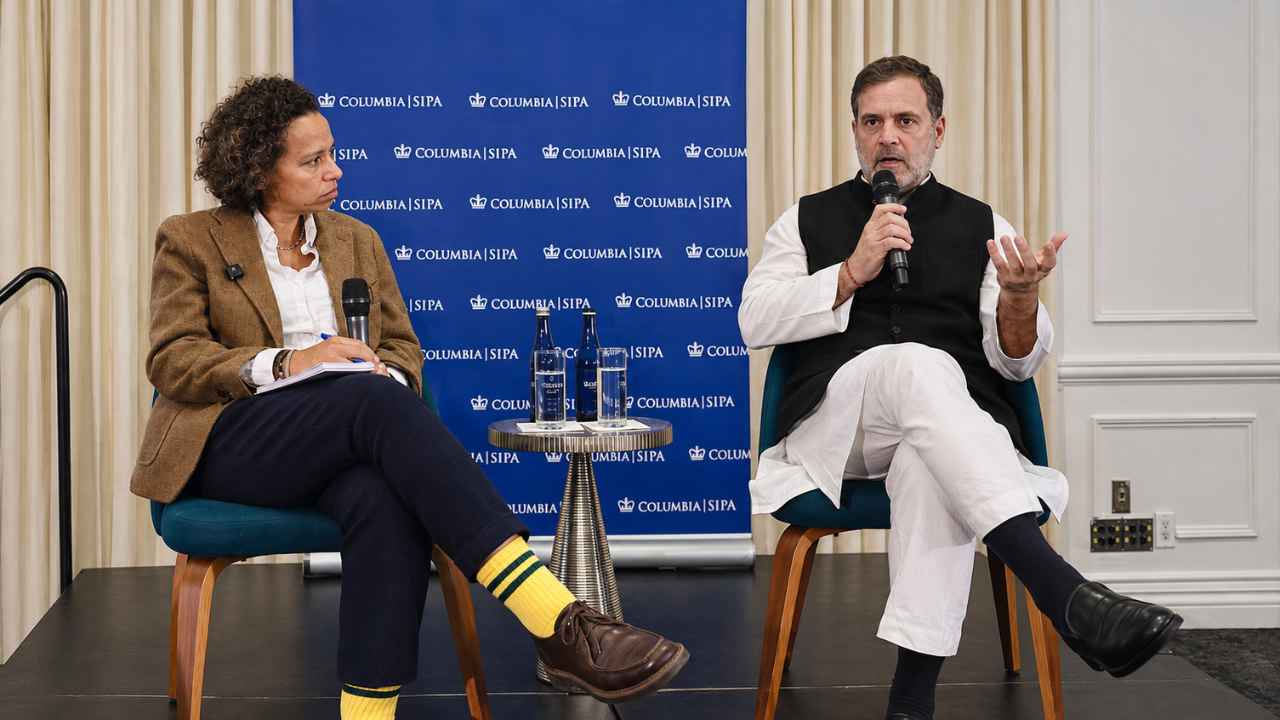
On 17 November 2026, New York Times opinion columnist Lydia Polgreen moderated a discussion with Rahul Gandhi, the Leader of the Opposition in the Lok Sabha, at Columbia University’s School of International and Public Affairs. They discussed why young people in India are protesting, what those protests say about Indian democracy and how the Opposition is responding. The conversation also invites a closer look at how Polgreen has written about the Modi government and Rahul Gandhi over the years.
Lydia Polgreen’s latest appearance at Columbia University has once again highlighted a pattern long visible in sections of Western commentary on India. On 17 November 2026, the New York Times opinion columnist moderated a conversation with Congress leader and Leader of Opposition Rahul Gandhi at the university’s School of International and Public Affairs. The discussion focused on youth protests, the state of democracy and the Opposition’s role. For many observers of India’s political discourse, the choice of moderator was neither accidental nor neutral.
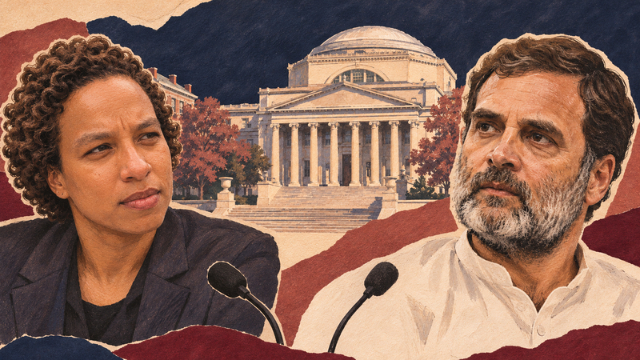
Polgreen is not a distant observer. She first arrived in New Delhi in 2009 as a New York Times foreign correspondent during the UPA years. She later served as editor-in-chief of HuffPost and held a senior role at Spotify’s Gimlet studio before returning to the Times as an opinion columnist writing on democracy, human rights and international affairs. Her published views on India have remained remarkably consistent.
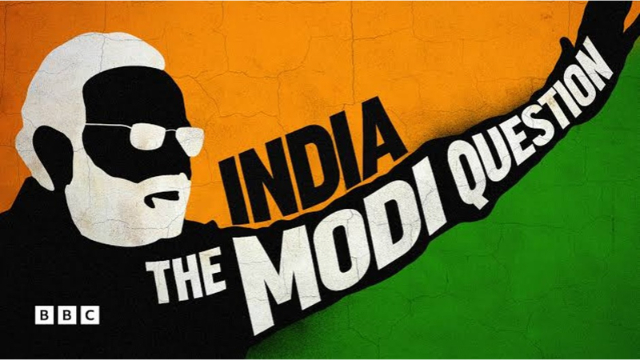
In February 2023 she examined the controversy around the BBC documentary India: The Modi Question. Despite the Supreme Court having upheld investigative findings that found no prosecutable evidence against Narendra Modi in connection with the 2002 Gujarat riots, Polgreen framed the government’s response to the film as part of a wider assault on free speech. She portrayed the rise of Hindu political assertion as a departure from Nehru’s secular vision and suggested India was becoming less free and less tolerant. The electoral mandate repeatedly delivered by Indian voters received far less weight in that framing.
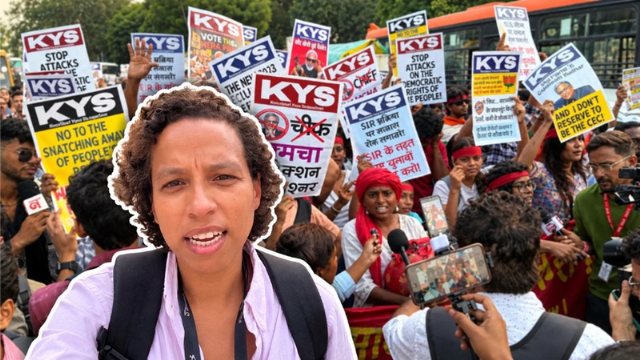
Her October 2026 column, written after a short visit to Delhi, followed the same template. Student protests were presented as evidence that Modi’s political dominance was cracking. She described the Prime Minister as a “barrel-chested strongman” finally challenged by a young protester. Familiar grievances, unemployment, inflation, examination irregularities and questions over electoral rolls were elevated into signs of deeper political upheaval. The same piece suggested the protests had helped Rahul Gandhi shed the image of a dynastic heir. That a week-long observation of limited demonstrations could yield such sweeping conclusions about a nation of 1.4 billion people raised obvious questions about method and intent.
The Columbia event brought the circle full. Gandhi used the platform to allege an “economic disaster,” massive unemployment, systemic failures in education, and large-scale deletion of voters from electoral rolls. He repeated claims of “vote chori” and warned of possible state violence if political pressure grew. These assertions were offered without independent verification during the conversation. The BJP responded by accusing Gandhi of carrying an anti-India narrative abroad. What drew equal attention was the moderator’s own record. A journalist who has repeatedly described the Modi government through the language of authoritarianism and democratic decline was now facilitating a conversation with the principal Opposition figure whose political interests align with that narrative.
Opinion columnists are entitled to strong views. Publications are free to criticise elected governments. The difficulty arises when commentary is presented as an authoritative assessment of a complex democracy while consistently advancing one side of a domestic political contest. Protests and legitimate grievances deserve scrutiny. So do the electoral preferences of the large majority that has repeatedly returned the BJP to power, the institutional findings of India’s courts, and the actual scale of movements that foreign visitors sometimes inflate into national transformations.
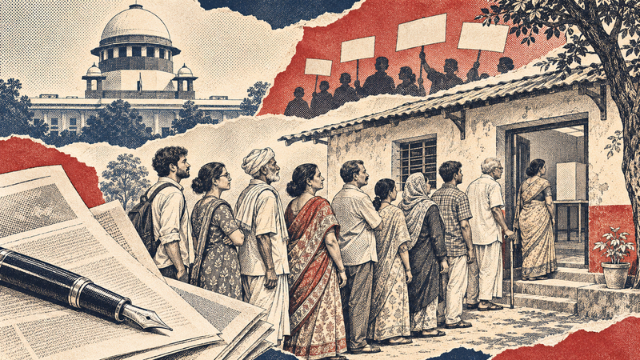
Polgreen’s body of work fits a broader tendency visible in parts of the international liberal media: the BJP’s electoral success and the assertion of India’s civilizational identity are routinely interpreted through the prism of majoritarianism, while Congress leaders are more readily cast as democratic resistors. Context, proportionality and the agency of Indian voters often receive secondary treatment.
Ultimately, India’s political future will be decided by its own citizens at the ballot box, not by the impressions of visiting columnists or carefully framed conversations in foreign universities. Readers of international commentary would do well to keep that distinction clearly in view.
Written by
Kewali Kabir Jain
Journalism Student, Makhanlal Chaturvedi National Journalism and Communication University