Stree Shakti: An Indian Perspective on Womanhood, Feminism and the Power of Shakti
Rani Lakshmibai’s courage offers a starting point for exploring Stree Shakti, the history of feminism and India’s own understanding of women’s equality and leadership.
Total Views |


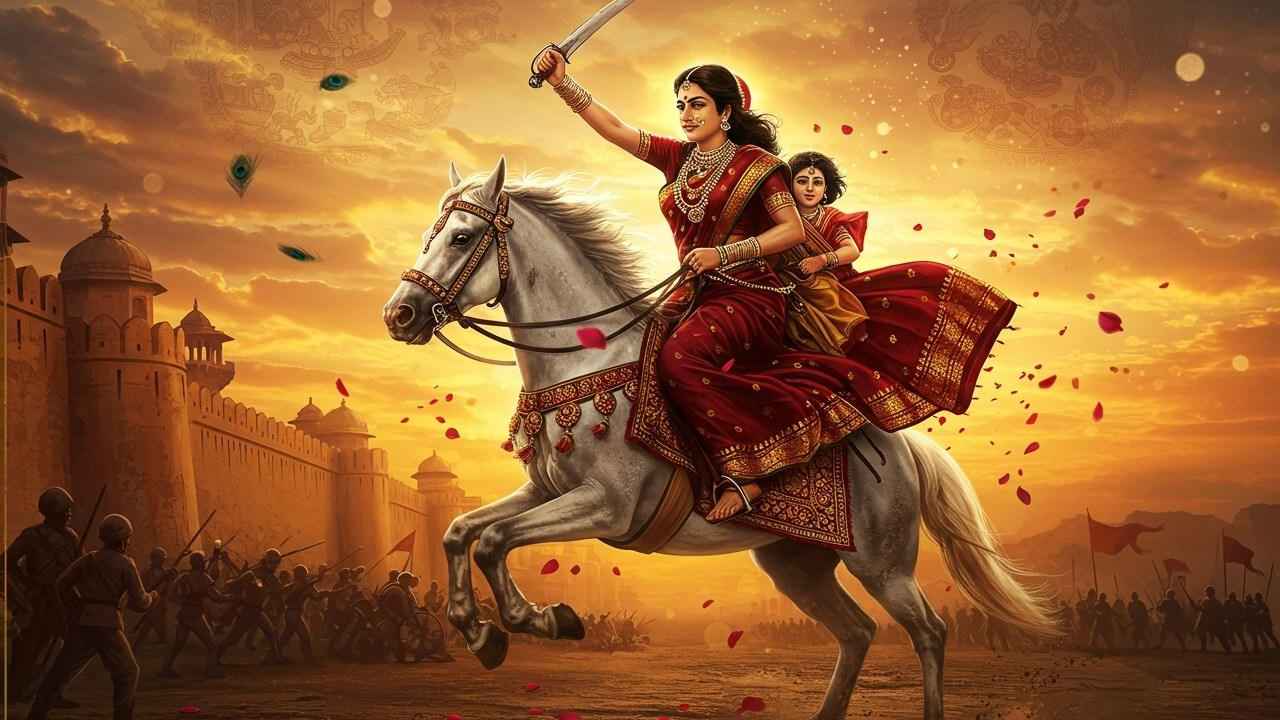
The birth anniversary of Rani Lakshmibai, the legendary Queen of Jhansi, is an occasion to remember not merely a historical personality but the courage, dignity, leadership and indomitable spirit of Indian womanhood. Celebrated as Stree Shakti Diwas, this day invites us to revisit an important question: How should we understand the position of women in society, and is feminism the only framework through which women's empowerment can be understood?
Different civilisations have understood the relationship between man and woman through different philosophical, religious and cultural frameworks. Therefore, understanding feminism requires examining not only the Western historical experience but also India's own civilisational understanding of womanhood.
The Philosophical Understanding of Man and Woman:
Civilisational Perspectives
The creation narratives of different religious traditions offer interesting insights into how the relationship between man and woman has been interpreted.
In the Biblical creation narrative, Eve is created from one of Adam's ribs to be his companion because he was bored.The narrative describes her creation in relation to Adam, as his companion. A popular Christian interpretation of this story suggests that woman was created neither from man's head to dominate him nor from his feet to be trampled upon, but from his rib near his heart to be loved.
According to Manusmriti, Chapter 1, Verse 32:
"द्विधा कृत्वात्मनो देहमर्धेन पुरुषोऽभवत्। अर्धेन नारी तस्यां स विराजमसृजत् प्रभुः॥"
The verse describes the Creator dividing his own body into two halves, becoming male through one half and female through the other, and creating Viraj through her. This creation narrative presents masculine and feminine principles as emerging from the same divine source.
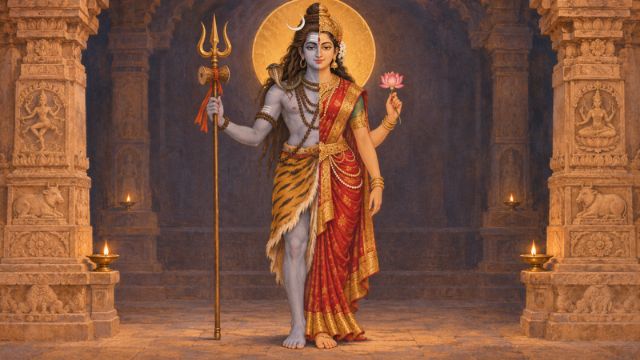
The philosophical idea is further reflected in the concept of Ardhanarishvara, the composite form of Lord Shiva and Goddess Shakti. It symbolises the inseparable and complementary nature of masculine and feminine energies.
Similarly, the traditional account of Svayambhuva Manu and Shatarupa presents the masculine and feminine principles as integral to the process of creation.
The broader philosophical message is significant: woman is not an incomplete creation of man; both represent different manifestations of the same cosmic existence.
Shakti: The Indian Understanding of Feminine Power
In Indian civilisation, the feminine principle is not merely associated with biological womanhood but with the fundamental energy of existence. Shakti represents the power through which creation, preservation and transformation become possible. India worships the feminine in numerous manifestations: Saraswati represents knowledge and wisdom, lakshmi represents prosperity and abundance, durga represents courage and protection, kali represents the power to destroy evil, parvati represents strength, devotion and companionship. The worship of Shakti establishes an important philosophical foundation for understanding feminine power. The Indian tradition has also respected women who transcended conventional social boundaries in their pursuit of spiritual knowledge.
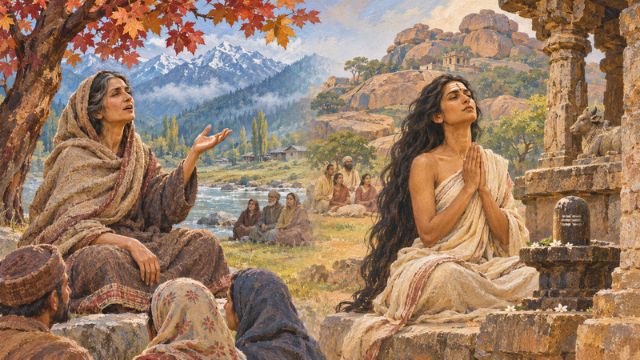
Lalleshwari, Akka Mahadevi and other women mystics pursued Bhakti and spiritual realisation beyond the limitations imposed by conventional social expectations. Their lives remind us that spiritual dignity and intellectual freedom are not determined by external appearance or social status.
Thus, Indian philosophical thought provides a framework in which womanhood can be understood through knowledge, courage, devotion, independence and spiritual strength.
The Emergence of the Feminist Movement
Feminism is a movement aimed at challenging the social, legal and political conditions that place women in an inferior or subordinate position and seeking equality between men and women.
“नारियों के आँसू” can be used as an expression or symbol of the historical suffering and struggles of women that gave rise to feminist consciousness. First Wave of Feminism (19th Century to Early 20th Century)
Period: Approximately 1848 to the 1920s.
The First Wave primarily emerged in Western countries, particularly the United States and Europe. Women began questioning their position in the existing social order (समाज की व्यवस्था) and challenging laws and customs that denied them equal rights.
Seneca Falls Convention, 1848
The Women's Rights Convention at Seneca Falls, New York, in 1848, is generally regarded as a landmark event in the history of the First Wave of Feminism. The major demands included – Right to vote (women's suffrage), right to own and control property, right to enter into and sign contracts, right to education, access to higher education, legal recognition of women as independent persons rather than merely dependants of their husbands.
What Was Happening in Bharat During the First Wave?
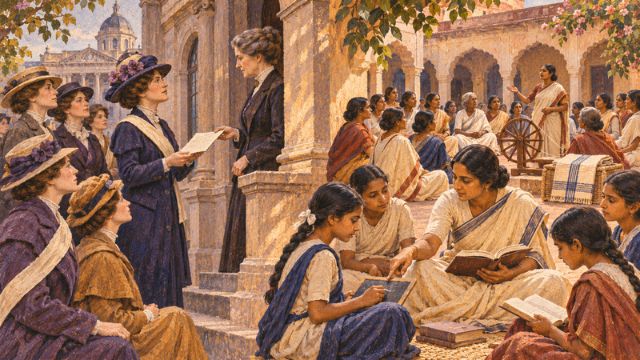
While the First Wave of Feminism in the West (roughly 1848–1920s) was largely centred on women's legal and political rights – especially suffrage, property, education and legal personality – Indian women were also breaking social barriers, but their participation was closely connected with social reform, education and the freedom movement. Rani Lakshmibai of Jhansi became a major symbol of women's participation in armed resistance during the Revolt of 1857, leading her forces against the British. Anandibai Joshi challenged the prevailing restrictions on women's higher education. She graduated with an MD from the Woman's Medical College of Pennsylvania in 1886, becoming one of the first Indian women to obtain a Western medical degree. Annie Besant became the first woman President of the Indian National Congress at its Calcutta Session in 1917. (Indian National Congress)
The Important Contrast
You can say- "Thus, while Western First-Wave Feminism was primarily articulated as a struggle for women's individual legal and political rights, Indian women of the same period were not merely demanding rights from society; many were also participating directly in the larger struggle for social reform, education and national freedom."
Feminist icon ‘Gloria Steinem’ once said, "India probably made me a feminist. She explained: "Yes, probably. I didn't know what feminism was, but Indian women had been such a huge part of the independence movement. I had not seen that in my own country."
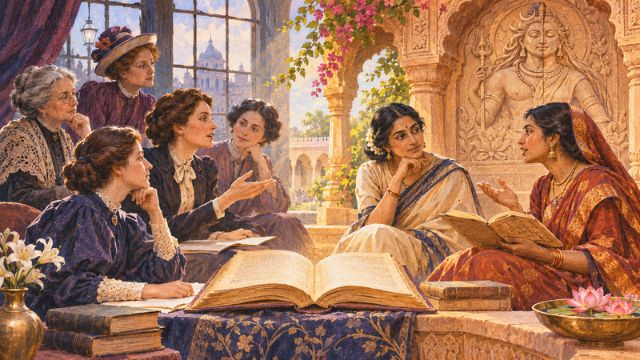
In the early 20th century, women in Europe still faced severe restrictions on their access to education and public institutions. In some places, women could not even enter world-famous libraries freely or independently. Virginia Woolf, in her famous essay A Room of One's Own, highlighted the structural barriers that prevented women from accessing education, knowledge and intellectual freedom.
The struggle for women's political rights also developed at different speeds across the world. In the United States, women secured the right to vote in 1920, while women in Britain gained equal voting rights with men in 1928. Switzerland granted women the right to vote at the federal level only in 1971. In contrast, India took a remarkably different path. When India became a republic, women and men received equal political citizenship from the very beginning.
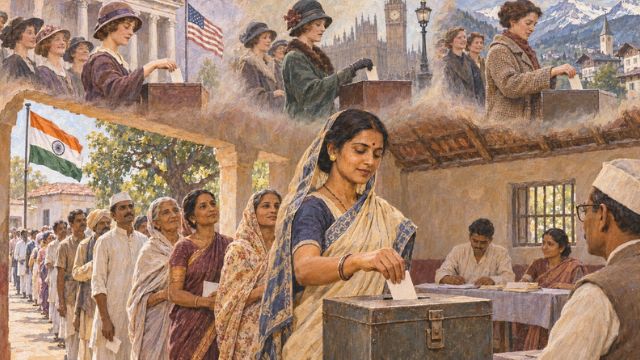
The Constitution guaranteed equality before the law and equal protection of the laws under Article 14, prohibited discrimination on grounds including sex under Article 15, and provided equality of opportunity in public employment under Article 16. Thus, Indian women did not have to fight a separate constitutional battle for universal adult suffrage after independence.
Second Wave of Feminism (1960s–1980s)
The Second Wave of Feminism, generally associated with the 1960s through the 1980s, expanded the feminist movement beyond voting rights. After the Second World War, many women were pushed back towards traditional domestic roles after having entered workplaces during the war.
Feminists began challenging gender inequality in employment, family life, reproductive rights, sexuality, education and the workplace. In the United States, some important milestones included:
1. Equal Pay Act, 1963: Aimed to eliminate sex-based wage discrimination.
2. Title IX, 1972: Prohibited sex-based discrimination in education programmes receiving federal financial assistance.
3. Roe v. Wade (1973): The U.S. Supreme Court recognised constitutional protection for abortion under the framework that existed at that time.
In India, the constitutional framework had already established a strong commitment to gender equality and non-discrimination. The Constitution guaranteed equality before the law, prohibited discrimination on the ground of sex and ensured equality of opportunity in public employment. India also witnessed women occupying positions of significant political authority. Indira Gandhi became Prime Minister in 1966, demonstrating that Indian women could reach the highest political office even during a period when the global feminist movement was demanding greater representation and equality.
Third Wave of Feminism (Early 1990s)
The Third Wave of Feminism emerged in the early 1990s. It was influenced by cultural Marxism and can be seen as the beginning of a more individualistic form of feminism. It challenged the homogeneous nature of the earlier feminist movement. This feminist narrative often presented as men being the oppressors and women being the oppressed, creating a fight between men and women. The Third Wave introduced new theories and concepts such as intersectionality, sex positivity, vegetarianism, eco-feminism and transformationism. In Marxist thought, "Stree Mukti" (स्त्री मुक्ति) was associated with the idea of "Deh Mukti" (देह मुक्ति).
The term Third-Wave Feminism became prominent through Rebecca Walker's 1992 article in Ms. Magazine, "Becoming the Third Wave."
The Third Wave was also associated with terms such as "girly feminism", "lipstick feminism" and "raunch culture". Raunch culture refers to a culture involving sexualised and provocative entertainment and the open expression of sexuality. Movements and ideas associated with this period included SlutWalk and choice feminism, expressed through slogans such as: "My body, my choice, my life, my choice."
There was also a girlification of female consumer culture, with women openly expressing their sexual desires, attractiveness and sexual agency. While some Second-Wave feminists criticised pornography and sexualised culture, Third-Wave "girly feminists" often viewed these matters through the framework of individual choice and agency. Thus, choices such as wearing a hijab or a belly shirt could both be presented as expressions of individual choice – the hijab as a choice and the belly shirt as a choice.
Fourth Wave of Feminism (Around 2012)
The Fourth Wave of Feminism began around 2012 and was strongly associated with social media, digital activism and online feminist movements. It is also connected with the rise of wokism. Hashtags became an important tool of feminist activism.
#MeToo was used by women to share their experiences and stories of sexual harassment and sexual abuse, while #TimesUp focused particularly on addressing sexual harassment and inequality in workplaces. A new form of activism emerged through "Feminist Twitter", where feminist debates and slogans became prominent on social media. Some of the hashtags used included: #KillAllTheMen and #AllTheMenAreTrash
In one reported interaction, when a reporter asked a feminist, "Is your father also trash?", she became angry and responded that she would slap him.
Another expression associated with this culture was #BitchDoctrine (2017) and the phrase "Make him drool". The feminist anthem and popular culture also included songs and lyrics focusing on female sexuality and physical attractiveness, such as the famous line: "Look at her butt. Oh my God, look at her butt." The #ProudRandy hashtag was also used, including in India.among Gen Z, several new slang terms are commonly used in connection with online culture and contemporary feminism.
Baddie: A term derived from "bad", generally referring to a woman who is confident, attractive, stylish and socially desirable.
Body count: The number of a person's past sexual partners.
Looksmaxing: Attempts to maximise or improve one's physical attractiveness.
Indian Womanhood: Equality Does Not Require Imitation. A significant question in contemporary feminist discourse is whether equality requires women to adopt the same social behaviour, appearance or lifestyle traditionally associated with men. The Indian perspective offers an alternative way of approaching this question. A woman does not need to abandon her feminine identity to exercise authority. India's President wearing a saree while occupying the highest constitutional office represents an important example of how leadership and feminine identity can coexist. Similarly, women can participate in public institutions, exercise political authority, pursue intellectual excellence and lead families without having to imitate masculine models of behaviour. Equality should mean equal dignity, equal opportunity and equal respect, not the erasure of differences.
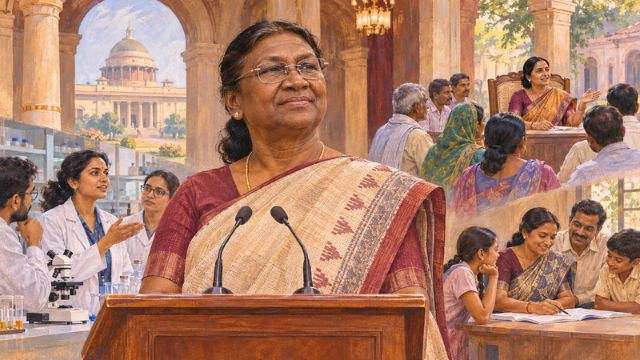
Our philosophical understanding also recognises that beyond the physical body, the essential identity of every human being is the Atman.Saints such as Lalleshwari, Akka Mahadevi, and others removed their clothes in their pursuit of Bhakti and knowledge. They are worshipped and respected.
Family, Cooperation and the Social Foundation of Womanhood
Another important dimension of the Indian understanding is the relationship between individual freedom and family. Freedom and cooperation are not necessarily contradictory. Cooperation develops through relationships, relationships develop through mutual trust, and families provide one of the important foundations for these bonds.
The family should not become an institution of domination or discrimination. Rather, it should be a space of mutual respect, responsibility, affection and individual growth. Women's problems are not exclusively women's problems; they are also problems of society.
Violence, discrimination, unequal opportunities, lack of education and social insecurity affect the entire social structure. Different societies have different historical, cultural and institutional challenges. Consequently, solutions must also be sensitive to their particular contexts.
A framework developed in one society cannot automatically become the universal solution for every other society. This does not mean compromising on equality or dignity. It means recognising that the pursuit of women's empowerment must remain sensitive to civilisational diversity and social realities.
Rani Lakshmibai: The Embodiment of Stree Shakti
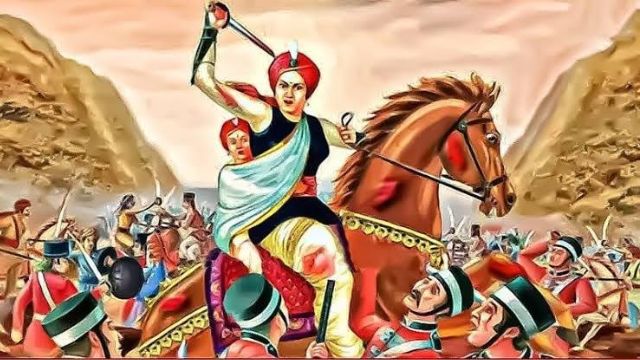
The birth anniversary of Rani Lakshmibai provides the most inspiring historical example of the power of Indian womanhood. Born on 19 November 1828, Manikarnika Tambe, popularly remembered as Rani Lakshmibai, became an enduring symbol of courage, patriotism and resistance. She challenged the political authority of the British Empire and fought for the sovereignty of Jhansi. Her life demonstrates that Indian womanhood has never been confined to a single social role.
She was a daughter, a wife, a mother, a queen, a military leader and, above all, a fearless defender of her motherland. Her contribution reminds us that the strength of a woman cannot be measured through conventional social expectations.
Rani Lakshmibai did not become powerful by abandoning her identity as a woman. She demonstrated that courage, leadership and patriotism are not exclusive to any gender. She represents the spirit of Stree Shakti: the power to protect, resist, lead and transform.
Beyond the Debate, Towards a Holistic Understanding
The purpose of discussing feminism from an Indian perspective is neither to deny the historical struggles of women nor to undermine the achievements of the feminist movement. It is to recognise that women's dignity, strength and empowerment have multiple intellectual, cultural and historical foundations. India's understanding of womanhood through Shakti, Ardhanarishvara, spiritual equality, knowledge and cooperation offers a distinctive philosophical perspective.
Worshipping the feminine principle as Shakti is a profound expression of reverence for feminine power. Rani Lakshmibai's life reminds us that a woman does not need permission to be courageous, nor does she need to abandon her identity to become powerful. Stree is not merely a subject of empowerment; she is herself a source of Shakti.
Written by
Anupriya Tanwar
PhD Scholar