79th Anniversary of Mirpur Massacre: A Forgotten Genocide That Still Demands Justice
79 years after Pakistani tribals and forces annihilated Mirpur’s Hindu-Sikh population, the third generation of displaced families still awaits justice, recognition and political voice while their ancestral land lies drowned under the Mangla Dam.
Total Views |


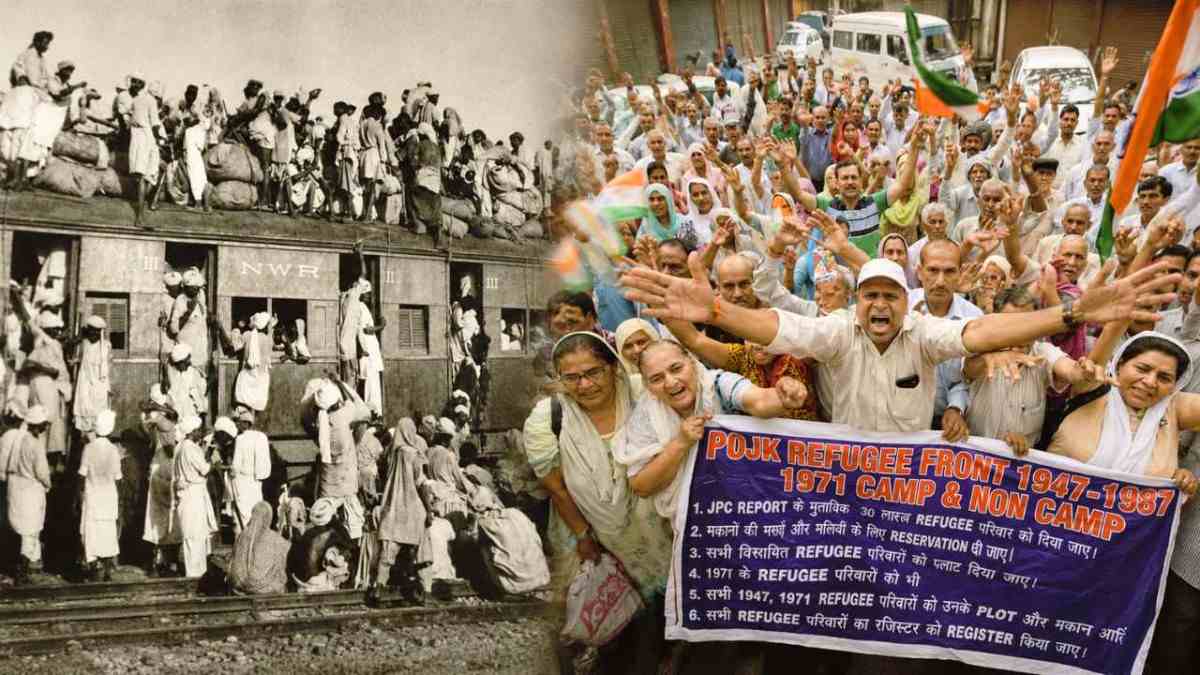
November 25 marks yet another grim anniversary of one of independent India’s most deliberately buried tragedies, the fall of Mirpur in 1947. While the world and successive Congress-led establishments treated it as a footnote, the Hindu and Sikh communities of Mirpur and Pakistan-Occupied Jammu & Kashmir (POJK) remember it as the day their civilization was systematically annihilated.
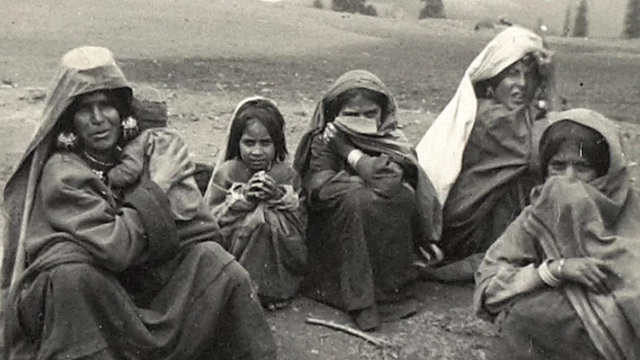
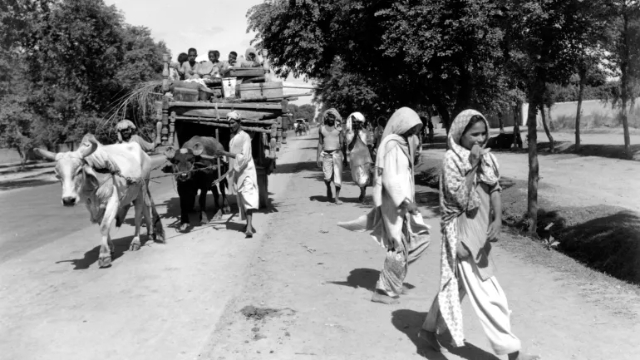
On that day, after weeks of siege by Pakistani tribal raiders backed by regular forces, the historic town of Mirpur was overrun. Hindu and Sikh men were massacred in the streets and homes. Women were abducted, raped, and marched into captivity. Community leaders, traders, and professionals were executed. Entire neighbourhoods across Mirpur, Bhimber, Kotli, Muzaffarabad and parts of Poonch were emptied of their non-Muslim populations. Contemporary accounts and later survivor testimonies put the death toll in the region of 35,000. The survivors who staggered across the border arrived with nothing but trauma and the clothes on their backs.
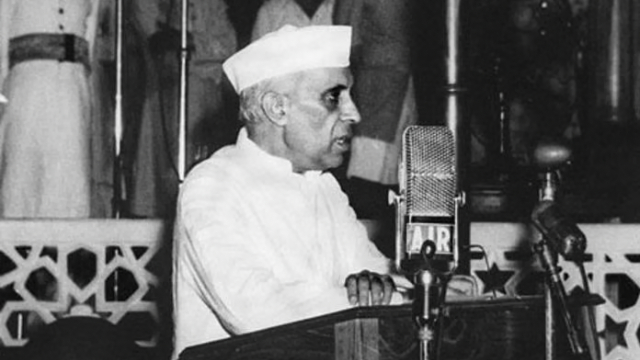
It was the opening act of Pakistan’s first Kashmir war, executed with religious precision. The evidence is not oral folklore. Within a week of the fall, Prime Minister Jawaharlal Nehru himself recorded the catastrophe in an official telegram to Pakistani Premier Liaquat Ali Khan on 2 December 1947. The cable, preserved in the Nehru Archive and the Government of India’s White Paper on Jammu and Kashmir, stated that Mirpur town had been “completely destroyed.” Of roughly 13,000 non-Muslims, only about 2,000 had reached safety near Jhelum. Thousands more were missing; large numbers of Hindu women had been abducted.
The Second Death of a Homeland
Between 1961 and 1967, Pakistan built the Mangla Dam on the Jhelum. The reservoir drowned the old city of Mirpur, its villages, temples, and fertile lands. For the families already driven out in 1947, this was the final physical erasure. Their homeland was first emptied of them and then submerged so that even the possibility of return vanished under water.
Official records tabled in Parliament acknowledge 31,619 registered displaced families from POJK, 26,319 in Jammu and Kashmir and 5,300 elsewhere. These numbers are incomplete. Countless families fled in terror directly to Punjab, Delhi, Haryana, Himachal, Uttar Pradesh and beyond, never entering the formal refugee camps. Joint families were shattered; branches were left off the rolls because paper deeds could not be carried through massacre and flight. To deny descendants their rightful status today because their grandparents lacked 1947 paperwork is administrative cruelty dressed up as procedure.
Tokenism Versus Rights
The one-time financial package of ₹5.5 lakh per eligible family announced in 2016 was a belated, partial acknowledgement. It does not constitute justice. Land rights remain unresolved, split-family claims linger in limbo, and families living outside Jammu and Kashmir continue to face exclusion. A third generation has now come of age born in free India only because their grandparents were expelled at gunpoint. They seek neither charity nor seasonal sympathy. They demand structural recognition.
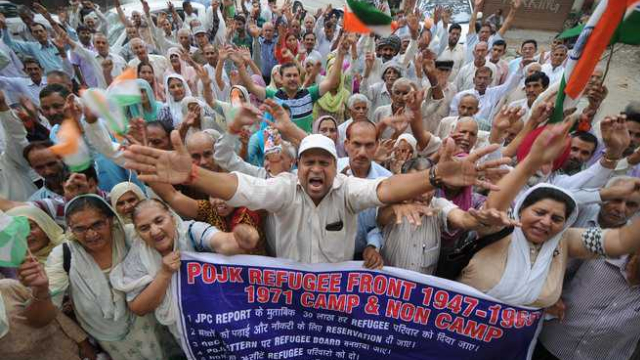
For nearly eight decades the United Nations and the global human-rights industry have examined every territorial claim over Kashmir while remaining conspicuously mute on the religious cleansing of Mirpur’s Hindu and Sikh populations.
The scale of killings, organised abduction of women, and permanent expulsion of entire communities meet every criterion of genocidal persecution under the UN Genocide Convention. Selective outrage is not human rights; it is political prejudice.
Written by
Kewali Kabir Jain
Journalism Student, Makhanlal Chaturvedi National Journalism and Communication University