1984 Anti-Sikh Riots: Congress’s Political Ambition Shattered Social Harmony
Congress’s cynical power play turned Punjab’s social harmony into a communal powder keg and left a permanent stain on India’s conscience
Total Views |


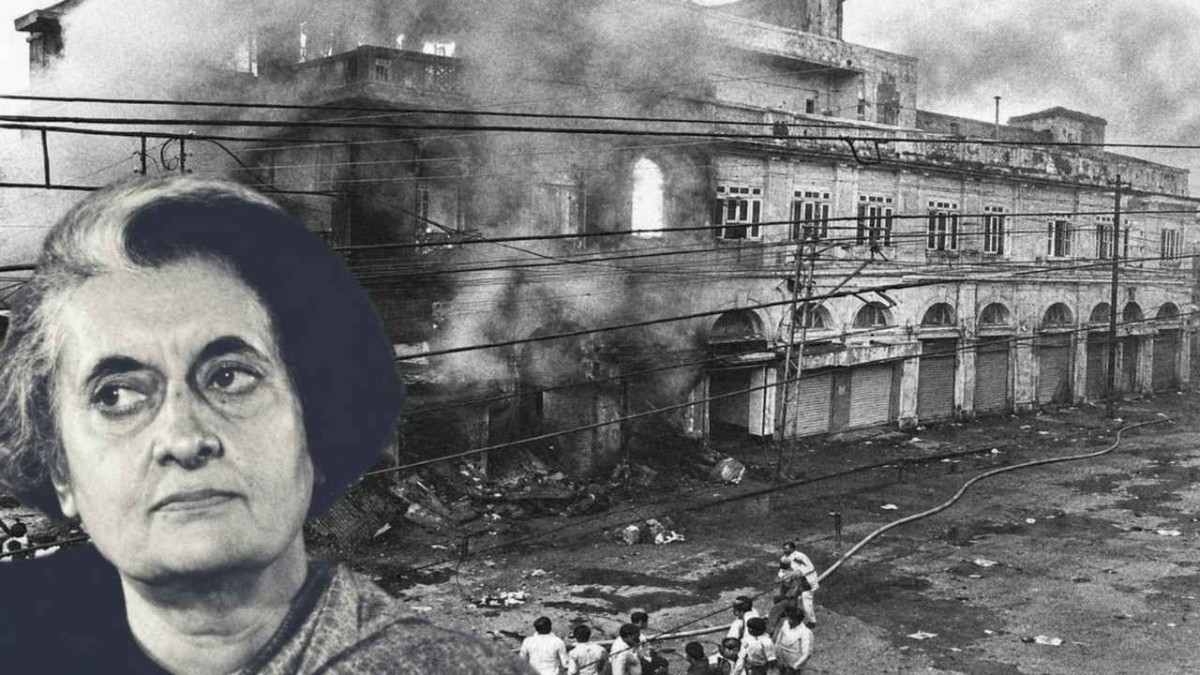
The blood-soaked events of 1984 stand as a grim reminder of how unchecked political ambition, cynically wrapped in the language of secularism, can tear apart the social fabric of a nation. What began as a calculated strategy by the Congress party to dominate Punjab ended in one of independent India’s darkest chapters: the systematic targeting of Sikhs after the assassination of Indira Gandhi. The scars remain, and the lessons must not be diluted by selective memory or convenient amnesia.
Political Greed Over Social Cohesion
At the time, Congress enjoyed near-total political dominance across India. Punjab, however, resisted complete capture. Rather than compete on governance or development, the party’s leadership chose a more corrosive path: the deliberate exploitation of religious fault lines. Leaders associated with the Congress, including figures linked to Sanjay Gandhi and others, worked to weaken the Shiromani Akali Dal by polarising communities. Vitriol was directed against Hindus from political and religious platforms. Mutual affection that had long characterised Punjab’s social life was replaced by cultivated suspicion and animosity.
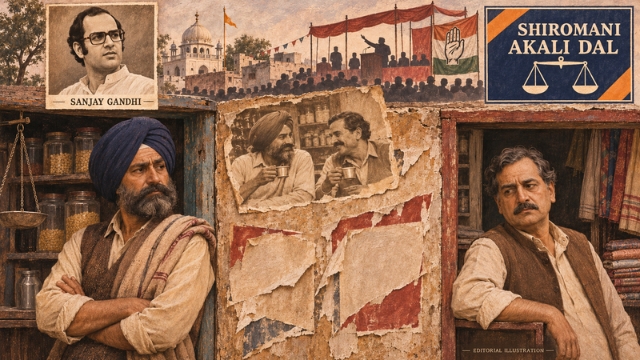
Ordinary Punjabis, Sikhs and Hindus alike paid the price as religious fanaticism, stoked for electoral gain, escalated into cycles of violence. When the situation spiralled, the same party that had fanned the flames authorised heavy-handed responses. The result was further radicalisation, not resolution.
Operation Blue Star: A Catastrophic Miscalculation
Indira Gandhi’s decision to order Operation Blue Star sending the Indian Army into the Golden Temple complex remains a permanent stain. The Darbar Sahib is not merely a religious site; it is the living heart of Sikh faith and pride. Storming it to neutralise militants may have achieved a tactical objective, but the strategic and moral cost was immense. Reports indicate even consultation with British Prime Minister ‘Margaret Thatcher’. Whatever the intelligence justification, the operation deepened alienation and set the stage for tragedy.
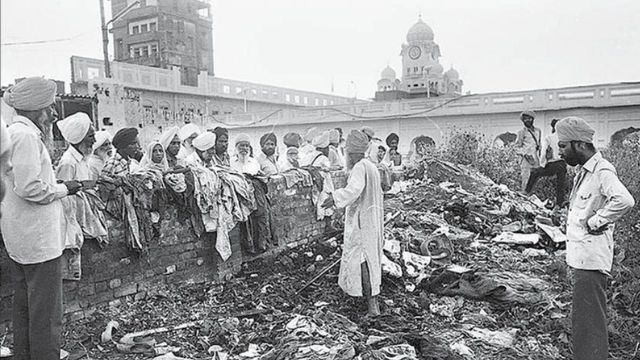
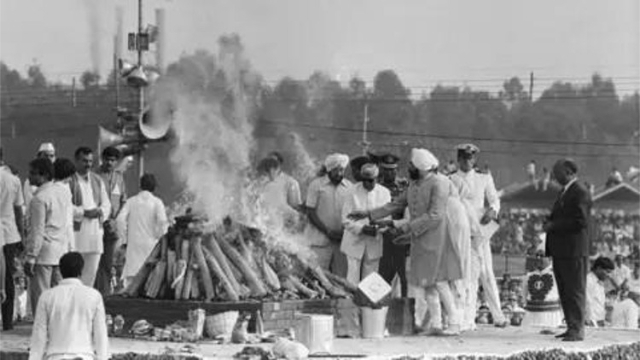
On 31 October 1984, Indira Gandhi was assassinated by her own Sikh bodyguards. What followed was not spontaneous grief turning violent. It was an organised carnage. Rajiv Gandhi’s now-infamous remark – “When a big tree falls, the earth shakes” provided political cover. From the evening of 31 October through the first days of November, Sikh citizens in Delhi and other cities were hunted. Homes, gurdwaras and businesses were burned. Men were dragged out and killed. Official figures put the nationwide death toll at 3,325, with 2,733 in Delhi alone. Independent accounts and survivor testimonies suggest the true scale may have been higher. Violence was reported in Kanpur, Bokaro and elsewhere.
State Failure and Delayed Justice
The state’s primary duty to protect citizens without regard to community was abandoned in critical hours. Police inaction, delayed registration of complaints, and reluctance to act against influential organisers were widely reported by victims and witnesses. Subsequent inquiries, including the Justice Ranganath Misra Commission and the Justice Nanavati Commission, examined administrative collapse and questions of political culpability. Relief packages were announced. Some prosecutions eventually moved forward. Yet for thousands of families, justice arrived late, incomplete, or not at all. Breadwinners were lost, children’s education disrupted, and deep psychological trauma endured for decades. Trust between communities suffered lasting damage.
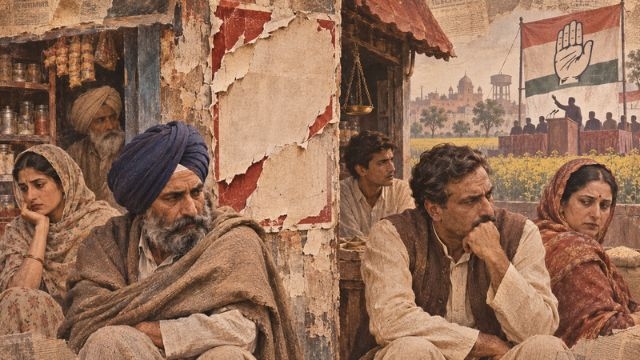
The 1984 anti-Sikh violence was the foreseeable outcome of political strategies that treated religious identity as raw material for power. Collective guilt must never be assigned to an entire community for the crimes of individuals. Rumours and hate, whether spread by word of mouth then or digital platforms now, require swift, impartial counteraction. Governments must prioritise the safety of every citizen, especially minorities under threat. True justice requires more than compensation: it demands truthful documentation, accountability for those who organised or enabled violence, protection of witnesses, and genuine rehabilitation.
The Congress party’s choices in the years leading to 1984, and its handling of the aftermath, inflicted a wound on India’s social stability that still requires honest reckoning.
Written by

Kewali Kabir Jain
Journalism Student, Makhanlal Chaturvedi National University of Journalism and Communication