Betrayal Under the Guise of Education: A Pattern of Abuse in Evangelical-Run Institutions
From Rampur to Chennai, repeated abuse claims raise questions about safety, oversight and silence within Evangelical-run schools and hostels.
Total Views |



On 16 February 2026, the otherwise quiet village of Khuntakheda in Rampur district, Uttar Pradesh, witnessed large-scale protests outside St Francis Missionary School. Angry parents gathered after serious allegations surfaced against Principal Arisheril Joseph, who was accused of sexually abusing minor girls aged six, ten and twelve inside his office under the pretext of "punishment".
Police intervened to rescue the accused from mob fury and registered an FIR under the Protection of Children from Sexual Offences Act. CCTV footage was seized and Joseph was taken into custody. The incident has since triggered broader concerns about accountability mechanisms within certain missionary-run institutions.
However, Rampur is not an isolated case.
A Pattern Beyond Geography
An examination of 15 reported cases between 2018 and 2026 reveals recurring allegations emerging from institutions managed by Evangelical or missionary-linked authorities, both in Bharat and abroad. The pattern is marked by abuse carried out under the cover of discipline, counselling, prayer sessions or academic supervision.
Andhra Pradesh (2025)

In March 2025, Akumarthi Shaji Jayaraju, a pastor and school correspondent at a private missionary institution in West Godavari district, was arrested under the Protection of Children from Sexual Offences Act after a minor student reported rape. The case came to light only when the girl was found to be five months pregnant.
Madhya Pradesh (2023)
In Dindori district, the principal of a missionary school hostel was arrested after eight minor girls reported sustained abuse. An inspection by child rights authorities revealed allegations of molestation, intimidation and inhumane hostel conditions.
Tamil Nadu (2022–2023)
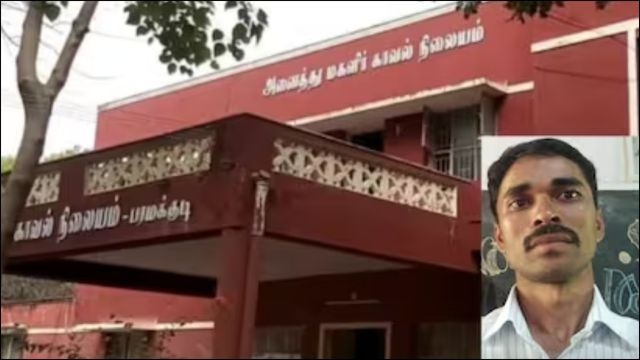
Multiple cases emerged across various districts:
- In Tuticorin, a government-aided school headmaster was sentenced to 14 years' imprisonment for assaulting nine girls.
- In Ramanathapuram, a mathematics teacher was jailed after a student's complaint was escalated to the Child Protection Committee.
- In Tiruppur, a hostel pastor was convicted for assaulting a 13-year-old student under his supervision.
Salem (2021)
At a foreign-funded missionary school in Salem, a karate instructor was arrested after a Class XII student attempted suicide and disclosed prolonged harassment disguised as meditation training.
Trichy (2021)
The principal of C.E. Higher Secondary School was arrested for assaulting a hostel student. The victim had allegedly been silenced by institutional authorities before the matter reached law enforcement.
International Cases Mirror the Pattern
The disturbing trend is not confined to Bharat. In the United States, similar allegations have surfaced within Christian educational institutions over the past decade.
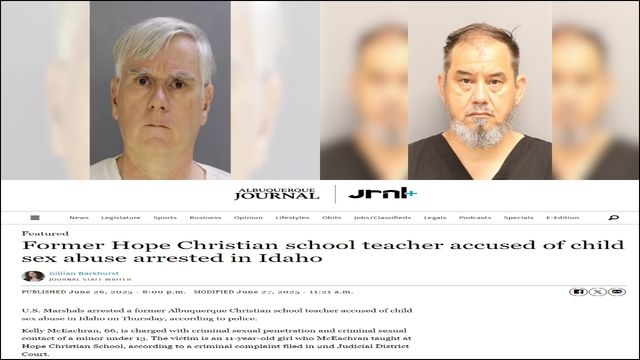
A former administrator of Hope Christian School was arrested in 2025 on charges of abusing an 11-year-old student. In Alabama, a teacher at North River Christian Academy was jailed for maintaining an inappropriate relationship with a minor student. In Pennsylvania, a former pastor and teacher at West Chester Christian School received a sentence of 20 to 40 years after being convicted of abusing a child as young as six. Likewise, a teacher at a Christian academy in Maryland was arrested for allegedly abusing five students between the ages of seven and thirteen.
Court records and media reports in several of these cases indicate that the accused allegedly leveraged religious authority, pastoral status or moral standing to suppress disclosure and discourage complaints.
The Montfort Case: A Precedent (2018)
One of the earliest high-profile cases in this review dates back to 2018, when the principal of Montfort School, Chennai, was arrested for sexually abusing an 11-year-old student. The case triggered widespread protests, particularly after initial reluctance by local police to formally register the complaint.

Subsequent investigations reportedly uncovered prior allegations against the accused and linked him to another student's alleged suicide, intensifying public outrage and scrutiny of institutional accountability.
Recurring Modus Operandi
Across the documented cases, a disturbing pattern emerges. Victims were frequently isolated and summoned to private offices, basements, storerooms, hostels or secluded classrooms. Authority was invoked as justification, whether in the name of punishment, academic counselling, prayer sessions, meditation classes or examination supervision.
In several instances, institutions were accused of shielding the perpetrators through delayed reporting, internal warnings or discouragement of formal complaints. Psychological intimidation was reportedly employed, with accused individuals allegedly leveraging religious influence or moral guilt to silence victims. Many disclosures surfaced only years later, following prolonged trauma.
Collectively, these recurring elements point towards structural vulnerabilities in certain institutional ecosystems where concentrated authority, limited external oversight and hierarchical reverence can create conditions susceptible to abuse.
Written by

Kewali Kabir Jain
Journalism Student, Makhanlal Chaturvedi National University of Journalism and Communication