Living the American Dream or Risking Death? 38 Indian Lives Lost in US Violence
Why are Indian students and workers increasingly becoming victims of shootings and robberies across the United States despite strict law enforcement?
Total Views |



For long considered a land of opportunity for Indian talent, America is fast emerging as a zone of grave peril for Indian nationals, students, professionals and workers. A meticulously compiled report, drawing from credible media sources across India and the US, has documented a staggering 41 incidents of violence against Indians between 2016 and 2026. Of these, 38 were fatal, claiming the lives of young students, hardworking petrol station attendants, delivery personnel and accomplished professionals. The remaining three involved survivors of armed assaults. The report, released in the wake of yet another tragedy, paints a disturbing picture of systematic vulnerability that demands urgent attention from both Indian and American authorities.
The latest outrage occurred on 1 March 2026, when 21-year-old Indian-American student Savitha Shan was gunned down outside a bar in Austin, Texas. The attacker, Ndiaga Diagne, was neutralised by police, and the FBI has launched an investigation into possible extremist links. Savitha's killing is not an isolated aberration; it fits into a decade-long pattern of shootings, robberies, kidnappings, workplace attacks and suspicious deaths that have claimed Indian lives with alarming regularity.

The report is divided into two sections. Part 1 records the 38 fatal incidents across multiple states, while Part 2 details three non-fatal attacks where victims survived but suffered serious injuries. The victims include Indian students pursuing higher education, IT professionals, security guards, doctors, engineers and small business owners, precisely the demographic that forms the backbone of the Indian diaspora's contribution to American society.
A chilling common thread runs through many cases: targeted robberies at petrol pumps, convenience stores and delivery jobs where Indians, often working late hours in high-risk environments, have been mercilessly shot. Several incidents also point to suspected hate crimes, mistaken-identity killings and unprovoked assaults. The report highlights that Indian students, who travel thousands of miles for quality education, are disproportionately affected, raising serious questions about campus safety and the protection of international scholars.

Among the most shocking cases is the 17 February 2026 kidnapping and murder of Avtar Singh, a 57-year-old Sikh man from Punjab, near Lake Berryessa in California. He was abducted in broad daylight outside a gurdwara in Tracy in what police suspect was a case of mistaken identity. Just weeks earlier, on 7 January 2026, 24-year-old Harshavardhini Raghupathi from Andhra Pradesh was shot dead inside her Seattle apartment, prompting her family to demand an international arrest warrant.
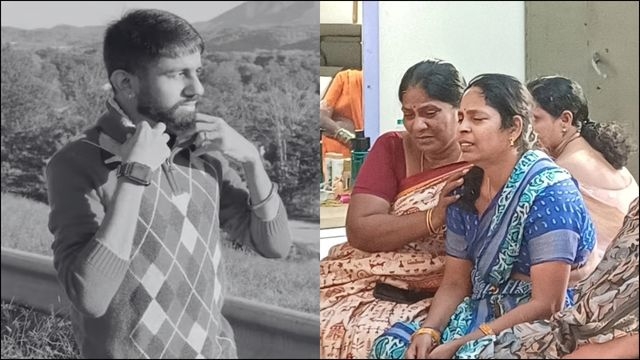
The year 2025 witnessed several brutal attacks. In October, Hyderabad student Kartik Venkata Sai Baddireddy, 26, was shot during a robbery at a Texas petrol pump where he worked. In September, Koyyada Ravi Teja, also 26 from Telangana, was killed at point-blank range while delivering food in Washington DC. Days later, Chandramouli Nagamallaiah, 50, from Karnataka, was beheaded during a violent dispute at a Dallas motel. Two Indian students, Saurav Prabhakar (23) and Manav Patel (20), lost their lives in a horrific road accident on the Pennsylvania Turnpike. In another incident that sent shockwaves, 26-year-old Kapil from Haryana was shot dead in California after confronting a man urinating in public outside his workplace.
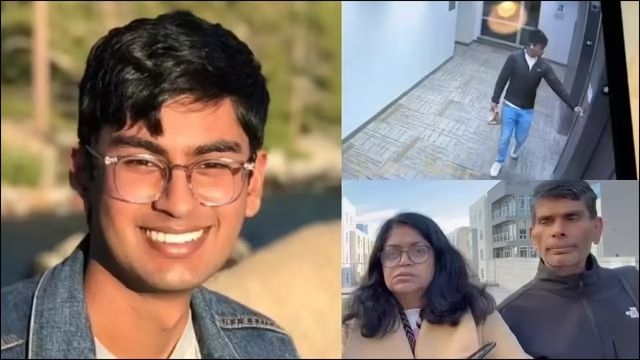
The pattern of students falling victim to robberies continued with Praveen Kumar Gampa (27) shot near his Wisconsin residence in March 2025 and Sai Teja Nukarapu (22) from Telangana gunned down at a Chicago store in November 2024 despite cooperating with the robbers. Even whistleblower Suchir Balaji, 26, was found dead under mysterious circumstances in San Francisco in November 2024.
Earlier years tell equally grim tales. In 2024 alone, several young Indians met tragic ends. Paruchuri Abhijit's body was dumped in a forest on the Boston University campus. Mohammed Abdul Arfath was kidnapped by a drug gang. Bharatnatyam dancer Amarnath Ghosh was shot in St Louis. Eighteen-year-old Akul Dhawan died of hypothermia after going missing from the University of Illinois. Tech executive Vivek Taneja, 41, succumbed to injuries after a street altercation, while Sameer Kamath's body was recovered from a nature preserve. Shreyas Reddy Beniger (19) and Neel Acharya were found dead under suspicious circumstances at their respective universities. In Georgia, Vivek Saini, 25, was beaten to death with a hammer 50 times by a homeless man he had tried to help with free food.
The report also records the 2022 murder of Purdue student Varun Manish Chheda by his Korean roommate and the horrific killing of an entire Indian-origin Sikh family of four, Jasdeep Singh, Jasleen Kaur, their infant daughter Aroohi and Amandeep Singh in Merced County, California, by a single armed suspect. Mass shootings claimed Taptejdeep Singh, 36, in San Jose in 2021 and Srinivas Kuchibhotla, 32, in a xenophobic attack in Kansas in 2017 where the shooter reportedly yelled, "get out of my country".
Hate crimes and road-rage incidents further underscore the vulnerability. Deep Rai, a Sikh man in Washington, was shot in the arm in 2017 after being told to "go back to your own country". Dr Achutha Reddy was stabbed to death by a patient in a Kansas clinic in 2017. Harnish Patel, a Gujarati convenience-store owner, was shot outside his South Carolina home.

Part 2 of the report documents three survivors of violent attacks. In September 2025, a 31-year-old Indian student in Chicago was shot in the abdomen after a verbal argument. In February 2024, Hyderabad student Syed Mazahir Ali was assaulted by four armed robbers in Chicago. In March 2017, Sikh man Deep Rai survived a hate-motivated shooting.
The report's authors note that in most cases, local police launched investigations, some suspects were arrested and charged, and Indian consulates extended assistance to grieving families. Yet the sheer frequency, nearly four incidents per year on average, reveals a systemic failure to safeguard a community that contributes immensely to America's technology, healthcare and education sectors.
Written by
Kewali Kabir Jain
Journalism Student, Makhanlal Chaturvedi National University of Journalism and Communication