CAPF Bill 2026 codifies Patel's vision of a unified and stronger India
The Bill formalises service rules, improves career progression and preserves coordination between CAPFs and IPS leadership in tackling insurgency and internal security challenges.
Total Views |


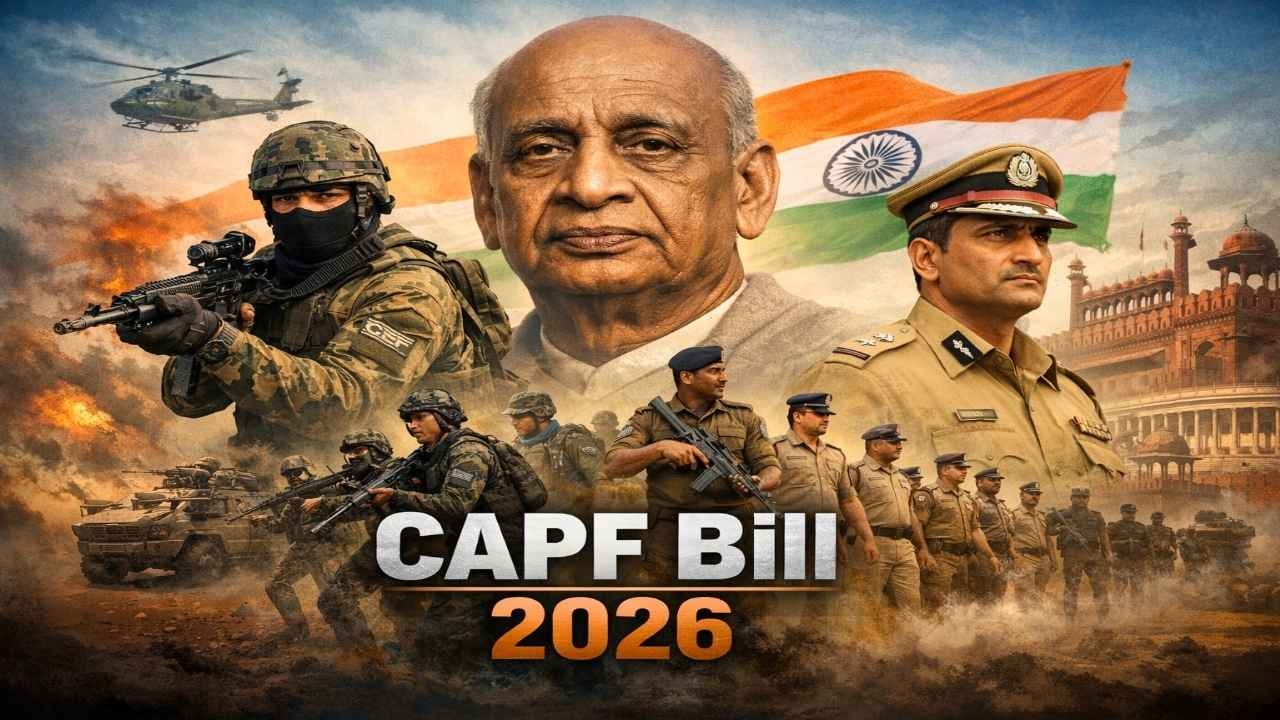
The CAPF General Administration Bill 2026 represents a pivotal step in fortifying India's internal security framework while addressing long-standing grievances within the Central Armed Police Forces (CAPFs). As outlined in this article, the legislation codifies essential service rules, ensures transparent promotions, introduces fixed tenures and grievance mechanisms, and creates additional senior posts to alleviate career stagnation, all without dismantling the proven coordination mechanisms that have sustained effective operations against Naxalism, insurgency and terrorism.
Having spent over three decades in the trenches of India's internal security, leading counter-insurgency operations in Odisha's Maoist-affected districts, coordinating intelligence grids as IG (Intelligence), serving as ADG (Operations), and eventually steering the entire state police machinery as DGP, I have seen first-hand what happens when coordination fails and what succeeds when it is seamless. The ongoing debate around the CAPF General Administration Bill 2026 is not merely about pay scales or promotions. It is about whether we preserve the institutional steel frame that Sardar Vallabhbhai Patel forged in 1947 or allow narrow career grievances to fracture the very architecture that has kept 1.4 billion citizens safe.
I stand firmly in support of the Bill. It delivers justice to the brave men and women of the Central Armed Police Forces while safeguarding the federal coordination mechanism that has repeatedly proved its worth in the fight against Naxalism, insurgency and terrorism. The reasons are best understood from the ground level, where bullets fly and intelligence must travel faster than rumour.
The coordination imperative: Patel's vision still holds
When Patel spoke in the Constituent Assembly about the All India Services, he was not being sentimental. He was addressing an existential coordination challenge. In a country of India's vast diversity, internal security cannot function as a patchwork of insular forces answering only to their own hierarchies. Intelligence Bureau assessments must reach CRPF companies in Chhattisgarh or BSF battalions in Jammu within hours, not days. State police Special Branches must share real-time inputs with CISF airport units. District Superintendents of Police, who are IPS officers, must exercise operational control when CAPFs are deployed to assist them.
My own career is proof of this reality. In Odisha, during the peak Naxal years, we were able to neutralise entire squads only because IPS officers rotated between state police, the Intelligence Bureau, CRPF and intelligence roles. The same officer who once ran a district police station in Malkangiri could later serve on the Intelligence Bureau's Naxal desk and then command a CRPF sector. Those personal relationships, built over joint operations, shared hardships and trust earned in the field, turned raw intelligence into precise action. Removing IPS leadership from senior CAPF command does not merely remove an officer; it severs a deeply embedded trust network that no new organisational structure can replicate.
Codification of rules: ending the era of bureaucratic discretion
For decades, CAPF officers operated under uncertainty. Service conditions, posting tenures and promotion pathways were often subject to the discretion of the Ministry of Home Affairs. The CAPF Bill 2026 ends this uncertainty by codifying:
- Clear, statutory service rules that every jawan and officer can rely upon
- Fixed tenure norms for field and staff postings
- Transparent provisions for medical, family and hardship allowances
- Grievance redressal mechanisms with defined timelines
This is a substantive reform. When a CRPF company commander in Bastar knows that his career progression is governed by law rather than administrative discretion, his focus remains entirely on operational effectiveness. I have seen officers distracted by repeated representations and procedural delays. This Bill removes that burden. Codification provides dignity through predictability and is welfare in its most institutional form.
Welfare that truly matters: new posts, OGAS implementation and career justice
The strength of the Bill lies in its ability to address genuine career stagnation among CAPF Group A officers without disturbing the federal security architecture. It creates hundreds of new senior posts at DIG, IG and Additional DG levels. It implements the Supreme Court's Orderly Gradation and Seniority (OGAS) ruling. It also addresses long-standing pay disparities.
These measures are not concessions; they are long overdue corrections for personnel who have served and sacrificed in the same operational theatres where I have worked. Between 2005 and 2020, Odisha alone lost numerous CAPF personnel in joint operations with the state police. Their families deserved better institutional support and career progression. The Bill delivers precisely that, without resorting to the risky demand for complete removal of IPS leadership.
The Greyhounds–CoBRA lesson: cross-pollination saves lives
History provides clear evidence. In 1989, IPS officer K.S. Vyas established the Greyhounds in Andhra Pradesh, an intelligence-driven, highly specialised force that became the benchmark for anti-Naxal operations. The Naxals feared it to such an extent that Vyas was assassinated in 1993. Yet his doctrine endured. Later, another IPS officer who had served with the Greyhounds adapted the same operational model within the CRPF to create CoBRA, the Commando Battalion for Resolute Action. Today, CoBRA remains one of the most effective operational units within the CRPF.
CAPFs do not operate in isolation. By law, they assist state police forces under the operational control of district SPs, who are IPS officers. In Odisha, every major Naxal encounter I supervised succeeded because CRPF and state police functioned under a unified command structure supported by officers who understood both systems. Without this integration, intelligence sharing would have slowed and operational responses would have fragmented, creating unacceptable vulnerabilities.
The economic fallacy we must reject
The argument against IPS leadership is often framed as one of dignity versus discrimination. This is a flawed narrative. It represents a classic case of concentrated benefits versus diffuse but potentially catastrophic costs. The perceived benefit is faster career progression for a limited group. The cost, however, is a weakened national security framework affecting the entire population.
Institutional economics teaches that the most dangerous decisions are those where the costs are not immediately visible. The CAPF Bill 2026 offers a balanced solution. It addresses career stagnation while preserving the coordination mechanisms that Patel envisioned. Dismantling decades of institutional integration to resolve promotional concerns would be a strategic error of lasting consequence.
A veteran's final word
I have attended too many funerals of young CAPF personnel and IPS officers in conflict zones. Their sacrifice demands two commitments from us: genuine welfare and uncompromised institutional strength. This Bill provides both.
Support the CAPF General Administration Bill 2026.
Codify the rules.
Deliver welfare.
But above all, preserve the unifying leadership that transforms multiple forces into a single, cohesive shield for the Republic.
Sardar Vallabhbhai Patel, the architect of modern India's unity, envisioned the All India Services, including the IAS and IPS, as the indispensable steel frame of the nation. In his addresses to the Constituent Assembly and to the first batch of IAS probationers in 1947, he emphasised that these services were essential for maintaining national integration in a diverse country. Without a unified, disciplined and impartial civil service, he warned, India risked fragmentation, with provincial interests undermining national cohesion.
Patel saw these services as instruments to bind India's diversity within a shared administrative and security framework, ensuring uniform standards, loyalty to the Union and seamless cooperation between states and central forces. He believed they would prevent administrative breakdown and uphold national service above regional interests.
The CAPF General Administration Bill 2026 embodies and advances this vision. By preserving IPS leadership in key senior roles within CAPFs, while simultaneously ensuring justice through codified rules, expanded promotional avenues via OGAS implementation and the creation of new posts, the Bill maintains the delicate balance between welfare and institutional integrity. It prevents organisational insularity that could weaken intelligence sharing, operational coordination and trust built over decades.
This approach reflects Patel's foresight that India's unity and security depend on institutions that rise above narrow interests. The Bill reinforces that principle. It ensures fairness for CAPF personnel while strengthening the role of the All India Services in national integration.
That is why I unequivocally support this legislation. It safeguards the steel frame that continues to protect 1.4 billion citizens in an increasingly complex security environment.
Article by
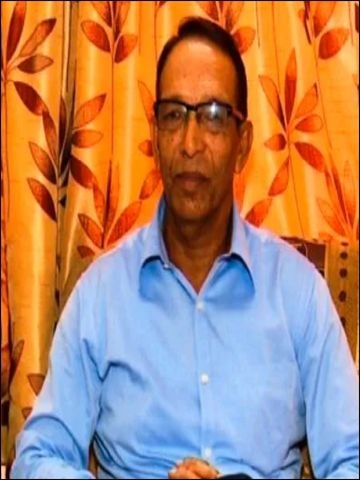
Sanjiv Marik
Former DGP, Odisha
Former IG (Intelligence), IG and ADG (Operations)