Northeast Bharat Witnesses Transformative Push for Women’s Empowerment
State-led initiatives in finance, safety, and health systems expand women’s agency, with SHGs, Nari Adalats, and technology platforms strengthening local participation and justice access.
Total Views |


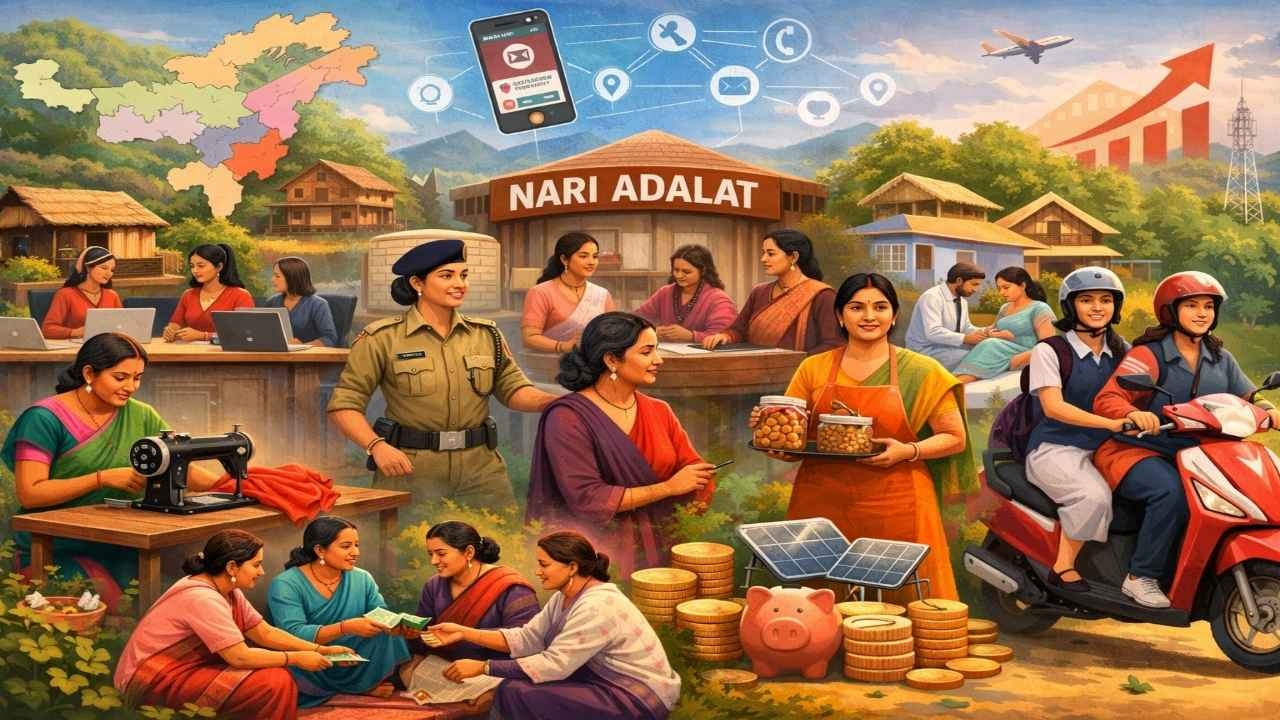
In a significant reaffirmation of Bharat's commitment to Nari Shakti, the northeastern region has witnessed a transformative decade marked by targeted policy interventions, grassroots mobilisation, and institutional support for women's empowerment. From financial inclusion and entrepreneurship to social security and justice delivery, the period between 2016 and 2026 reflects a comprehensive and multi-dimensional approach by both the Union and State governments.
A notable milestone in this journey was achieved on 12 March 2026, when the Tripura government formally launched the Tripura Women Entrepreneurship Policy 2025–2030 at Pragya Bhavan in Agartala. This forward-looking policy aims to foster a robust ecosystem for women entrepreneurs by offering capital investment subsidies of 30 to 40 per cent under the TIPIS scheme, a 35 per cent project cost subsidy under the Swabalamban initiative, and concessional interest rates on working capital loans. The initiative is designed to enable women, particularly those engaged in micro, small, and cottage industries, to access modern technology, markets, and institutional finance.
Expanding Economic Frontiers
Across the Northeast, states such as Assam, Manipur, Mizoram, Meghalaya, and Nagaland have placed women-led economic growth at the centre of their development agenda.
In Assam, the Chief Minister's Women Entrepreneurship Campaign has emerged as a flagship programme, targeting nearly 30 lakh women through phased financial assistance beginning with seed capital of ₹10,000 and scaling up to ₹50,000 for enterprise expansion.
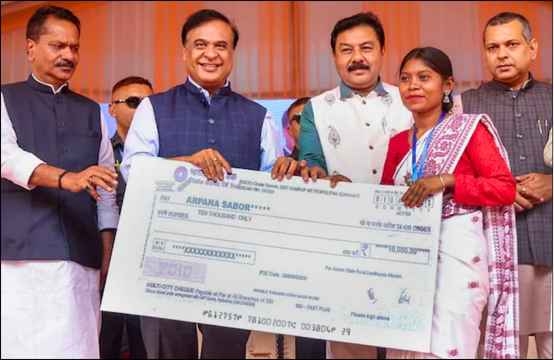
Similarly, Manipur's 2026–27 budget introduced a Self-Help Group based empowerment scheme benefiting over 3.5 lakh women, with direct benefit transfers ensuring immediate financial support.
Nagaland broke new ground with the establishment of its first all-women Business Process Outsourcing centre in Dimapur. Backed by the IDAN and JSW Foundation, the centre provides structured IT training and employment opportunities in sectors such as banking support, e-commerce operations, and customer service, thereby integrating women into the digital economy.
In Meghalaya, the Pla Tangka Cooperative Society has strengthened SHG-led entrepreneurship by enabling access to credit up to ten times the group's savings, simplifying financial processes and fostering sustainable rural enterprises.
Strengthening Social Security Nets
A parallel thrust has been observed in direct financial assistance schemes aimed at enhancing women's socio-economic security.
The Orunodoi Scheme in Assam stands out as a pioneering DBT initiative, placing women at the centre of household financial management. By 2026, the scheme has expanded to cover nearly 40 lakh families, with monthly assistance increased to approximately ₹1,250.
In Manipur, the Ima Nongthangleima Yaipha Tengbang Scheme provides a monthly stipend to women aged 40 and above who are not beneficiaries of other government schemes, ensuring a basic safety net.
Sikkim's Aama Sashaktikaran Yojana has also made significant progress by offering ₹20,000 annually to non-working mothers, thereby recognising and supporting unpaid domestic labour.
Advancing Justice and Safety Mechanisms
Ensuring safety and access to justice has been another critical pillar. The introduction of Nari Adalats in Tripura under the Union government's Mission Shakti framework marks a grassroots-level intervention for dispute resolution. These community-based platforms aim to address cases of domestic violence and social conflict through mediation and local engagement.
The Sakhi One Stop Centres, operational since 2016, continue to provide integrated support services including legal aid, medical assistance, and psychological counselling to women affected by violence.
Technological interventions such as Assam's Bhoroksha mobile application have further strengthened emergency response mechanisms, offering instant access to helplines and government services.
Focus on Health, Education, and Dignity
Recognising that empowerment extends beyond economics, several initiatives have targeted health, education, and workplace welfare.
In Sikkim, the extension of maternity leave to 12 months for government employees sets a progressive benchmark, significantly exceeding national standards.
Menstrual health has received long-overdue attention through schemes such as the Chief Minister's Menstrual Hygiene Scheme in Manipur and the Bahini Scheme in Sikkim, which ensure the availability of sanitary products in schools and promote awareness among adolescent girls.
Arunachal Pradesh's initiative granting menstrual leave to women police personnel reflects a growing sensitivity towards workplace inclusivity and gender-specific health needs.
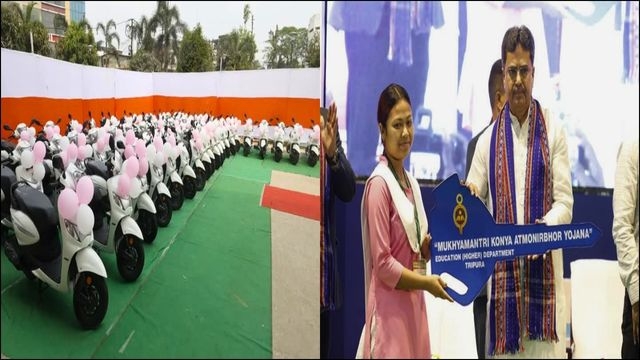
Educational empowerment has also been prioritised. Tripura's Chief Minister Kanya Atmanirbhar Yojana, which distributes scooters to meritorious girl students, addresses mobility constraints and encourages participation in higher education.
Bridging Tradition and Modernity
What distinguishes the northeastern model is its ability to blend traditional community structures with modern governance frameworks. The proliferation of Self-Help Groups, cooperative societies, and community-led initiatives demonstrates a bottom-up approach, ensuring that policies resonate with local realities.
Moreover, programmes such as the Women Entrepreneurship Platform in Mizoram, supported by NITI Aayog, highlight the integration of national-level institutional support with state-specific innovation.
Written by

Kewali Kabir Jain
Journalism Student, Makhanlal Chaturvedi National University of Journalism and Communication