Ghodagaon Massacre: Twenty Years On, the Memory of Maoist Carnage Endures
On this day twenty years ago, 11 civilians were killed in a Maoist landmine blast at Ghodagaon, a tragedy that continues to echo through Bastar.
Total Views |


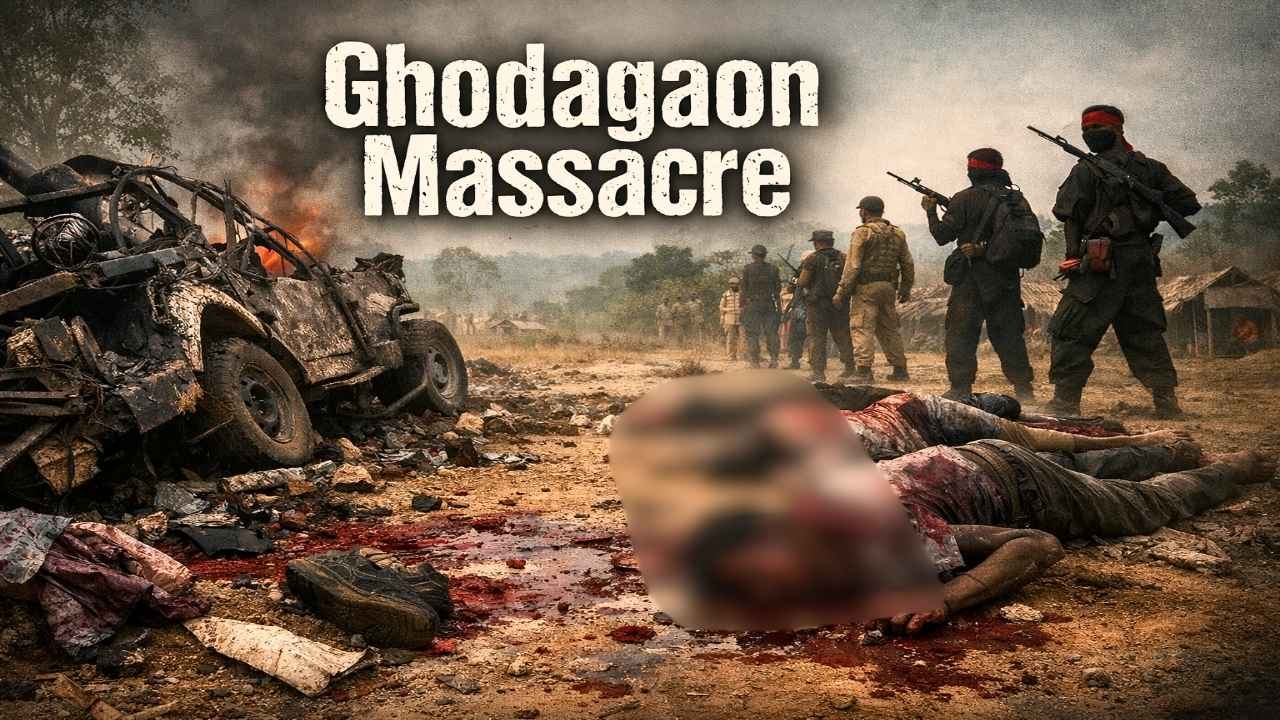
Two decades ago, on the very day of 25th March, 2006, the blood of 11 innocent Indians stained the soil of Kanker district in Chhattisgarh.
It was a planned ambush by CPI-Maoist terrorists who are the self-styled "revolutionaries". They have long masqueraded as champions of the tribal poor while waging a brutal war against the very soul of Bharat.
On March 25, 2006, Maoists triggered a landmine near Ghodagaon village under the Pakhanjur police station area, about 250 km from Raipur. Mistaking a private jeep taxi for a police vehicle, the cowards detonated the explosive, killing 11 civilians on the spot and injuring four others.
Then Kanker Superintendent of Police Pradeep Gupta had confirmed the details, mentioning that a police party had rushed to the spot as reports trickled in. The same day, in nearby Bastar, security forces delivered justice in a fierce encounter, gunning down five Maoists, including a 'deputy commander', in the Dhanora jungle area.
Notably, 2006 was the peak of Maoist savagery in the Red Corridor. The UPA government at the centre, led by a prime minister who himself called Naxalism the "single biggest internal security challenge", dithered with half-measures and endless "dialogue" that only emboldened the gun-toting ideologues.
In Chhattisgarh, under the BJP government of Raman Singh, the tribal people themselves rose in resistance through the Salwa Judum, which was a spontaneous people's movement against the Maoist stranglehold.
The left-liberal ecosystem, ever ready to paint terrorists as victims, vilified this tribal uprising while ignoring the Maoists who extorted, abducted, and executed anyone who dared oppose their foreign-inspired ideology of class hatred and anti-national disruption.
Written by
Kewali Kabir Jain
Journalism Student, Makhanlal Chaturvedi National University of Journalism and Communication