The Rebel Christian Clergyman Who Influenced the Entire World: Martin Luther – Part 1
A German monk"s personal crisis and spiritual search set him on a path that would challenge Church authority and reshape Christianity across Europe.
Total Views |


When I searched on Google for a list of people who influenced the world, I did not find the names of four individuals whom I believe belong on that list. Who are these four?
The first is Jesus Christ, followed by Prophet Muhammad. These two figures completely transformed the identity of the world. Due to the spread of the religions they founded, many countries across the world today do not even know what their earlier civilisations or religions were before 2022 years ago. Even if someone wished to return to the past, there is nothing left to return to. Because of these two, enormous violence took place worldwide—through events such as the Crusades and jihad. Perhaps the only region where ancient civilisation, religion, and way of life still survive is the Indian subcontinent.
The third name, in my view, is Karl Marx, whose economic philosophy swept across the world. Under the influence of this philosophy—which famously called religion an opiate—there may have been violence even more brutal and widespread than that seen during the Crusades or Jihad. However, we now see its influence declining rapidly.
The fourth influential figure, according to me, is the protagonist of our narrative—Martin Luther. Many of us are familiar with Martin Luther King Jr from America but not with the Martin Luther who is the subject of this account.
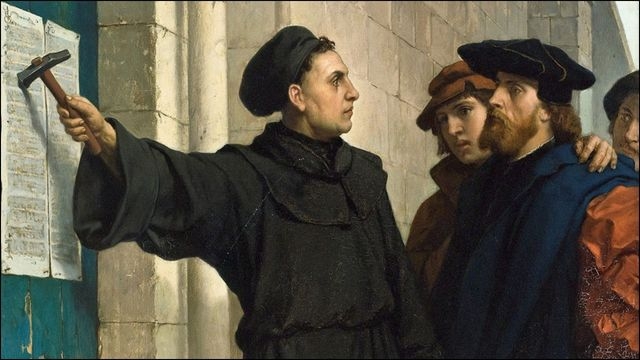
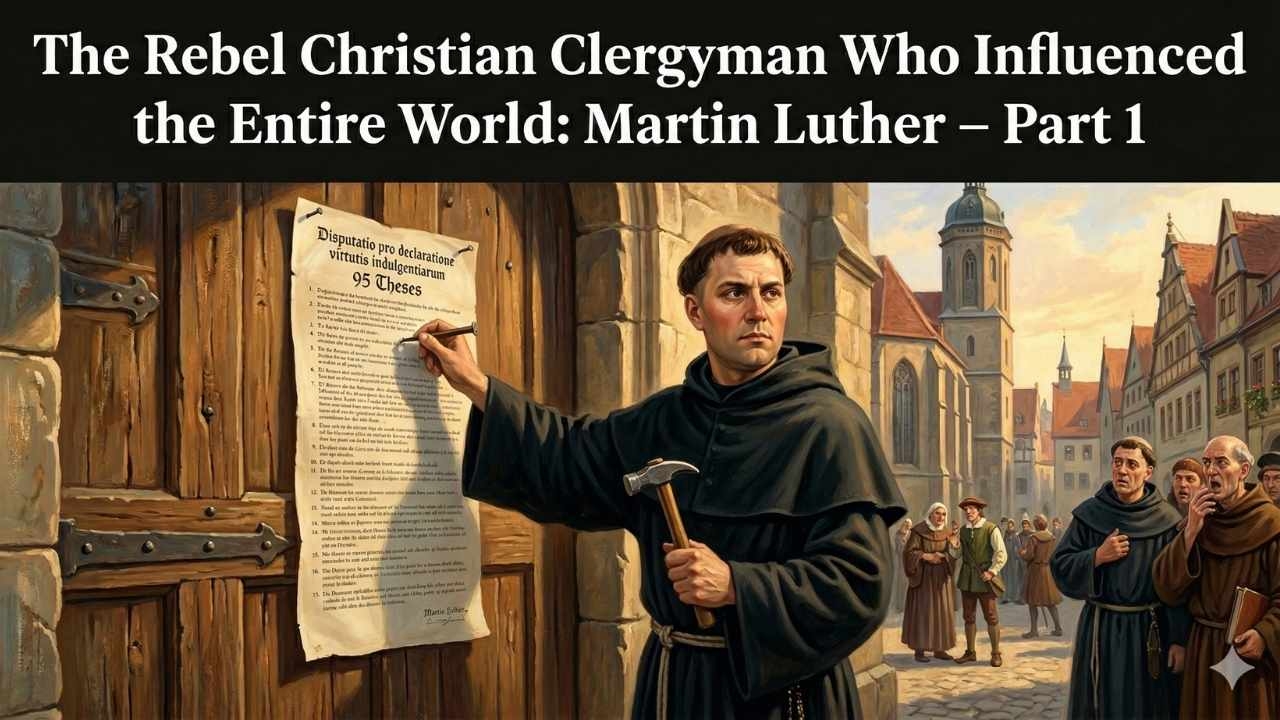
The Martin Luther in our narrative was from Germany and was a religious cleric. He rebelled against the established Catholic Church and clergy and founded the Protestant sect within Christianity. This movement is known in European history as the Reformation. The ideas he proposed also led to numerous wars and instances of mass violence across the world. From an Indian perspective, what is important is that a certain colonial mindset—shaped during British rule—has embedded this "Martin" within us, giving us a colonial lens through which we still view ourselves, even in the context of our own strong Hindu identity.
In the coming sections, we will get acquainted with this protagonist and his philosophical and religious ideas.
Martin Luther was born to Hans Luder and Margarethe on 10 November 1483. Later, the surname "Luder" became "Luther". He was born in the town of Eisleben in Germany, which was part of the Holy Roman Empire. He was baptised the very next day. Martin had many siblings, and he was particularly close to his brother Jacob. Being the eldest, his father wanted him to become a lawyer.
In 1501, he entered the University of Erfurt and obtained his master's degree in 1505. Following his father's wishes, he then enrolled in law. However, Martin, who was searching for certainty in life, could not find satisfaction in a dry and ever-changing subject like law. He began to develop an interest in philosophy and theology, especially in the works of Aristotle, William of Ockham, and Gabriel Biel.
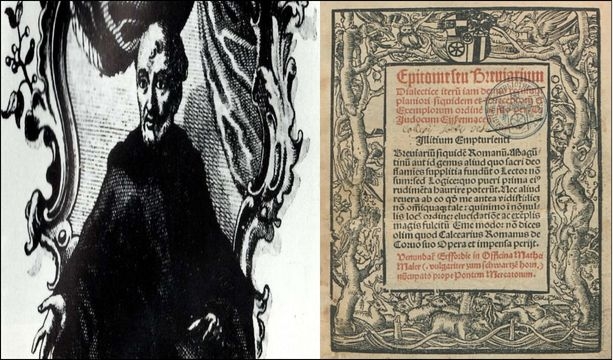
Two teachers had a particularly strong influence on him—Bartholomaeus Arnoldi (von Usingen) and Jodocus Trutfetter. They taught him to question even the greatest thinkers and ideas and to accept something as true only after experiencing it personally.
Yet, even philosophy did not satisfy him. He felt that philosophy teaches reason but does not teach love for God. Such love, he believed, could only come through divine experience. As a result, his attraction toward religious texts grew stronger day by day.
On 2 July 1505, while travelling on horseback from his home to the university, a bolt of lightning struck near him. Terrified and fearing death, he cried out to Saint Anne (the mother of Saint Mary and thus the grandmother of Jesus Christ), pleading for help and vowing that he would become a monk if he survived.
He informed his father of this decision and insisted that he must honour his vow. He left the university and entered the monastery of Saint Augustine. His father, who had hoped that his son would become a lawyer, was deeply distressed by this decision.
His religious life and the rebellion within it will be discussed in the next part.
Written by
Dr. Prasad Kelkar