Bharat's Historic Military Overhaul: Joint Theatre Commands Blueprint Ready to Counter Pak-China Axis
Three theatre commands planned to secure borders, counter terrorism and protect maritime interests in Indian Ocean Region.
Total Views |


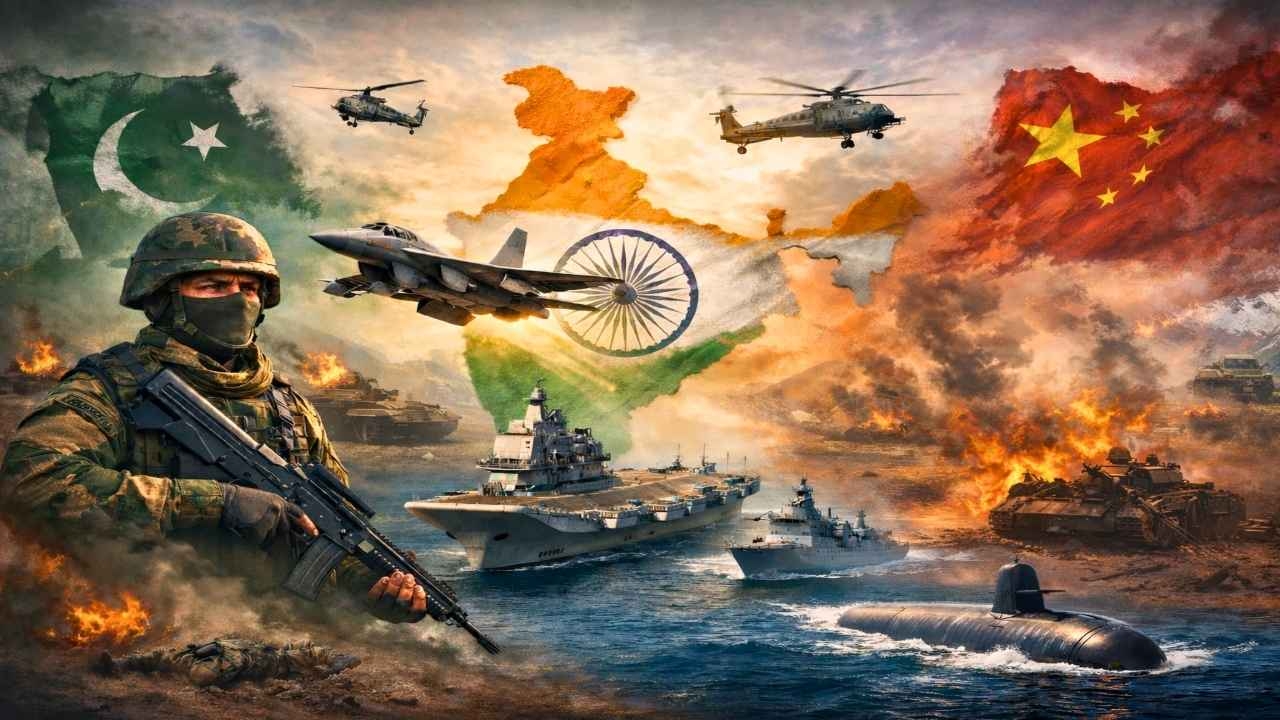
In what marks a watershed moment for Bharat’s national security and defence architecture, the government led by Narendra Modi is set to implement the most sweeping and decisive military restructuring since independence. Breaking away from the colonial legacy of operating in silos, the armed forces have finalised a historic blueprint to establish Integrated Joint Theatre Commands. This monumental reform will seamlessly synchronise the Indian Army, Indian Air Force (IAF), and Indian Navy into a unified and formidable fighting force capable of decisively countering the twin threats from Pakistan and an expansionist China.
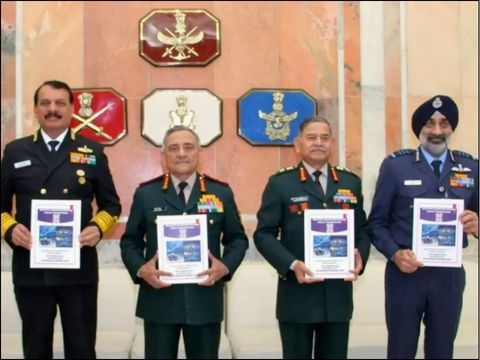
Under the political leadership and strategic direction of the government, this blueprint has been brought to fruition under Operation Tiranga, spearheaded by Chief of Defence Staff (CDS) Anil Chauhan. Reports indicate that over 90 per cent of the planning is complete, and the final proposal has been forwarded to Defence Minister Rajnath Singh. It is expected to be placed before the Cabinet Committee on Security in the near future.
The ambitious new architecture envisions replacing the existing 17 disjointed service commands with three distinct, lethal, and geographically defined theatre commands.
Western Theatre Command (Headquarters: Jaipur)
This command will focus squarely on neutralising state-sponsored terrorism and conventional threats from Pakistan along the Line of Control and the international border. Recognising the decisive precision and impact of air power, especially demonstrated during recent operations such as Operation Sindoor, this command will be led by an officer from the Indian Air Force.
Northern Theatre Command (Headquarters: Lucknow)
This command will be tasked with defending Bharat’s territorial sovereignty against China along the challenging terrain of the Line of Actual Control. An Indian Army officer will lead this formation to ensure robust ground defence and enable swift multi-domain retaliation in the event of any provocation.
Maritime Theatre Command (Headquarters: Thiruvananthapuram)
This command will secure Bharat’s vital strategic and economic interests across the expansive Indian Ocean Region. Led by a senior officer from the Indian Navy, it will strengthen the peninsular front against any form of maritime adventurism.
To streamline high-level military coordination, the government is also preparing to introduce the post of Deputy Chief of Defence Staff. This officer will hold a four-star rank equivalent to the Service Chiefs, increasing the number of four-star officers in the military hierarchy to five. The Deputy CDS will play a central role in institutionalising jointness, ensuring operational synergy, and acting as a crucial link in translating integrated strategies into effective tactical outcomes.
In addition, dedicated Space and Cyber Commands are also being developed to protect Bharat against emerging forms of non-kinetic warfare. These domains are increasingly critical in modern conflict, where technological superiority and information dominance often determine strategic advantage.
For decades, strategic experts and the Kargil Review Committee had highlighted the urgent need for theatre commands. However, earlier governments did not demonstrate the political resolve required to implement such a transformative reform. Today, a resurgent and self-reliant Bharat is taking decisive steps to modernise its military structure and strengthen its national security framework.
Written by

Kewali Kabir Jain
Journalism Student, Makhanlal Chaturvedi National University of Journalism and Communication