The Rebel Christian Clergyman Who Influenced the Entire World: Martin Luther – Part 4
Luther defies the Pope and emperor, faces excommunication, and is declared an outlaw as his ideas spread despite growing political and religious pressure.
Total Views |


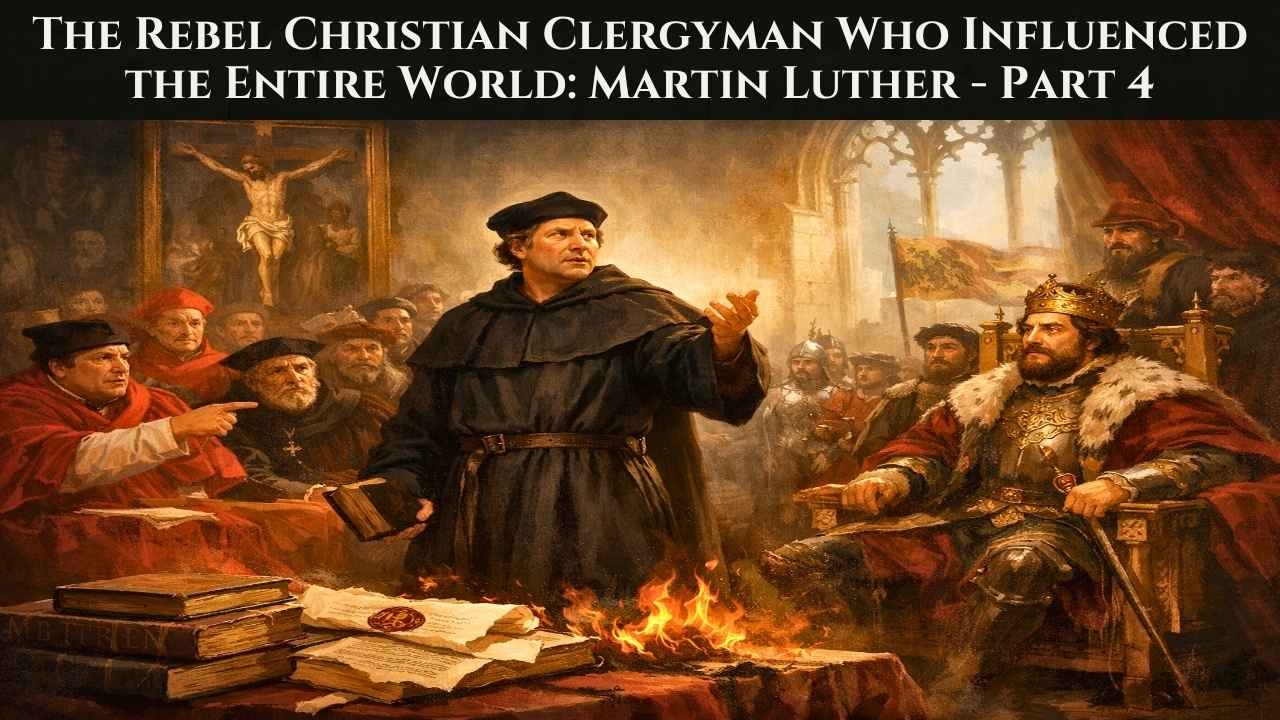
Martin Luther nailed his propositions and demands, addressed to the local bishop, on the door of the All Saints' Church in Wittenberg. The bishop did not respond, but the theses were forwarded to Rome. Pope Leo X instructed various theologians to refute Luther. The Pope ordered Luther to appear in Rome. In October 1518, for three consecutive days, Luther defended his position, stating, "The Pope cannot be superior to the Holy Scriptures." Accused of being an enemy of the Pope, Luther managed to escape from the city before he could be arrested.
In 1519, Luther argued that, according to Matthew 16:18, the pope does not have any exclusive authority to interpret the Holy Scriptures. Therefore, neither the Pope nor Church councils can be considered infallible. At this point, the theologian Johann Eck, who was present there, compared Luther to the Czech reformer Jan Hus, who had been burnt as a heretic in 1415.
On June 15, 1520, the Pope issued a decree stating that if Luther did not retract his views within sixty days, he would be excommunicated from the Christian community. In 1521, Luther was formally excommunicated.
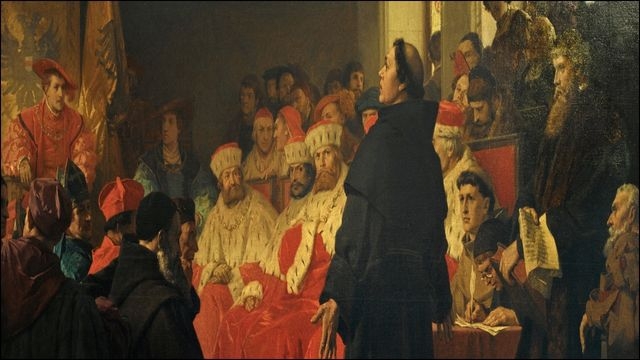
On April 15, 1521, Luther appeared before the Diet of Worms, an imperial assembly of the Holy Roman Empire presided over by Emperor Charles V. Luther's books were placed on a table, and he was asked whether he had written them and whether he agreed with their contents. Luther admitted that he had written the books. He gave his answer regarding their content the next day, saying:
"Unless I am convinced by the testimony of the Scriptures and by clear reason—for I do not trust either in the Pope or in councils alone, since it is well known that they have often erred and contradicted themselves—I am bound by the Scriptures I have quoted, and my conscience is captive to the Word of God. I cannot and will not recant anything, for it is neither safe nor right to go against conscience. May God help me. Amen."
On May 25, 1521, the emperor issued the Edict of Worms, declaring Luther an outlaw and removing him from the protection of law and the state. His writings were banned. Providing him with food or shelter was declared a crime. It was also announced that anyone who killed Luther would not face legal punishment.
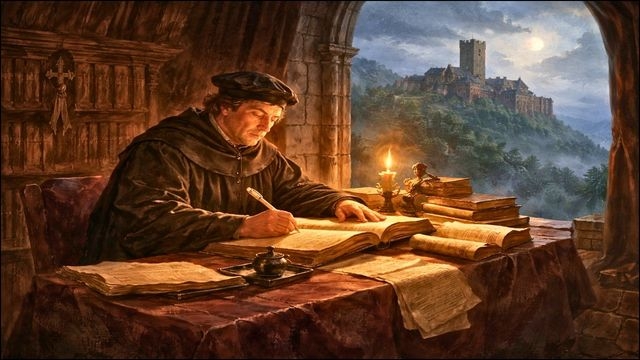
While returning to Wittenberg, Luther disappeared on the way. He was secretly taken to Wartburg Castle in Eisenach by Frederick of Saxony and kept there safely. During his stay at Wartburg, Luther translated the New Testament from Greek into German. He also wrote extensively, presenting his ideas and criticising established authorities. There, he made a famous statement: "Good works done to attract God's attention are themselves sinful."
Luther asserted that all humans are inherently sinful, and only God's grace can save them. He then began attacking the Pope and Church practices, arguing that the private mass was wrong and akin to idol worship. He questioned who had given the Pope the authority over confession, stating that every Christian could confess directly and attain salvation without the need for the Pope.
Later, Luther addressed monks and nuns within the Catholic Church, saying that their vows (chastity, celibacy, poverty, obedience, and stability) were futile attempts to gain grace, and breaking them was not sinful.
Meanwhile, upheaval began in Wittenberg. Statues and images in churches were being destroyed, and church officials were openly condemned.
The time for Martin Luther to return to Wittenberg was drawing near.
Written by
Dr. Prasad Kelkar