The Rebel Christian Clergyman Who Influenced the Entire World: Martin Luther – Part 6
Luther reshapes church practice in German, writes catechisms, and spreads his ideas through Bible translation, hymns, and debates over faith and doctrine.
Total Views |



After his marriage, Martin began to design a new form of church organisation. He restructured the church system and established a church supervisory committee. He presented the ideas of the new denomination and forms of collective worship through two dialogic writings (catechisms).
Martin then wrote the Mass in the German language. The Mass refers to a gathering for religious prayer and the Eucharist. He also started composing and singing hymns in German. Similarly, the Psalms—daily prayers recited in church—began to be conducted in German instead of Latin, which had been the only language used earlier. Baptism and marriage ceremonies also started being conducted in German.
To communicate the core principles of Christianity to the common people, Martin chose a dialogic style of writing known as a catechism. He wrote two parts: the Small Catechism and the Large Catechism. The Small Catechism was intended for ordinary Christians, while the Large Catechism was meant for pastors (those who conduct religious services or lead prayers in church). In these, he explained the Ten Commandments, the Apostles' Creed, the Lord's Prayer, and the Last Supper of Jesus in a conversational style so that people would understand Christian faith rather than merely memorising the Bible.
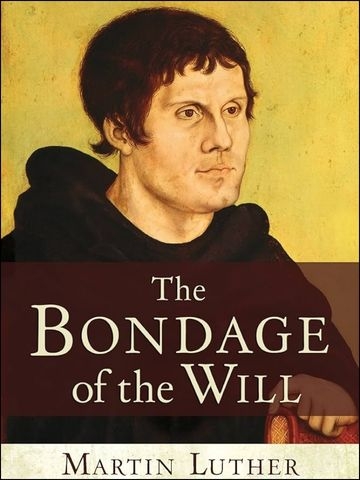
Martin considered "The Bondage of the Will" and the catechisms his own significant works. He wrote these in simple German. He believed that the concept of the Trinity in Christianity should not just be known as a doctrine but understood as three distinct persons: the Father as the creator, the Son as the redeemer, and the Spirit as representing divine unity and holiness among them.
In 1522, Martin Luther translated the New Testament into German, and in 1534, with the help of his colleagues, he translated the Old Testament. Until the end of his life, he continued refining the Bible translation for greater accuracy. Although others had translated the Bible into German before him, Martin's version stood out for its simplicity and fluency, understandable to both northern and southern Germans. It became extremely popular and is considered to have given the German language a refined literary form. He added introductions and notes according to his views and even decorated the Bible with anti-papal imagery, which helped spread his ideas rapidly.
He was criticised for adding the phrase "alone" to "faith" in Romans 3:28, emphasising that "faith alone justifies us, not works." He also omitted the Johannine Comma (1 John 5:7–8) from his translation, considering it spurious; it was later reinserted after his death.
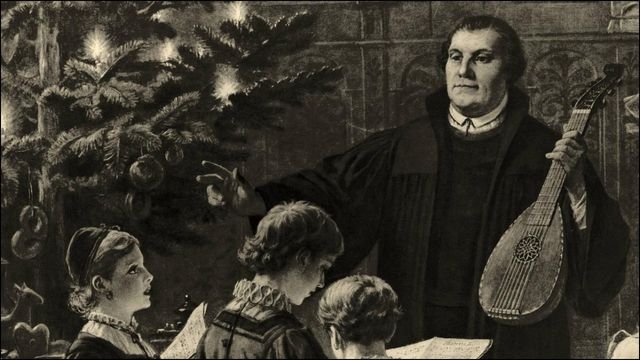
Martin Luther composed numerous hymns that appealed to both scholars and common people. He would sing them while playing a lute-like instrument. This instrument later evolved into the waldzither, which was considered a national instrument of Germany in the 20th century.
Some of his well-known hymns include "We All Believe in One True God", "From Heaven Above to Earth I Come", "A Mighty Fortress Is Our God", "From Depths of Woe I Cry to You", and "O God, Look Down from Heaven". Through these hymns, he conveyed key principles of Christianity.
Martin believed that after death, the soul goes into a state of sleep. Catholics believe that after death, the soul suffers for its sins in a state called Purgatory. Martin rejected this concept of Purgatory. He also believed that a person's identity continues after death.
In 1529, a meeting was held to maintain unity among Protestant groups. Agreement was reached on fourteen principles, but disagreement arose on the fifteenth, concerning the Eucharist. Jesus had said during the Last Supper, "This bread is my body, and this wine is my blood." Martin insisted this statement was literally true because Jesus is omnipresent, while his colleagues argued that it was symbolic or metaphorical.
Martin held that faith and reason are opposed to each other, and that matters of faith cannot be resolved through rational analysis. He considered critical reasoning an enemy of faith. However, later in life, he stated that for an enlightened person, reason and critical thinking can actually strengthen and deepen faith.
Written by

Dr. Prasad Kelkar