More Than a Celebration: Motherhood as the Soul of a Nation
In every generation, mothers carry forward values, traditions, and strength that help define both individual lives and the nation itself.
Total Views |


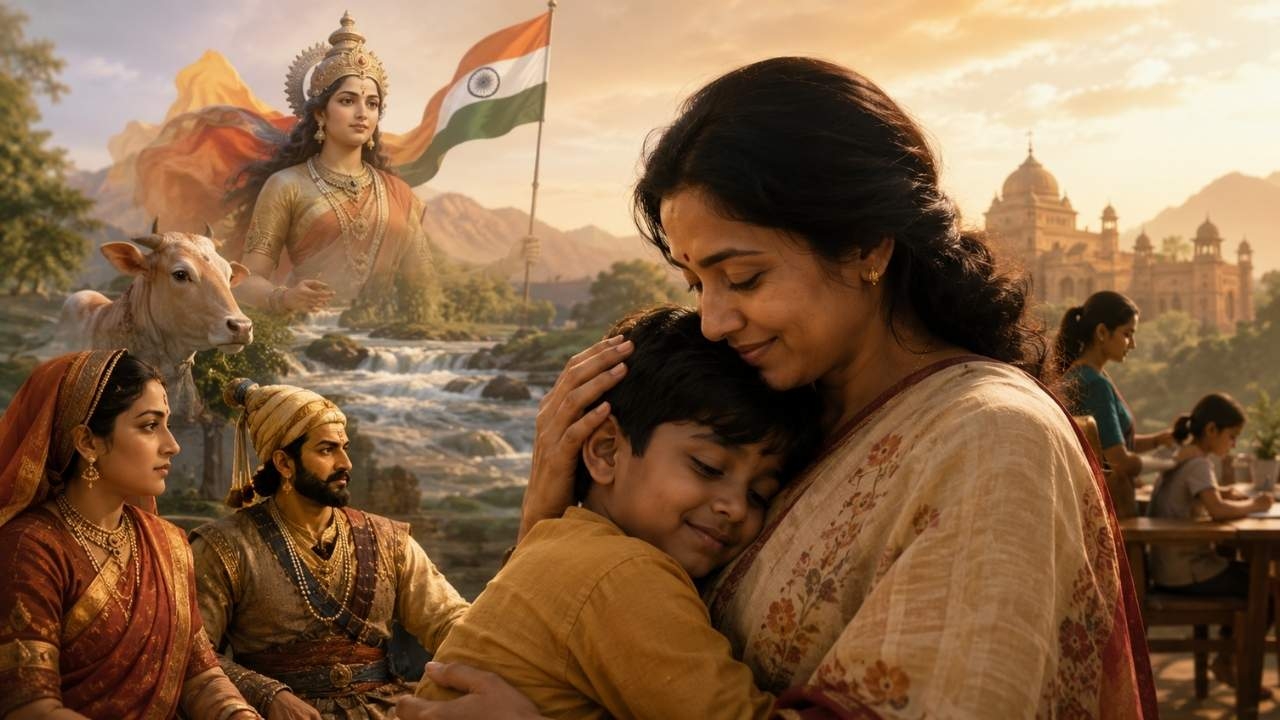
Every year, Mother's Day arrives with flowers, messages, and carefully chosen words of gratitude. Social media fills with pictures and memories, and for a moment, we pause to acknowledge the women who shaped our lives. But when the day passes, a deeper question remains—have we truly understood what motherhood means beyond celebration?
In Bharat, motherhood has never been seen as a limited or private role. It is expansive, powerful, and deeply connected to the idea of nationhood. We do not just speak of our biological mothers—we say 'Bharat Mata', 'Gau Mata', 'Ganga Mata'. This cultural instinct reflects something profound: the mother is not just a person but a principle—of nurturing, sacrifice, and continuity.
A mother is the child's first introduction to the world. Before classrooms and textbooks, it is her voice that teaches language, her actions that define values, and her quiet strength that becomes the child's first lesson in resilience. In countless homes across the country, it is the mother who shapes not only habits but also character.
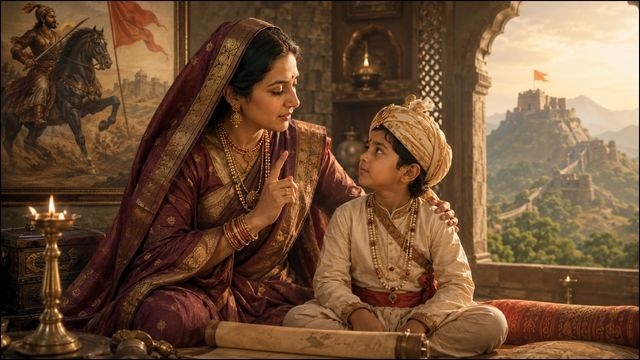
History reminds us that the making of great individuals often begins with extraordinary mothers. Jijabai did not simply raise Shivaji; she instilled in him a vision of Swarajya. Her stories, her convictions, and her unwavering belief shaped a leader who would go on to redefine history. Such examples are not distant legends—they reflect a timeless truth about the power of maternal influence.
Today, the context has changed, but the responsibility remains just as significant. Modern mothers navigate a complex world—balancing careers, managing homes, and raising children in an age of constant digital exposure. The challenge is no longer just about providing but about guiding. In a time where information is abundant but wisdom is scarce, the mother becomes the filter through which a child learns what truly matters.
Equally important is the role of mothers in preserving cultural identity. As globalisation reshapes lifestyles and aspirations, the home becomes the first and often the strongest space of cultural transmission. Whether it is speaking in one's mother tongue, celebrating festivals with meaning, or sharing stories from our epics, these small, everyday acts carry forward a civilisational legacy. More often than not, it is the mother who sustains this continuity.
Yet, for all the reverence expressed in words, there is often a gap in action. Motherhood is praised, but not always supported. The emotional strength, patience, and constant effort that mothers invest remain largely invisible. If we truly believe that mothers are central to nation-building, then society must move beyond symbolic appreciation. Shared responsibilities within families, supportive workplaces, and a genuine respect for their time and aspirations are essential.
Mother's Day, therefore, should not be reduced to a ritual of gratitude. It should serve as a reminder of something far more significant—that the strength of a nation is quietly shaped within its homes. And at the centre of that space stands the mother, not seeking recognition but giving her best, every single day.
To honour motherhood is to recognise its enduring impact—not just on individuals, but on the very character of the nation.
Written by
Dr. Smitha Shine