Women, Society and the Balance of Empowerment
Women have long shaped Bharat"s moral and cultural foundation through courage, wisdom, sacrifice, and their role in guiding future generations.
Total Views |


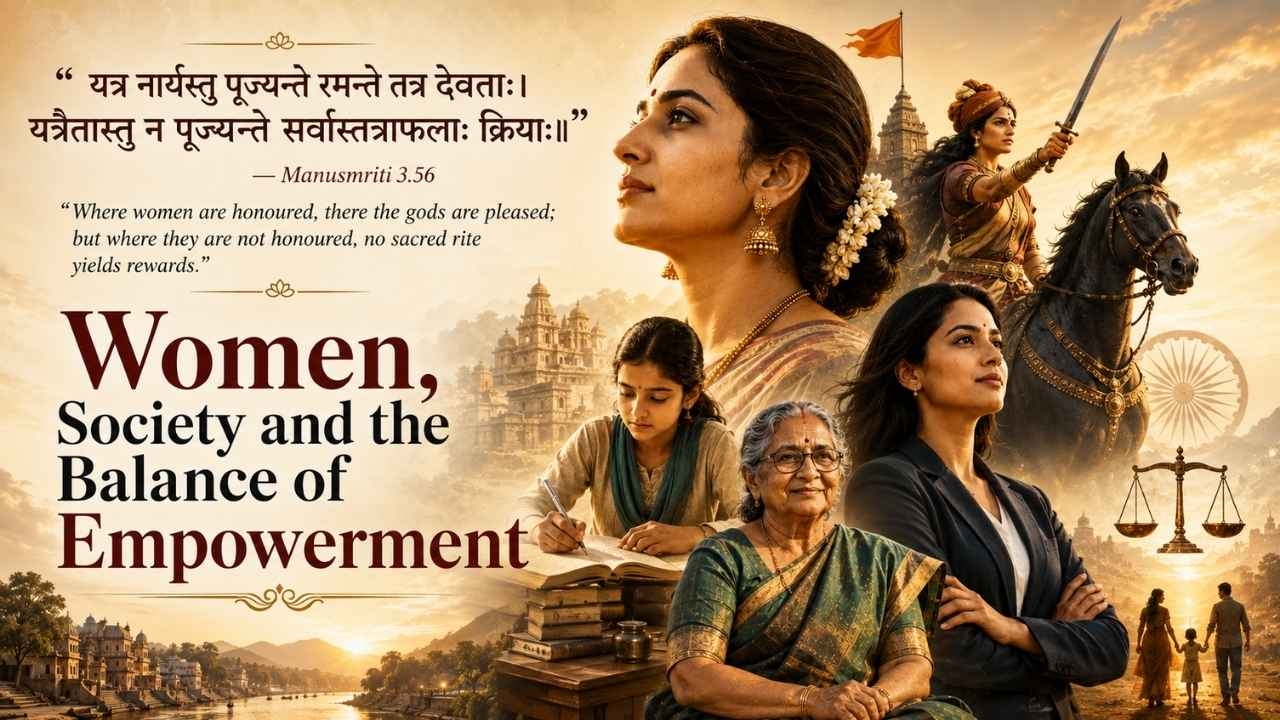
"यत्र नार्यस्तु पूज्यन्ते रमन्ते तत्र देवताः।
यत्रैतास्तु न पूज्यन्ते सर्वास्तत्राफलाः क्रियाः॥"
— Manusmriti 3.56
"Where women are honoured, there the gods are pleased; but where they are not honoured, no sacred rite yields rewards."
This shloka from the Manusmriti reflects the deep respect that Indian philosophy has traditionally accorded to women. It shows that the dignity of women was never viewed as secondary in Bharat’s civilisational thinking. A society where women are respected is considered a place worthy of divine presence. Women were powerful yesterday, they are powerful today, and they will remain powerful tomorrow.
The discussion is not limited to how any one religion or community has treated women. Rather, it concerns the broader Indian philosophy that recognises women as the foundation of harmony, culture, and social balance. From ancient times, women have been regarded not merely as members of society, but as its emotional and moral centre.
In the modern era, however, feminism has taken multiple forms. While its original purpose was to ensure dignity, equality, and protection for women, certain extreme interpretations have, at times, created social imbalance instead of harmony. There is no denying that crimes such as rape, domestic violence, and dowry harassment are serious realities, and strict laws were necessary to protect women from such injustices. Bharat introduced laws relating to rape, anti-dowry measures, and domestic violence with the intention of safeguarding women’s rights and dignity.
At the same time, concerns are increasingly being raised regarding the misuse of certain legal provisions. This has created fear and hesitation among many individuals regarding marriage and long-term commitment. As a consequence, urban Bharat has witnessed changing social patterns, including rising divorce rates and a growing preference among some individuals to remain single. Reports have often suggested that divorce rates in urban areas have increased significantly over the last decade, while surveys indicate that many young people now prioritise individual independence over traditional family structures.
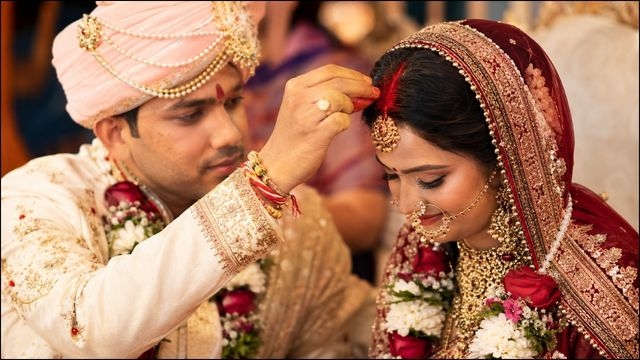
Indian society has historically been built upon the idea of collective responsibility rather than excessive individualism. Marriage was never viewed merely as a personal arrangement between two individuals; it was seen as a partnership rooted in duty, sacrifice, and mutual understanding. Both men and women deserve equal respect, dignity, and fairness within this institution. However, social harmony can survive only when rights are balanced with responsibilities.
The solution, therefore, lies not in conflict between men and women, but in cooperation and balance. In Indian thought, women have always been regarded as symbols of knowledge, strength, humility, compassion, and wisdom. They possess the unique ability to balance strength with sensitivity and independence with responsibility. The role of women in shaping society is therefore not limited to empowerment alone, but extends to preserving social harmony and guiding future generations.

History itself offers countless examples of women who used their power for the upliftment of society, including warriors like Rani Lakshmibai and Rani Abbakka Devi, as well as modern inspirations such as Sudha Murty. Their lives demonstrate courage, wisdom, sacrifice, and contribution towards nation-building rather than social division.
This article is not a criticism of women’s empowerment. Rather, it is a reminder that women possess immense power to transform the world into a better place through their presence, values, and leadership. However, this power should always contribute towards the betterment of humanity and the strengthening of society.
Since ancient times, women in Bharat have participated in political, intellectual, and social life. They enjoyed freedom of thought and contributed actively to civilisation. Yet, their strength was traditionally used as a force for unity, balance, and welfare rather than polarisation. That spirit of balanced empowerment remains relevant even today.
A strong society can never be built through hostility between genders. It can flourish only through mutual respect, fairness, and harmony between men and women, the two pillars upon which every civilisation stands.
Article by

Divya Maheshwari
Law Student at Kalinga University