Modi, Obama and the Politics of Street Food Diplomacy
Whether in Bengal, Singapore or Vietnam, simple meals at roadside stalls have become powerful moments of public connection, diplomacy and cultural identity.
Total Views |


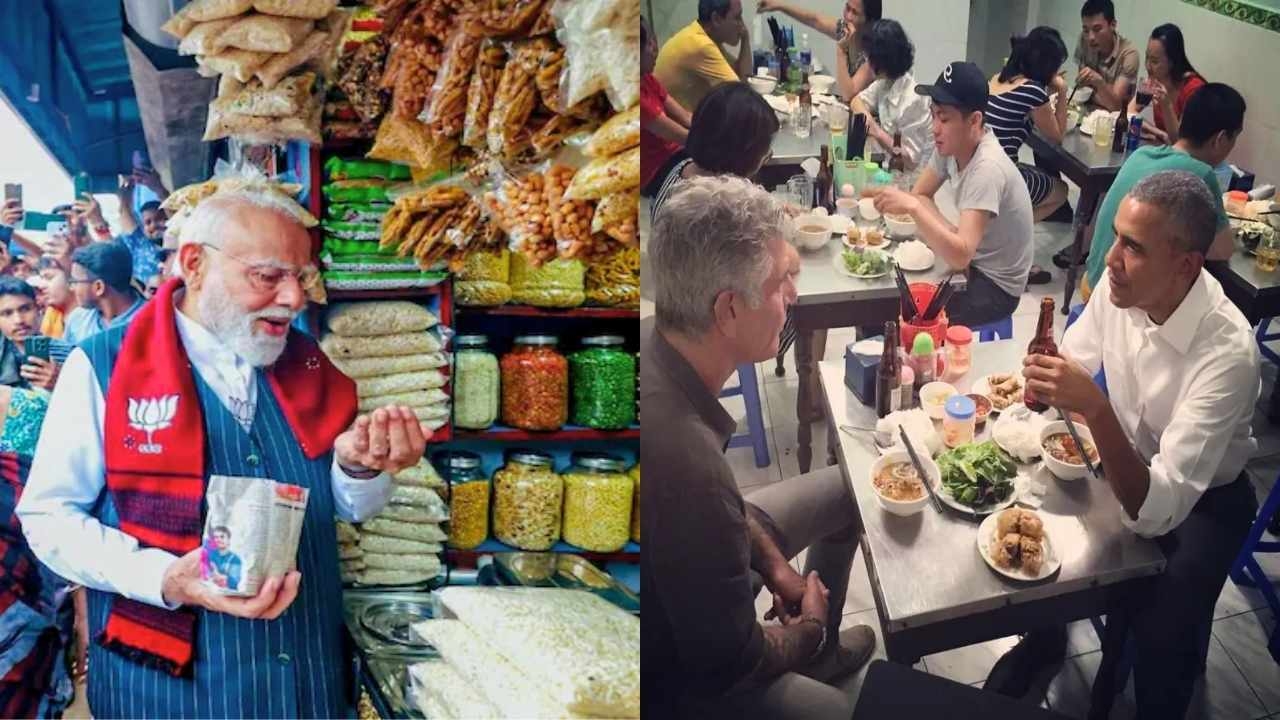
In an era of carefully scripted political theatre and digital optics, street food has emerged as one of the most authentic bridges between leaders and the people they serve. From Indian thelas to Singaporean hawker centres and Hanoi's humble stools, world leaders have instinctively understood that sharing a plate of local fare cuts through formality and signals a deeper cultural rootedness.
Modi's Jhalmuri to Obama's Bun Cha
In the heat of the 2026 West Bengal election campaign, Prime Minister Narendra Modi once again demonstrated his instinctive connect with the masses. On April 18, stopping at a roadside stall in Jhargram, he relished jhalmuri, the iconic Bengali puffed rice delicacy tossed with onions, chillies, peanuts, mustard oil, and spices. Sitting among locals, interacting with children and supporters, and paying the modest ₹10 despite the vendor's refusal, Modi turned an ordinary pause into a powerful cultural statement. The images and his post, "Jhalmuri break in Jhargram!", went viral, triggering memes, admiration, and renewed debate on "street food politics".
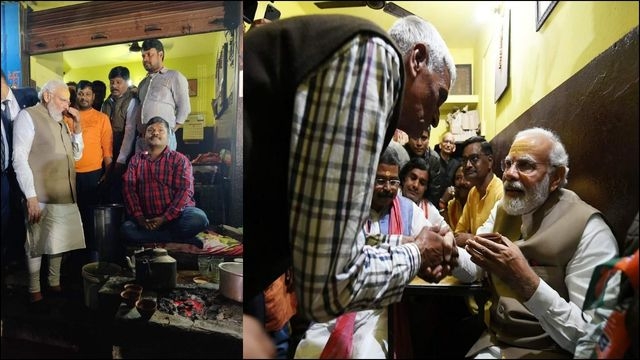
Notably, over the years, Prime Minister Modi has repeatedly embraced India's vibrant street food culture as a way to reaffirm his bond with the common citizen. In 2022, during the Uttar Pradesh Assembly elections, he stopped at the legendary Pappu Ki Addi near Assi Ghat in Varanasi for a cup of Banarasi chai. The historic tea stall, immortalised in literature and cinema, gained fresh national attention. In 2020, at Delhi's Hunar Haat, he savoured litti chokha paired with kulhad chai, celebrating India's artisanal traditions and regional flavours while engaging with craftsmen and visitors.
Global Resonance of Street Food Diplomacy
The phenomenon is not unique to India. World leaders have long recognised the soft power of street food.
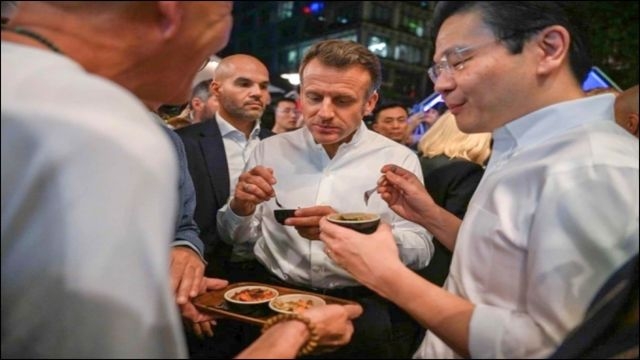
In May 2025, French President Emmanuel Macron visited Singapore's iconic Lau Pa Sat hawker centre during his state visit. Accompanied by Prime Minister Lawrence Wong, Macron enjoyed satay and other local delicacies among ordinary diners. The visit underscored Singapore's UNESCO-recognised hawker culture and highlighted food as a bridge in international relations.
Perhaps the most famous example remains former US President Barack Obama's 2016 visit to Bun Cha Huong Lien in Hanoi. Sharing a simple $6 meal of bun cha with celebrity chef Anthony Bourdain, Obama sat on plastic stools in a busy street-side eatery. The restaurant was instantly catapulted to global fame, rechristened "Bun Cha Obama", and continues to draw tourists years later. The owners preserved his table and created an "Obama Combo", turning a humble meal into a lasting symbol of American-Vietnamese friendship.
MUST READ - End of "Didi Ka Gunda Raj": West Bengal Rejects TMC's Reign of Violence and Intimidation
Joe Biden, during his time as Vice President, made ice cream stops a signature part of his public persona. From Dairy Queen outlets to local parlours across America, Biden's casual ice cream outings humanised him and generated warmth across party lines.
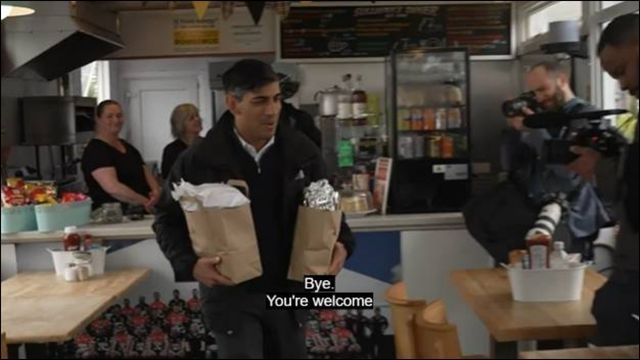
In the United Kingdom, then Prime Minister Rishi Sunak was seen buying breakfast from a local café during the 2024 election campaign, handing out food while engaging with voters. In Indonesia, both presidential candidates in 2014, Joko Widodo (Jokowi) and Prabowo Subianto, leveraged street food imagery. Jokowi's frequent stops at warteg stalls and Prabowo's association with nasi goreng and mutton satay helped project them as men of the people in a nation proud of its rich culinary traditions.
Singapore's Lee Hsien Loong too was photographed buying takeaway pasta at a community hawker centre during the 2015 election period, reinforcing the city-state's ethos of leaders staying connected with everyday life.
Why Street Food Matters in Politics
In diverse democracies, where leaders are often accused of being distant or elitist, breaking bread or sharing jhalmuri at roadside stalls signals humility, cultural awareness, and respect for grassroots traditions. Such visits generate massive social media traction, boost local businesses, promote tourism, and subtly reinforce national identity.
For India, under Prime Minister Modi, this approach carries added significance. It celebrates the country's unparalleled diversity of regional cuisines while reinforcing the idea of cultural unity through everyday traditions. Whether it is Bengali jhalmuri, Banarasi chai, or Bihari litti chokha, these moments weave the cultural tapestry of Bharat into the political narrative.
Written by
Kewali Kabir Jain
Journalism Student, Makhanlal Chaturvedi National University of Journalism and Communication