The "Cockroach" Conspiracy: Unmasking the AAP-Linked Digital Sabotage
What do the origins, manifesto and foreign-linked social media presence of the "Cockroach Janta Party" reveal about its larger political agenda?
Total Views |


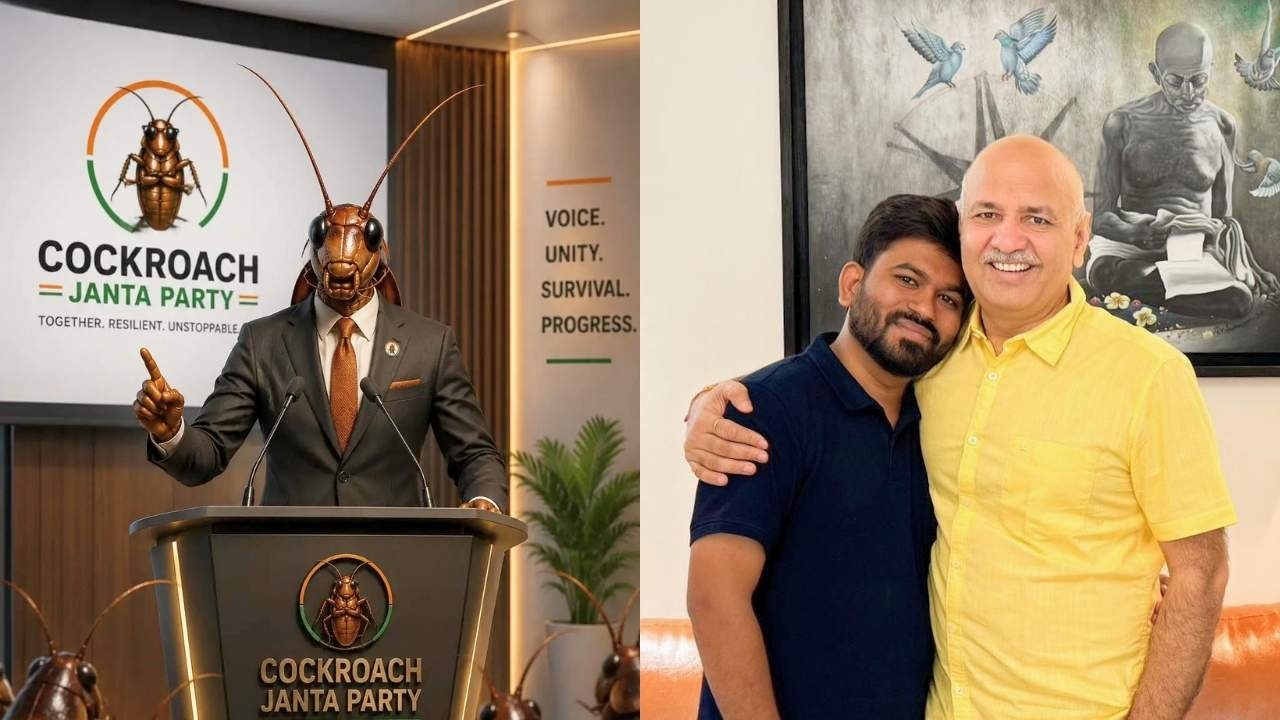
In the digital landscape of 2026, the emergence of the "Cockroach Janta Party" (CJP) has been presented to the public as a spontaneous, youth-led satirical movement. However, a granular investigation into the party's origins, its founder's professional history, and its ideological manifesto reveals that the CJP is less a grassroots uprising and more a calculated exercise in digital influence operations, closely mirroring the tactical playbook of the Aam Aadmi Party (AAP) and its associated ecosystem.
The Genesis of a Manufactured Narrative
The CJP was launched in the immediate aftermath of remarks made by the Chief Justice of India (CJI) regarding the quality of entrants into professional fields such as law and journalism. While the CJI later clarified that his comments were aimed at those utilising fraudulent academic credentials, the CJP seized upon the terminology to construct a narrative of victimhood.
By branding themselves as the "voice of the unemployed" and adopting the "cockroach" label, the founders successfully weaponised irony to deflect attention from the substantive issue of academic integrity. Instead, they framed the judiciary as an adversary of the youth.
"No distance will ever weaken my commitment to AAP", Abhijeet Dipke
The central figure behind this initiative is Abhijeet Dipke, a known operative within the AAP's social media infrastructure. Dipke's career trajectory is well documented. During the 2020 Delhi Assembly elections, he was identified as a key strategist in the party's "meme warfare", responsible for creating content that projected Arvind Kejriwal as an approachable leader while systematically delegitimising political opponents.
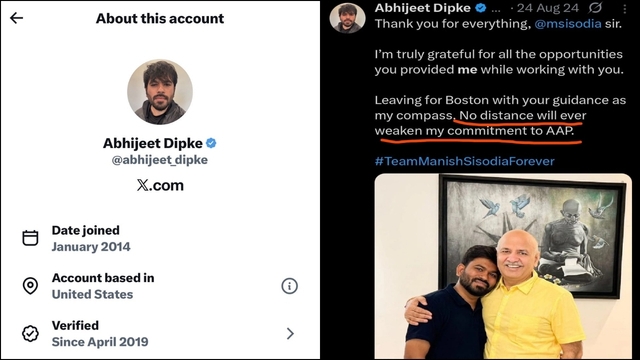
His transition from direct AAP campaigning to the establishment of the CJP signifies a strategic shift from explicit party promotion to the creation of "independent-seeming" satirical platforms capable of mobilising sentiment against institutional targets without the baggage of a formal party label.
Notably, the social media handles of both the CJP and its founder are based in the United States, suggesting what critics describe as a disguised global influence operation directed against Bharat.
Abhijeet Dipke's Relations with Hurriyat
Abhijeet Dipke was flagged in 2019 by the Legal Rights Observatory (LRO) for allegedly pushing narratives aligned with the Hurriyat and external actors. This development transforms the CJP from a mere political satire project into what critics describe as a serious matter of national security.
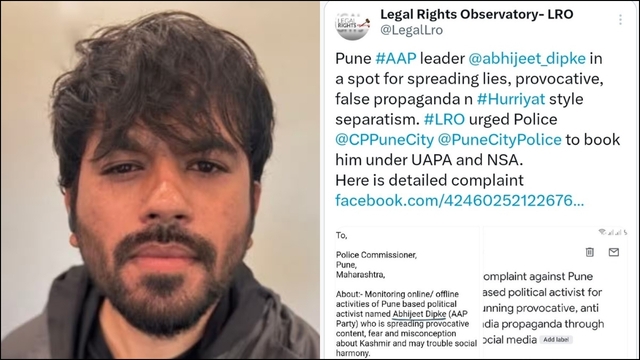
The LRO's formal complaint to the Pune Police, seeking action under the UAPA and NSA, underscores what it alleges to be a consistent pattern of behaviour involving the systematic dissemination of content aimed at undermining social harmony and spreading misinformation regarding Kashmir.
The Manifesto: A Blueprint for Institutional Erosion
Beneath the veneer of internet humour, the CJP's manifesto advances a series of radical anti-establishment demands that align closely with rhetoric frequently amplified by the opposition ecosystem.
The manifesto calls for:
The Criminalisation of the Election Commission: The manifesto demands the arrest of the Chief Election Commissioner under the UAPA for alleged vote deletion, a narrative that has become a recurring element of opposition propaganda aimed at undermining public faith in electoral outcomes.
Targeting the Judiciary: The manifesto proposes that the Rajya Sabha should no longer remain an option for retired judges, thereby exerting populist pressure on the judicial process.
Corporate and Media Demonisation: The manifesto advocates cancelling the licences of specific media houses and launching investigations into what it describes as "Godi media". This reinforces the narrative that independent private enterprise and sections of the media function merely as tools of the central government.
Written by

Kewali Kabir Jain
Journalism Student, Makhanlal Chaturvedi National University of Journalism and Communication