A Dozen Years, A Millennia Reclaimed: How Modi Restored Bharat's Cultural Pride?
Over twelve years, heritage restoration, sacred infrastructure projects, and global recovery of stolen artefacts have reshaped Bharat’s cultural and spiritual identity.
Total Views |


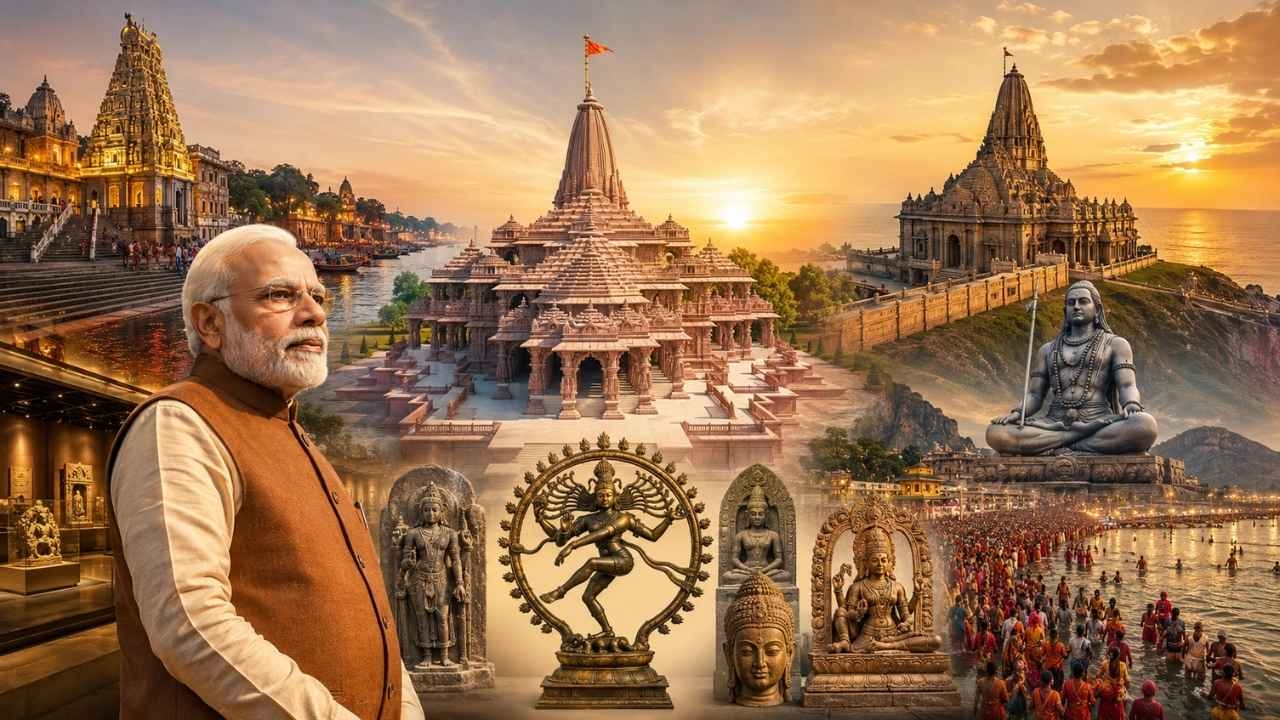
On 26 May, Bharat is set to complete 12 years under Prime Minister Narendra Modi's government, a government that professes profound respect for Bharat's enduring civilisation and diverse traditions. It is a government that views temple restoration as part of a broader national cultural awakening.
Bharat has historically been a land of magnificent temples. These temples have served not only as places of worship, but also as centres of learning, art, community gatherings, and festivals. Ancient temples held immense wealth and symbolised the pride of the communities in which they were built.
Over centuries, such temples became targets of foreign invasions and destruction. Conquering temples often served as a means of acquiring wealth and establishing social and political control. Yet, whenever Hindus regained power, they restored these sacred spaces and revived their traditions.
Here is a detailed look at the numbers and initiatives that have defined this civilizational awakening over the past twelve years.
The Return of the Stolen Gods: Reclaiming Antiquities
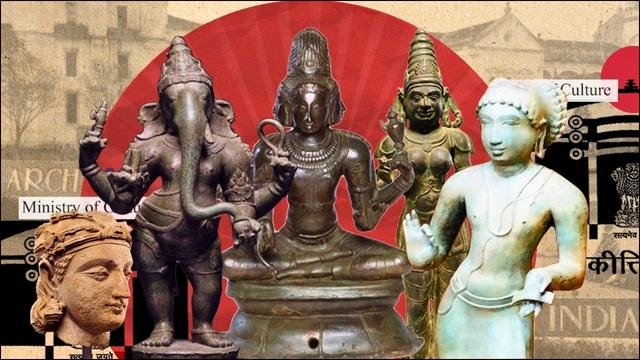
For centuries, Bharat's priceless heritage was looted and dispersed across global museums and private collections. Over the last 12 years, the Indian government launched an aggressive global cultural restitution mission. Diplomatic efforts to bring back stolen idols and artefacts have yielded unprecedented results.
Total Recoveries
Since 2014, Bharat has successfully brought back over 640 stolen antiquities. To put this into perspective, between 2004 and 2013, only one artefact was successfully returned to Bharat.
The US Partnership
The United States alone has returned 578 cultural artefacts since 2016. This includes the massive handover of 297 illegally trafficked antiquities following PM Modi's US visit in September 2024, 105 artefacts in 2023, and 157 in 2021.
Iconic Retrievals
Among the priceless pieces brought home are a 12th-century Chola-era Nataraja bronze, the revered Annapurna idol returned to Varanasi, and countless ancient Buddhist and Jain sculptures dating back millennia.
Rebuilding the Sacred Geography
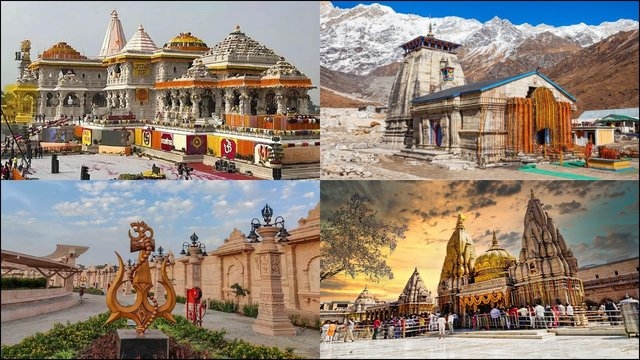
The Modi era recognised that spirituality and modern infrastructure do not exist in silos. The government embarked on mega-projects to rebuild, expand, and decongest Bharat's most sacred sites, transforming them into world-class spiritual destinations.
1. The Temple Corridors
Ayodhya Ram Mandir
The inauguration of the grand Ram Temple on 22 January 2024 marked a historic turning point, resolving a centuries-old civilizational quest and fundamentally altering the cultural landscape of North Bharat.
Kashi Vishwanath Dham
The project completely revitalised Varanasi by clearing narrow lanes and directly connecting the ancient temple to the sacred Ganga ghats, dramatically improving the pilgrim experience.
Mahakal Lok
Launched in Ujjain, Madhya Pradesh, this expansive corridor created a majestic, art-filled promenade for millions of devotees visiting the revered Mahakaleshwar Temple.
Kedarnath and Somnath
Massive reconstruction efforts at Kedarnath, including the installation of the Adi Shankaracharya statue, and the development of a majestic sea-facing promenade at the Somnath Temple in Gujarat, have redefined these ancient pilgrimage sites.
2. The PRASHAD Scheme
Launched to holistically develop pilgrimage infrastructure, the Pilgrimage Rejuvenation and Spiritual, Heritage Augmentation Drive (PRASHAD) has expanded significantly over the years.
What began as a modest initiative with eight projects in 2015 has grown into 54 sanctioned projects across 28 States and Union Territories.
The total estimated cost allocated for these spiritual infrastructure upgrades stands at an impressive ₹1,726.74 crore. These investments have directly contributed to cleaner facilities, multi-level parking, sound-and-light shows, and improved accessibility at pilgrimage sites ranging from Kamakhya in Assam to Trimbakeshwar in Maharashtra.
3. Maha Kumbh 2025: A Staggering Congregation
The scale of Bharat's cultural mobilisation became fully visible during the Maha Kumbh in Prayagraj in early 2025. Over a 45-day period, a record-breaking 66 crore devotees participated in the spiritual gathering, far exceeding the initial estimate of 45 crore.
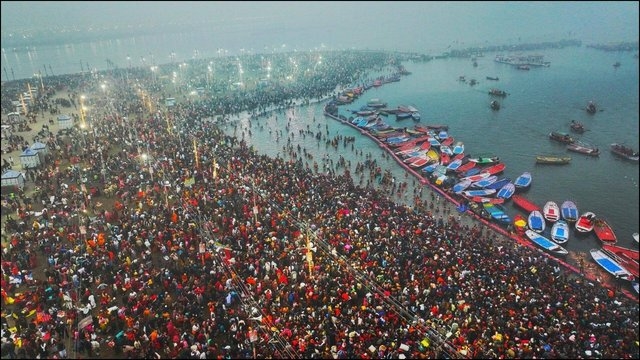
The event also featured a massive 10.24-acre Kalagram, or cultural village, showcasing the peak of Bharat's organisational and cultural capabilities.
Institutionalising Heritage: Languages, Literature, and Museums
Beyond stone and mortar, the past 12 years have also witnessed significant institutional efforts aimed at preserving Bharat's linguistic and literary diversity.
Elevating Classical Languages
In October 2024, the government officially granted Classical Language status to Assamese, Marathi, Pali, Prakrit, and Bengali. This expanded Bharat's list of recognised classical languages to 11, ensuring state support for their research and academic preservation.
Global Recognition
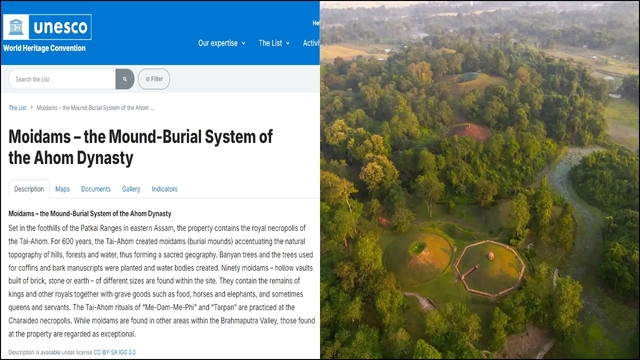
Bharat now boasts 43 UNESCO World Heritage Sites, with notable recent additions including the Moidams, the mound-burial system of the Ahom dynasty in Assam.
Literary Treasures
In a historic achievement, foundational Indian texts including the Ramcharitmanas, Panchatantra, and Sahrdayāloka-Locana were inscribed into the 2024 UNESCO Memory of the World Committee for Asia and the Pacific (MOWCAP) Regional Register.
Museums of the Future
The government has also developed world-class experiential spaces. The Archaeological Experiential Museum in Vadnagar, built at a cost of ₹298 crore, houses more than 5,000 artefacts showcasing 2,500 years of unbroken history.
Meanwhile, the upcoming Yuge Yugeen Bharat Museum in New Delhi is set to become the largest museum in the world.
As we look back at the last 12 years, Narendra Modi's tenure represents a fundamental shift in how Bharat views itself. By investing billions into heritage corridors, reclaiming stolen antiquities with geopolitical assertiveness, and officially nurturing ancient languages, the government has sought to demonstrate that civilizational pride and modern development can reinforce one another.
Written by

Kewali Kabir Jain
Journalism Student, Makhanlal Chaturvedi National University of Journalism and Communication