Bharat's Digital and Economic Rise Under Modi
Rising GDP, record digital payments, stronger infrastructure and financial inclusion have reshaped Bharat’s economic and technological landscape since 2014.
Total Views |


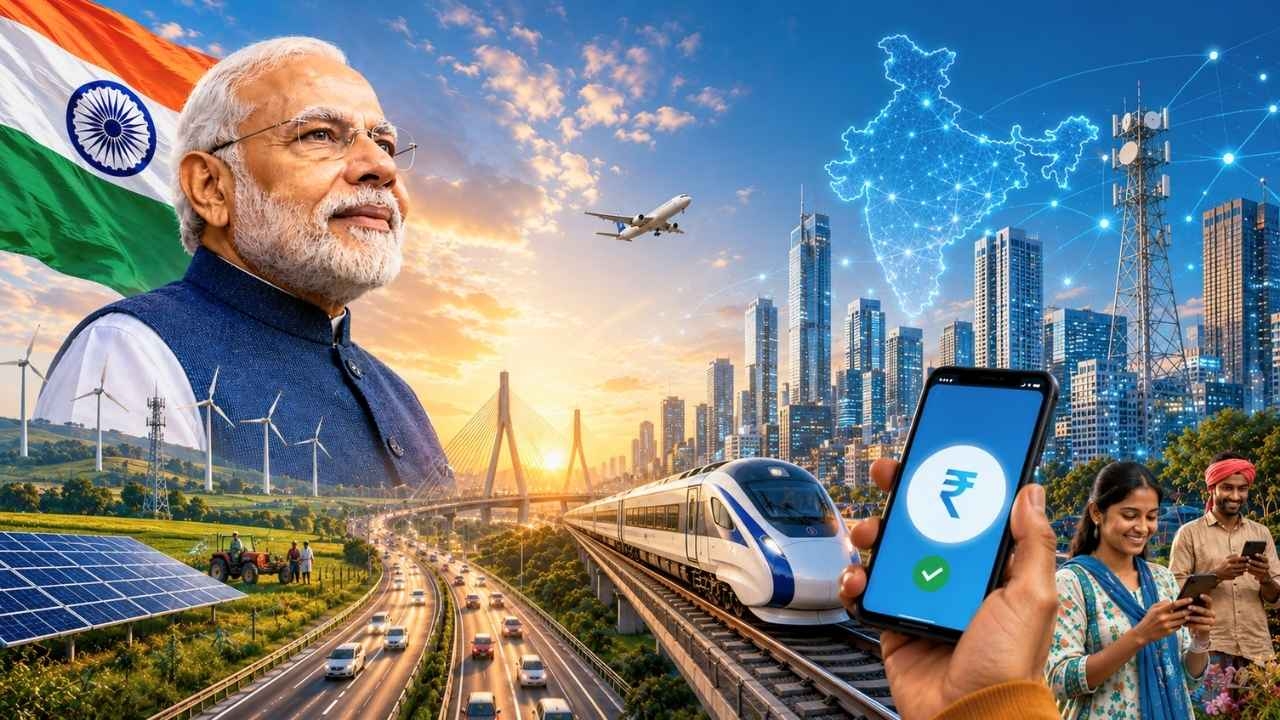
As Bharat marks the completion of 12 years of the Narendra Modi government in 2026, the nation stands at a pivotal moment in its post-independence history. From a $2 trillion economy in 2014, plagued by policy paralysis, high inflation, and cronyism scandals, Bharat has emerged as a resilient powerhouse and the world's fastest-growing major economy, with a nominal GDP exceeding $4 trillion. This resurgence is the result of decisive, reform-oriented governance rooted in the vision of Atmanirbhar Bharat, coupled with infrastructure development, ease of doing business reforms, and a bold digital transformation.
Economic Transformation of Bharat
In 2014, Bharat inherited an economy reeling from the aftereffects of the global financial crisis, policy uncertainty, and corruption scandals that had eroded investor confidence. GDP growth had slowed, fiscal deficits remained high, and the country ranked poorly on ease of doing business metrics.
Now, after 12 years of double-engine governance, Bharat's nominal GDP has more than doubled in dollar terms, rising from approximately $1.86–2.04 trillion in 2014 to over $4 trillion by 2025–26. In rupee terms, it has nearly tripled from ₹106.57 lakh crore in 2014–15 to an estimated ₹331 lakh crore in 2024–25. Real GDP growth has remained robust despite global headwinds, including the COVID-19 pandemic, with Bharat consistently outpacing other major economies. Projections for 2025–26 place growth at 6.3–6.8%, cementing Bharat's position as the world's fastest-growing large economy.
Several key structural reforms drove this turnaround.
Goods and Services Tax (GST)
Implemented in 2017, the Goods and Services Tax introduced the concept of "one nation, one tax". It replaced a fragmented indirect tax regime, improved compliance, widened the tax base, and created a unified national market.
Insolvency and Bankruptcy Code (IBC)
The Insolvency and Bankruptcy Code helped clean up non-performing assets, strengthened creditor rights, and improved the overall business environment.
Production-Linked Incentive (PLI) Schemes and Make in India
The PLI schemes and the Make in India initiative boosted manufacturing in sectors such as electronics, pharmaceuticals, and defence. These policies also helped Bharat attract global supply chain shifts away from China.
Labour and FDI Reforms
The liberalisation of foreign direct investment rules across sectors, combined with labour law simplifications, signalled Bharat's openness to business while continuing to prioritise national interests.
Foreign Direct Investment surged as a vote of confidence in the Indian economy. From 2014 to 2025, Bharat attracted around $749 billion in FDI, marking a 143% increase over the previous 11-year period. Cumulative FDI inflows since 2000 crossed significant milestones, with major investments flowing into infrastructure, manufacturing, and digital sectors.
Infrastructure development became another cornerstone of Bharat's transformation.
The pace of national highway construction accelerated dramatically, rising from approximately 8–11 kilometres per day before 2014 to averages exceeding 30 kilometres per day. Airports, railways, including high-speed corridors and electrification projects, ports, and rural roads expanded at an unprecedented scale. Schemes such as UDAN improved air connectivity, with the number of operational airports more than doubling. These investments enhanced productivity, improved logistics efficiency, and strengthened regional equity.
Poverty reduction stands as one of the strongest indicators of inclusive growth. Extreme poverty, measured at $2.15 per day, fell sharply from 16.2% in 2011–12 to 2.3% in 2022–23, lifting more than 170 million people out of poverty. Multidimensional poverty indices also declined significantly, aided by direct benefit transfers (DBT), Jan Dhan accounts, and welfare schemes such as PM Garib Kalyan Anna Yojana, which reached hundreds of millions during periods of crisis.
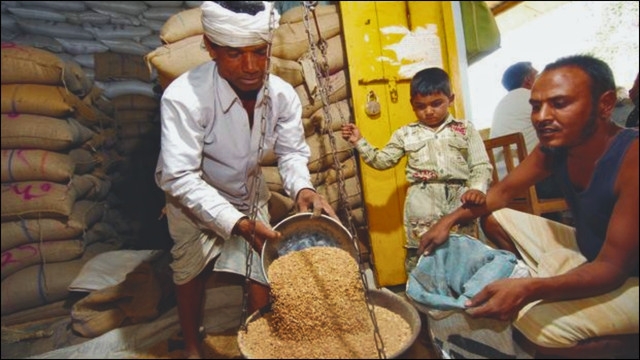
Financial inclusion expanded rapidly. Bank account ownership rose from approximately 48% to more than 70%, while women's participation in the formal banking system surged significantly.
Challenges such as the COVID-19 shock, which caused an economic contraction in 2020, were met with a strong rebound supported by fiscal prudence, vaccination drives, and economic stimulus measures. Inflation has been moderated to around 4–5% in recent years, foreign exchange reserves have strengthened, and exports have become increasingly diversified.
The Digital Revolution: From Laggard to Global Leader
Parallel to economic reforms, the Modi government spearheaded a digital resurgence that redefined governance, commerce, and inclusion. Launched in 2015, the Digital India initiative aimed to bridge the digital divide and build a knowledge-based economy.
The crown jewel of this transformation is the Unified Payments Interface (UPI), launched in 2016. What began modestly has evolved into a global benchmark for real-time payments.
UPI now handles more than 18–21 billion transactions per month, based on 2025–26 data, with transaction values exceeding ₹24–28 lakh crore during peak months. It accounts for nearly 85% of digital transactions in Bharat and almost 50% of global real-time digital payments. Daily transaction volumes often surpass 600–700 million, rivaling or even exceeding major global card networks.
The growth has been exponential, rising from negligible transaction volumes in 2016–17 to trillions in value today, with a compound annual growth rate exceeding 100% during its early years.
This digital public infrastructure, built on Aadhaar, UPI, and ONDC, has democratised finance. It reduced dependence on cash, curbed leakages in welfare delivery by saving lakhs of crores through DBT, and empowered small vendors, farmers, and the unbanked population. Bharat's digital payments ecosystem is projected to contribute substantially towards the country's $1 trillion-plus digital economy ambition.
Several complementary initiatives further strengthened this digital ecosystem.
Aadhaar and Jan Dhan
More than 1.4 billion Aadhaar enrolments enabled targeted and leakage-free delivery of government services and welfare benefits.
Broadband and Rural Connectivity
The expansion of internet access, smartphones, and digital platforms such as UMANG and other e-governance services improved accessibility across rural and urban Bharat alike.
Startup India
A vibrant startup ecosystem emerged under the Startup India initiative, helping Bharat become the world's third-largest startup hub. Digital tools, policy support, and easier access to capital accelerated entrepreneurial growth.
The synergy between economic reforms and digital policies has become increasingly evident. UPI and digital public infrastructure lowered transaction costs, accelerated economic formalisation, enhanced tax compliance, and created employment opportunities in fintech, e-commerce, and logistics.
This digital leapfrog has positioned Bharat not merely as a consumer of technology, but also as a global exporter of digital solutions.
Written by

Kewali Kabir Jain
Journalism Student, Makhanlal Chaturvedi National University of Journalism and Communication