The Rebel Christian Clergyman Who Influenced the Entire World: Martin Luther – Part 8
Luther"s final years, marked by illness and harsh views, close a life that shaped faith, conflict, and lasting debates across Europe.
Total Views |


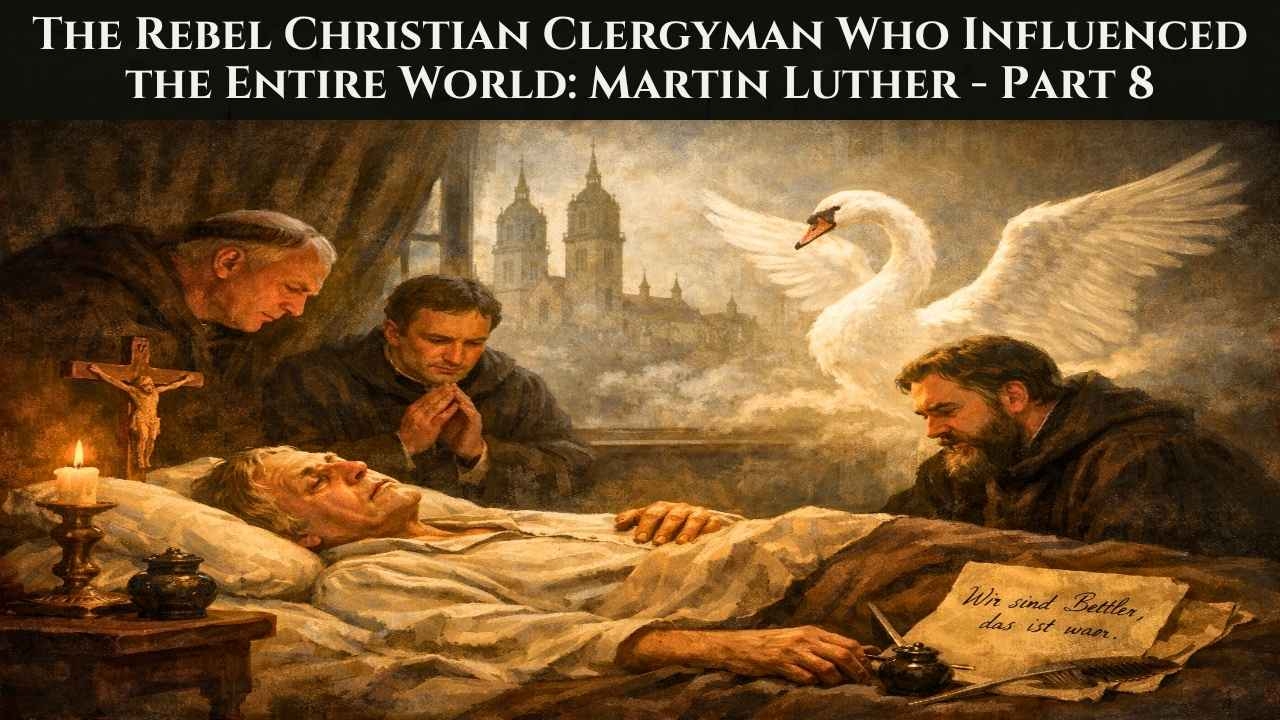
Every story must inevitably come to an end, just as death is an unavoidable reality in every human life. How could our protagonist, Martin Luther, be any exception?
Luther had been suffering from various health issues for many years. He had Ménière's disease, which caused him frequent dizziness. He also had a cataract in one eye. Between 1531 and 1546, his health steadily declined. In 1536, he developed kidney stones, followed by joint pain. In 1544, he began suffering from angina. During this period, he became extremely irritable.
Three days before his death, he delivered his final sermon in his birthplace, Eisleben. The entire thrust of this sermon was against the Jews. He insisted that strict measures should be taken against them—that Jews should be expelled from Germany immediately and, until they converted to Christianity, they should be persecuted. If they converted, well and good; otherwise, they were to be considered social enemies.
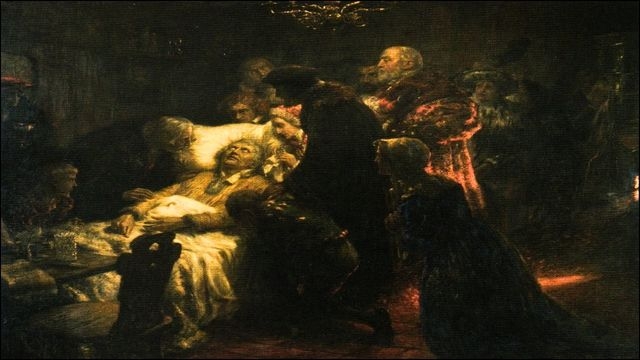
On February 17, at around 8 p.m., he began experiencing chest pain. After going to bed, he recited a prayer for the moment of death:
"Into your hands I commit my spirit; you have redeemed me, O Lord, faithful God" (Psalm 31:5).
After midnight, his chest pain worsened. Those present with him asked loudly,
"Reverend Father, are you ready to die, trusting in your Lord Jesus Christ and to confess the doctrine which you have taught in His name?"
Luther replied distinctly, “Yes.”
Soon after, he suffered a stroke and lost his ability to speak. On February 18, 1546, at 2:45 a.m., Martin Luther passed away. He was buried in All Saints' Church in Wittenberg, right in front of the pulpit, and his grave was constructed beneath it.
Some time after his death, a note written by him in his final moments was found. It was in Latin, except for one sentence in German:
"We are beggars: this is true."
The swan is used as a symbol of Martin Luther. On coins issued in his memory, the reverse side bears the image of a swan. In many paintings of Luther, a swan is depicted alongside him, and even a Lutheran church features a swan weather vane. There is a story behind this symbolism.
Jan Hus of Bohemia (present-day Czech Republic) — whose name meant “grey goose” — was also a religious rebel. He was declared a heretic and burnt alive. At that time, Hus is said to have declared:
"Today you roast a goose, but in a hundred years you will hear the song of a swan—and you will have to listen to it."
About a hundred years later came Luther's Ninety-Five Theses, and Hus's prophecy seemed to come true in that form. Hence, Luther came to be symbolised as a swan.
Thus ends the life of our protagonist.
You might wonder why, while writing about Gandhi's history, I suddenly began writing about Martin Luther. Once the window of history opened for me, I began noticing many contradictions between historical personalities and their relationship with the present. Eventually, I realised that these contradictions lie within our own colonial mindset.
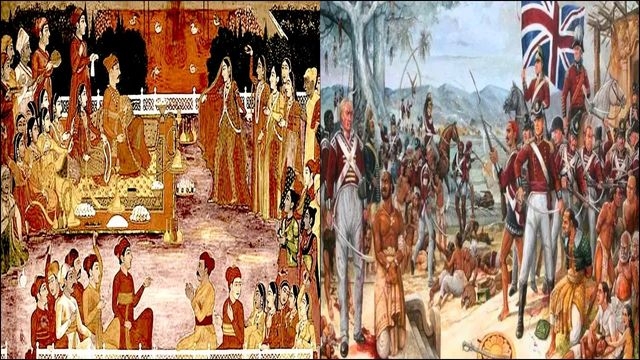
For nearly a thousand years, our country lived under subjugation. Two cultures invaded us, and looking at ancient Indian history, it becomes clear that we could not assimilate these cultures. This, however, was the fault of the invaders, because for the first time, India faced rigid, structured religious and cultural aggression—something contrary to its inherent nature.
The greatest loss during this millennium was that we lost our sense of "self". As a result, we never truly understood the meaning of becoming "independent". This is the root of the contradiction. The more recent of these invasions was the British Christian one.
While writing this biographical series, I became acquainted with Christianity—its various streams, such as Orthodox, Catholic, Protestant, Baptist, and Evangelical. I began to wonder how to categorise our protagonist: a political leader, a religious leader, or a saint? He does not fit our notion of a saint. Nor can he be called a founder of religion or a prophet, and certainly not a philosopher. So I called him a rebel—one who later became part of the establishment and who, in turn, did what earlier establishments had done.
For example, Luther's associate, John Calvin of France, had Servetus burnt alive on charges of denying the Trinity. As Protestantism became established, major upheavals took place in European history. The Thirty Years' War raged on, and millions perished. The concept of "secularism", as we use it today, emerged during this period. The importance of textual authority increased, definitions of rationality were shaped, and the seeds of the Enlightenment lay in this Reformation.
At times, these Protestants even preferred Muslims over Catholics. They sowed hatred against Jews, created ghettos to segregate them, looted their wealth, and resented their intellect—all because they did not convert to Christianity. These very Protestants later ruled our country and viewed India through a European lens.
In the next two parts, we will discuss the wars in Europe and their impact on India. It is indeed true that the thoughts—or even the misjudgments—of a single individual can influence the entire world.
Written by
Dr. Prasad Kelkar