The Rebel Christian Clergyman Who Influenced the Entire World: Martin Luther – Part 9
Tracing Luther"s intellectual roots, this part explores earlier reformers, Church power struggles, and how ideas of faith and freedom shaped the Reformation.
Total Views |


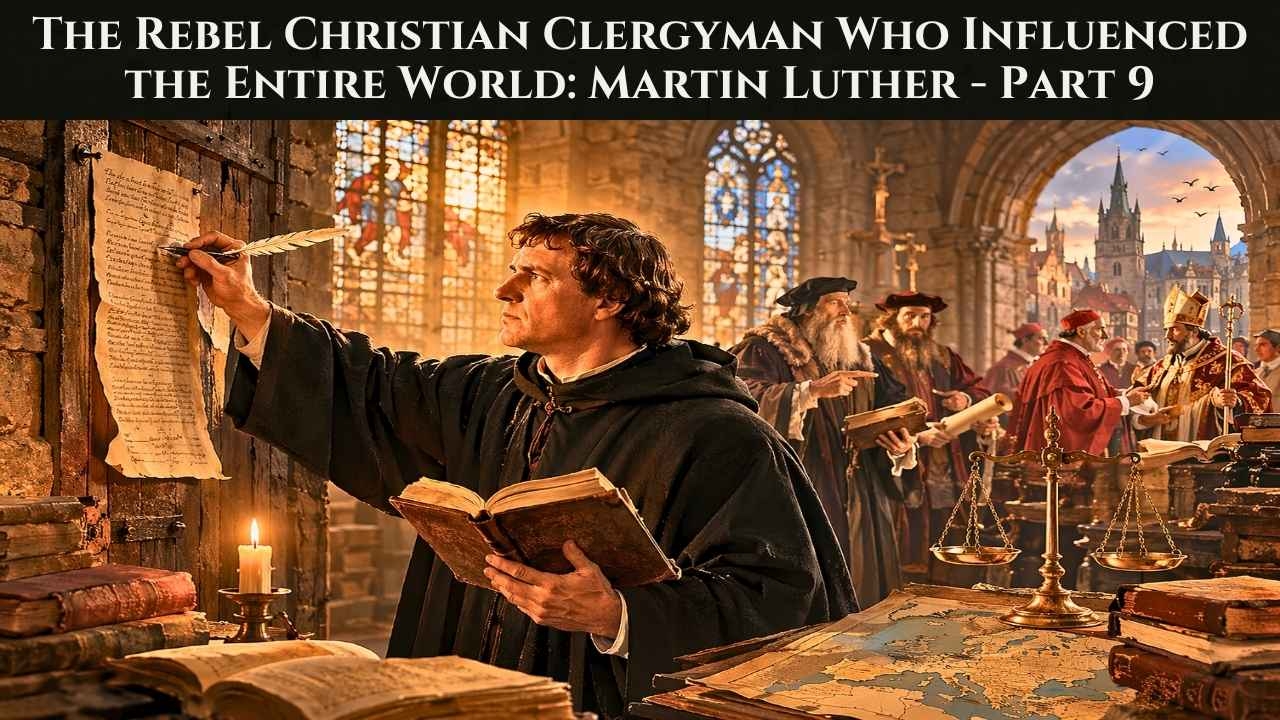
Why did Martin Luther feel the need to rebel? The first reason was the corruption within the Catholic Church, along with the Pope and priests. But was there any deeper inspiration behind Luther's actions? Who were his predecessors? No idea emerges suddenly; it takes shape through a background and the thinkers who contribute to it.
This line of thought can be traced back to Pope Gelasius I in the 5th century. Referring to Jesus Christ and the Bible (Luke 20:20, Mark 12:17), he proposed the idea of two authorities: the material world governed by the king (regnum) and the spiritual, eternal world governed by religious leaders. This framework later strengthened the Reformation.
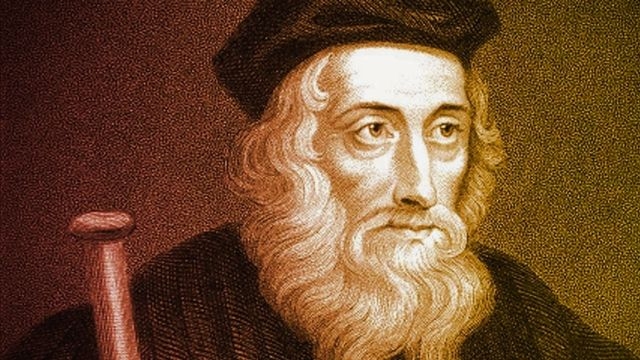
John Wycliffe, a Catholic theologian, was the first to translate the Bible into the language of the common people—vernacular English. His teachings influenced the Czech reformer and rebel Jan Hus. However, both were accused of heresy and burnt alive by the Roman Catholic Church and the state. Their ideas deeply influenced Martin Luther, making them his intellectual predecessors.
The Reformation gave birth to modern Europe, and the roots of secularism can be found here. All these reformers led a movement for Christian freedom. Examining the sources of this freedom is an intriguing endeavour. For ordinary readers unfamiliar with the Christian world, the story becomes even more intriguing.
What does it mean to be a Christian? It means complete surrender to God. God created humans in His own image, but due to original sin (Adam and Eve), humans became corrupt and began to succumb to bodily desires—hunger, wealth, sexual urges, and personal gratification.
Christian monks recognised these distortions in human life and the guilt within the human mind. To truly become spiritual or religious, one must undergo a process of transformation (conversion). First, one must attempt to renounce worldly desires. When a person repeatedly fails, they realise that, despite being born in sin, God still loves them and grants them grace. Another important belief is that God's grace through Jesus Christ is a path to salvation.
Human life has two aspects: material and spiritual. Material life will continue until the second coming of Christ. Thus, a true Christian is in constant struggle—to ensure that the spirit triumphs over the flesh. This journey of transformation is continuous, striving for control over bodily desires. One who surrenders to God in this way gradually becomes free from worldly authority. Through God's grace in Jesus Christ, a person can resist temptations and move toward Christian liberation.
Christianity shows two streams: one that advocates withdrawal from the world and another that seeks to guide and reform it. Those who achieve spiritual progress are believed capable of bringing change in society, and such individuals were entrusted with leadership roles like bishops. A system evolved to mould society along monastic ideals, and laws were created to unify the Church.
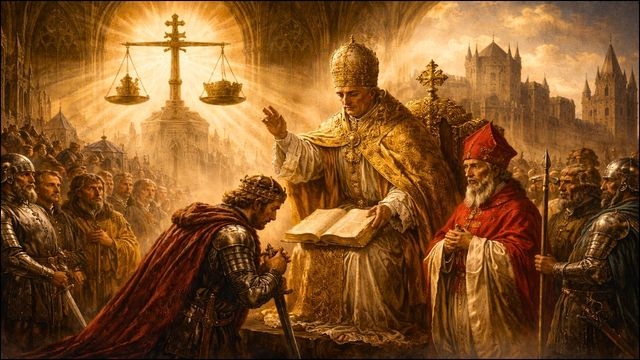
Until the 11th century, the Church was under the control of the material world—emperors or kings appointed priests and bishops. However, a reform emerged, arguing that those who are spiritually advanced should not be controlled by worldly authorities; instead, the Church, led by the Pope, should make such decisions. This came to be known as the “Freedom of the Church". Increasingly, the more religious a person was, the more they were seen as superior to worldly authority. Gradually, the Church began to exercise indirect control over the material world as well.
The Papal Revolution revolved around the relationship between secular authority and Church power. Over time, the Church's interference in worldly affairs grew so much that it became oppressive for both rulers and common people. People began to lose faith in the Church as an intermediary between God and the public, and resentment against religious authorities increased. This unrest culminated in the Protestant Reformation of the 16th century.
The Protestant Reformation eliminated the need for intermediaries like the Church, the Pope, and bishops. What was once confined within the Church could now occur anywhere and by anyone. Initially, people followed church rules individually, but gradually these rules weakened and began to disappear, leading to a form of secularisation within Christianity.
Martin Luther wrote The Freedom of a Christian, representing a third kind of freedom in this tradition. Luther argued that God gives humans the Ten Commandments and the laws of the Gospel, but humans cannot truly follow them without divine grace. Therefore, grace is more important than good deeds. Faith leads to grace, and through grace, a believer becomes free from religious rules, conditions, and rituals—this was Luther's interpretation of Christian freedom.
In essence, Martin Luther asserted that if one has absolute faith in God, then disciplines, rituals, processes of conversion, and even the role of a guiding religious authority can be set aside.
Written by
Dr. Prasad Kelkar