State Terror in a Workers' Paradise: A Retrospective Report on the Novocherkassk Massacre
When the Soviet government deployed tanks and live ammunition against the very working class it claimed to champion.
Total Views |


Date of Event: 1-2 June 1962
Location: Novocherkassk, Russian SFSR, Soviet Union
Regime: The Soviet Communist Government under Premier Nikita Khrushchev
Casualties: 26 unarmed civilians killed, 87 wounded
Subsequent Purge: 7 executed, 105 sentenced to hard labour
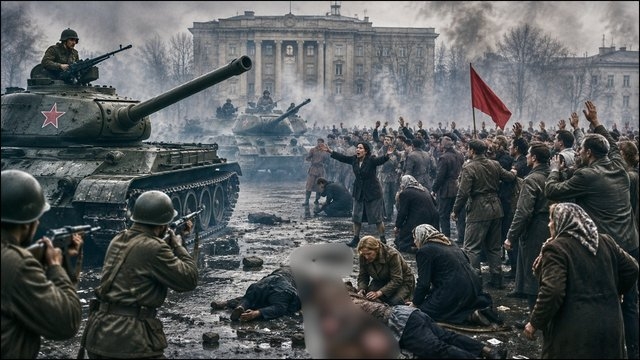
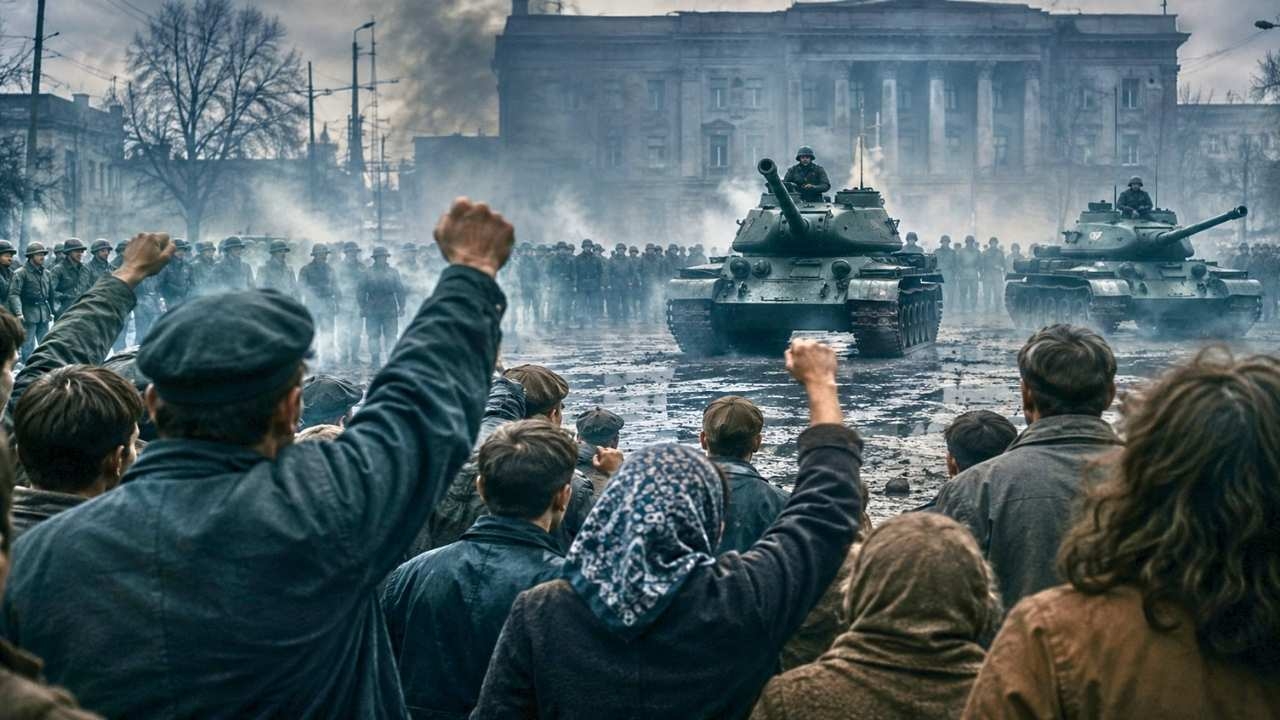
On 2 June 1962, the Soviet government deployed armed troops and tanks against unarmed, protesting factory workers in the city of Novocherkassk. The violent suppression resulted in the deaths of 26 citizens and the wounding of 87 others, followed by a swift and ruthless campaign of show trials, executions, and a 30-year state-enforced cover-up. The Novocherkassk massacre stands as a glaring indictment of the Soviet communist system, highlighting the catastrophic failures of its centrally planned economy, its inherent hostility to organised labour, and its willingness to use lethal military force to silence its own populace.
The Catalysts: Economic Mismanagement and State Arrogance
The unrest in Novocherkassk was a direct result of profound economic mismanagement by the central communist government. By the spring of 1962, the Soviet Union was struggling with severe food shortages caused by disastrous agricultural policies.
On 1 June 1962, the Kremlin mandated a devastating nationwide price increase on essential foodstuffs:
- Meat prices were increased by 30%.
- Butter prices were increased by 25%.
In a display of gross bureaucratic incompetence, the management at the Novocherkassk Electric Locomotive Factory (NEVZ) simultaneously enforced a revision of production quotas. This effectively reduced workers' wages by roughly 30%. For the average factory worker, the combination of falling wages and soaring food costs meant immediate poverty and hunger.
When workers approached the factory director to ask how they were supposed to feed their families, he reportedly responded with elite arrogance:
"If there isn't enough money for meat and sausage, let them eat liver-filled pirozhki."
1 June: The Strike Begins
Infuriated by the economic squeeze and the dismissal of their grievances, the workers at NEVZ went on strike. They halted trains on the vital Rostov-on-Don to Saratov railway line, demanding better pay and affordable food prices.
The local authorities, completely unequipped and unwilling to negotiate, panicked and contacted Moscow. Premier Nikita Khrushchev and the Politburo immediately viewed the strike not as a labour dispute but as a serious political threat. Instead of addressing the workers' economic grievances, Moscow ordered an overwhelming military and KGB response to crush the dissent.
2 June: The Communist-Led Massacre
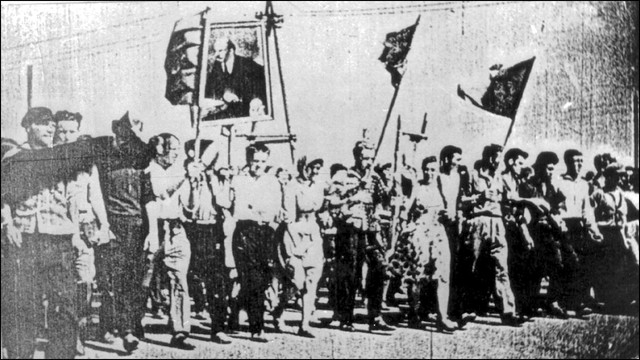
By the morning of 2 June, thousands of workers, including women and children, marched peacefully towards the city centre and the Communist Party headquarters to present their demands. They carried portraits of Lenin, believing that the system would hear their pleas. Instead, they were met by cordons of internal troops (MVD) and units of the Soviet Army.
During the unfolding events, General Matvey Shaposhnikov famously refused an order to deploy tanks against the crowd, stating:
"I see no enemy before me."
He was later expelled from the Communist Party and faced criminal charges for his insubordination.
Other commanders were fully compliant with the state's lethal directives. As the crowd gathered in the square outside the executive committee building, troops opened fire directly into the mass of unarmed civilians. According to declassified Soviet records, 26 people were killed in the square and 87 were wounded.
The aftermath of the massacre demonstrated the full machinery of Soviet state terror. The communist government immediately initiated a massive cover-up to conceal its actions from the rest of the USSR and the wider world.
Erasing the Dead
The bodies of the 26 victims were secretly transported out of the city and buried in unmarked graves across different cemeteries in the Rostov region. Families were not informed of where their loved ones had been buried.
Blood on the town square was so extensive that the local fire department had to wash it away, and sections of the square were hastily repaved to conceal the physical evidence of the slaughter. Hospital workers who treated the wounded were forced by the KGB to sign non-disclosure agreements under threat of death. Medical records were falsified to conceal bullet wounds.
To punish those deemed responsible for the unrest, the state arrested hundreds of people. In sham trials typical of the communist judicial system, 105 workers were sentenced to prison terms of up to 15 years. Seven individuals were sentenced to death and subsequently executed by firing squad.
The Novocherkassk massacre remained a tightly guarded state secret until 1992, only coming to light after the collapse of the Soviet Union.
Written by

Kewali Kabir Jain
Journalism Student, Makhanlal Chaturvedi National University of Journalism and Communication