Does China Control Congress? The Kenya Airport Deal Raises Questions
Has Congress"s long-standing engagement with the Chinese Communist Party influenced its approach to projects where Chinese and Indian interests compete abroad?
Total Views |


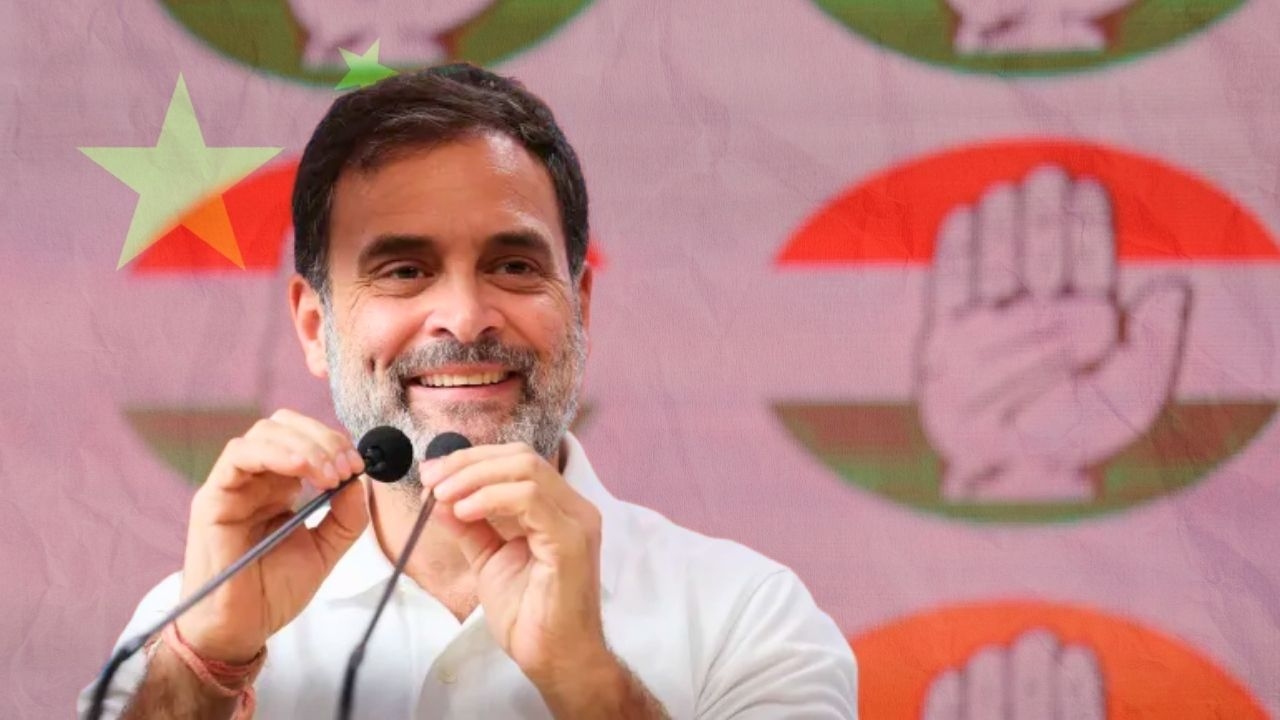
In a development that has reignited debate over the intersection of domestic politics, foreign policy, and economic diplomacy, Kenya has awarded a $2.9 billion contract for the expansion of Jomo Kenyatta International Airport (JKIA) in Nairobi to China Communications Construction Company (CCCC), a Chinese state-owned enterprise.
The decision comes nearly two years after the Kenyan government cancelled a proposed $2 billion public-private partnership (PPP) agreement with the Adani Group for the modernisation and long-term operation of the same airport. The contrast between the two projects is striking. While the Adani proposal relied primarily on private investment and operational expertise, the new Chinese-backed project is substantially pricier and is expected to place a greater financial burden on Kenyan taxpayers.
The Rise and Fall of the Adani Proposal
Between 2022 and 2024, Kenya engaged the Adani Group for a comprehensive upgrade of JKIA, East Africa's busiest aviation hub. The proposal envisaged terminal modernisation, runway improvements, and operational enhancements under a PPP framework. The project was supposed to modernise Kenya's aviation infrastructure without imposing an immediate fiscal burden on the Kenyan government. More importantly, it represented an opportunity for an Indian private-sector company to establish a strategic presence in a key African transportation hub.
However, the project soon became the subject of intense political controversy.
A sustained campaign emerged on social media and in sections of the Kenyan public sphere, raising concerns about transparency, procurement procedures, stakeholder consultations, and potential implications for airport fees and national sovereignty. France-based Kenyan activist Nelson Amenya played a prominent role in amplifying these concerns, publishing documents and allegations related to the proposed agreement.
Simultaneously, the Kenya Aviation Workers Union organised protests and threatened industrial action, citing concerns over privatisation and job security. Faced with growing political pressure, President William Ruto's government eventually terminated the procurement process in November 2024.
Congress and the Internationalisation of the Adani Narrative
What made the JKIA controversy particularly significant from an Indian perspective was the role played by the Congress party in amplifying opposition to the project.
On September 3, 2024, senior Congress leader Jairam Ramesh publicly highlighted the protests in Kenya, linking them to what he described as Prime Minister Narendra Modi's close relationship with Gautam Adani. He argued that controversies surrounding Adani projects abroad were damaging India's international image and weakening its soft power.
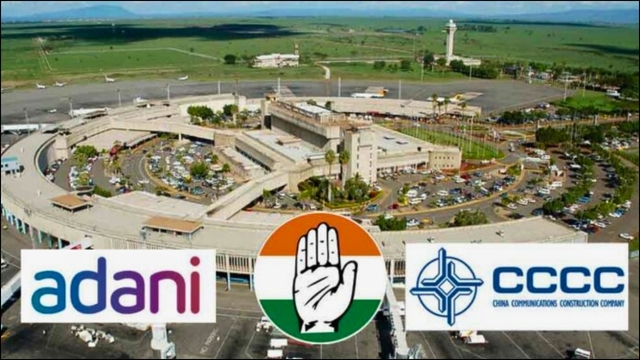
Subsequent statements from Congress leaders continued to portray the cancellation of the project as an expected outcome, arguing that Indian foreign policy should not become intertwined with the interests of any single corporate group.
At the time, the Adani Group had reportedly emerged ahead of multiple international competitors, including Chinese firms, during the project evaluation process. Consequently, sustained attacks on the company indirectly weakened India's position while strengthening that of Chinese strategic competitors.
Information Warfare and the Battle of Narratives
The JKIA controversy was further complicated by the circulation of misinformation.
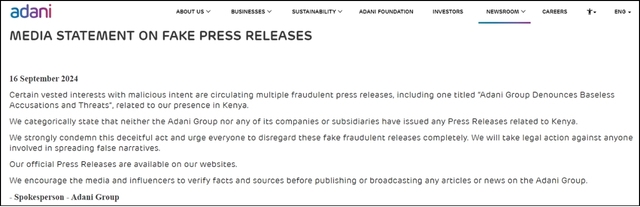
In September 2024, a fake press release falsely attributed to the Adani Group began circulating online. The document purported to threaten the exposure of alleged bribery beneficiaries in Kenya. Adani Group immediately denounced the release as fraudulent and clarified that no such statement had been issued. The incident highlighted the increasingly complex information environment surrounding major infrastructure projects, where social media campaigns, leaked documents, anonymous accounts, and misinformation can shape public opinion and influence political decision-making.
Recent developments have added another dimension to these concerns. France's Viginum agency recently exposed a network of counterfeit Chinese news websites allegedly linked to Chinese state media interests. According to the agency, these platforms used artificial intelligence tools to disseminate pro-China narratives across multiple languages and regions.
The US DOJ Factor and Its Aftermath
Another significant element in the controversy was the use of allegations originating from investigations by the United States Department of Justice against Gautam Adani and associated entities.
When Kenya cancelled the airport agreement, references were made to the ongoing scrutiny surrounding the Adani Group. These allegations became part of the broader political narrative surrounding the project.
However, in May 2026, the US Department of Justice reportedly closed key criminal fraud-related proceedings after concluding that the available evidence was insufficient to sustain prosecution.
For supporters of the Adani Group, this development reinforced their argument that allegations which were never conclusively proven had nevertheless contributed to the collapse of a strategically important overseas project.
The consequence, they argue, was that an Indian-led infrastructure proposal was abandoned, only to be replaced later by a more expensive Chinese state-backed alternative.
China Steps In
With the award of the JKIA contract to CCCC, China has secured another major infrastructure foothold in East Africa.
Unlike the proposed Adani concession model, the Chinese arrangement is structured as an Engineering, Procurement, and Construction (EPC) contract. Under this framework, financing obligations ultimately rest with the Kenyan state.
The reported increase from approximately $2 billion under the Adani proposal to $2.9 billion under the Chinese contract has sparked debate regarding value for money, public debt exposure, and long-term financial sustainability.
The Congress-CCP MoU of 2008
Notably, this controversy has also revived attention on a little-discussed agreement signed between the Indian National Congress and the Communist Party of China (CPC) in 2008.
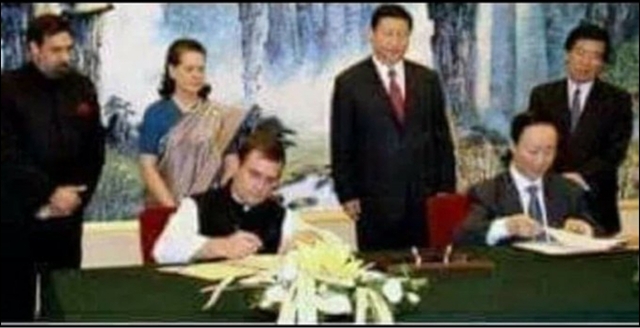
The Memorandum of Understanding was signed in Beijing in the presence of senior leaders from both sides, including Rahul Gandhi and Xi Jinping. According to official statements at the time, the agreement was intended to facilitate consultations and exchanges on important bilateral, regional, and international developments.
On paper, such party-to-party engagements are not unusual in international politics. However, the agreement defines the position of Congress where it's agenda aligns in favour of China.
Strategic Consequences for India
The Nairobi airport episode represents more than a commercial setback for a single company.For India, the cancellation of the Adani project and its replacement by a Chinese state-owned enterprise carries broader geopolitical implications. Africa has become a key arena of strategic competition between India and China, with infrastructure development serving as a major instrument of influence.
Indian policymakers have consistently emphasised private-sector participation as a pillar of India's engagement with developing economies. The loss of a flagship project in one of Africa's most important transport hubs therefore raises questions about the vulnerability of Indian commercial diplomacy to political and information campaigns.
The domestic political battles should not undermine India's ability to compete internationally against state-backed rivals. They contend that when Indian companies operating abroad become targets of sustained political attacks at home, strategic competitors may ultimately be the primary beneficiaries.
Written by

Kewali Kabir Jain
Journalism Student, Makhanlal Chaturvedi National University of Journalism and Communication