Centre Tightens Grip on Conversion-Linked Foreign Funding
Has the Centre drawn a clear red line against foreign-funded religious conversion through its toughest FCRA changes in recent years?
Total Views |


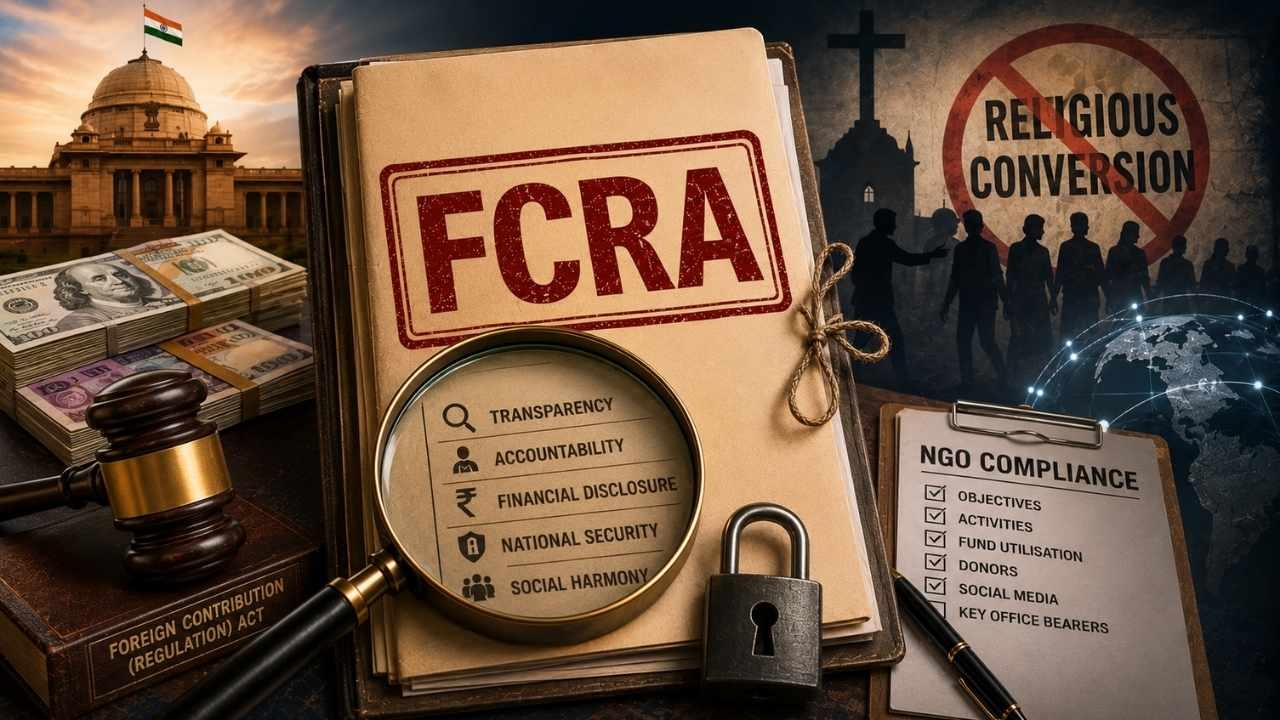
The Union Government has amended the Foreign Contribution (Regulation) Act (FCRA) rules, introducing stricter compliance requirements for NGOs seeking foreign funding. The Ministry of Home Affairs (MHA) has also clarified that religious conversion will not be treated as a permissible religious activity under foreign-funded programmes, while mandating greater transparency regarding foreign contributions, organisational activities, and key office bearers.
Except for Indian citizens, foreign nationals associated with NGOs will now be required to register and provide additional details if they wish to hold key positions in organisations seeking FCRA registration or prior permission. Failure to comply may render them ineligible to occupy such positions in NGOs receiving foreign contributions.
The Ministry of Home Affairs notified the amendments on Monday, citing concerns related to national security, transparency, and accountability in the utilisation of foreign funds.
Under the revised rules, NGOs applying for FCRA registration or prior permission will be required to furnish detailed information regarding their objectives, operational activities, states of operation, utilisation of foreign contributions, social media accounts, foreign donors, and the specific purpose for which foreign funding is being sought.
The Home Ministry has made it clear that religious activities and religious conversion will be treated as separate categories. Religious conversion will no longer be considered part of permissible foreign-funded religious activities.
Earlier, several organisations argued that conversion activities formed part of their religious work, allowing foreign funding to be used under that category. However, under the amended rules, conversion will be treated as a separate activity and will be subject to greater scrutiny in matters involving foreign contributions.
The government maintains that foreign contributions should primarily be utilised for education, healthcare, and other social welfare initiatives rather than religious conversion activities.
Government's Concerns
Over the past several years, multiple cases have come to light in which some NGOs and missionary-linked organisations have used foreign funds for religious conversion activities.
According to the government, such activities have the potential to affect social harmony and may have implications for the national interest. This concern has been one of the key reasons behind the decision to separate foreign-funded religious work from conversion-related activities.

The government has further stated that if any NGO is found to be involved in religious conversion, anti-development activities, or actions affecting social harmony, its FCRA registration may be cancelled.
The amended rules also impose stricter compliance requirements on NGOs regarding the utilisation of foreign funds. Organisations will now be required to clearly demonstrate how foreign contributions are being spent, with audit reports and financial disclosure requirements becoming more stringent.
Additionally, NGOs will be required to adhere to standards prescribed by the Financial Action Task Force (FATF), an international body that monitors money laundering and terror financing across the world.
Restrictions on News Publishing
The revised FCRA rules also introduce restrictions relating to the publication of news and current affairs content by foreign-funded organisations.

Organisations seeking foreign funding will be required to declare whether they are involved in news dissemination or current affairs-related activities. The government argues that the measure is aimed at preventing undue foreign influence within Bharat's media and information ecosystem.
Differing Views
Supporters of the amendments argue that foreign contributions should be used strictly for social welfare and development-related activities rather than conversion efforts. They believe the new provisions will strengthen transparency, accountability, and national security.
Although opposition leaders and some civil society groups have voiced objections to the amendments, the government argues that enhanced scrutiny is essential to prevent the misuse of foreign funds and safeguard national interests.
Conclusion
A key feature of the amended FCRA framework is the government's decision to separate religious conversion from foreign-funded religious activities. The Centre has signalled its intention to exercise greater oversight over the use of foreign contributions, particularly in areas linked to conversion, social harmony, and the national interest.
While the government maintains that the changes are intended to enhance transparency and accountability, the amendments have continued to generate debate at both political and social levels regarding the balance between regulation, national security, and the functioning of civil society organisations.
Written by

Mokshi Jain
Sub-editor, The Narrative