Urban Naxals: Ideological Subversion, Institutional Capture, and the Assault on Bharat's Civilisational Core
How urban Naxal networks have hijacked universities, social media, and public discourse to promote anti-Hindu narratives while shielding Islamist expansion and fostering Maoist sympathies.
The Narrative World 12-Jul-2026
Total Views |


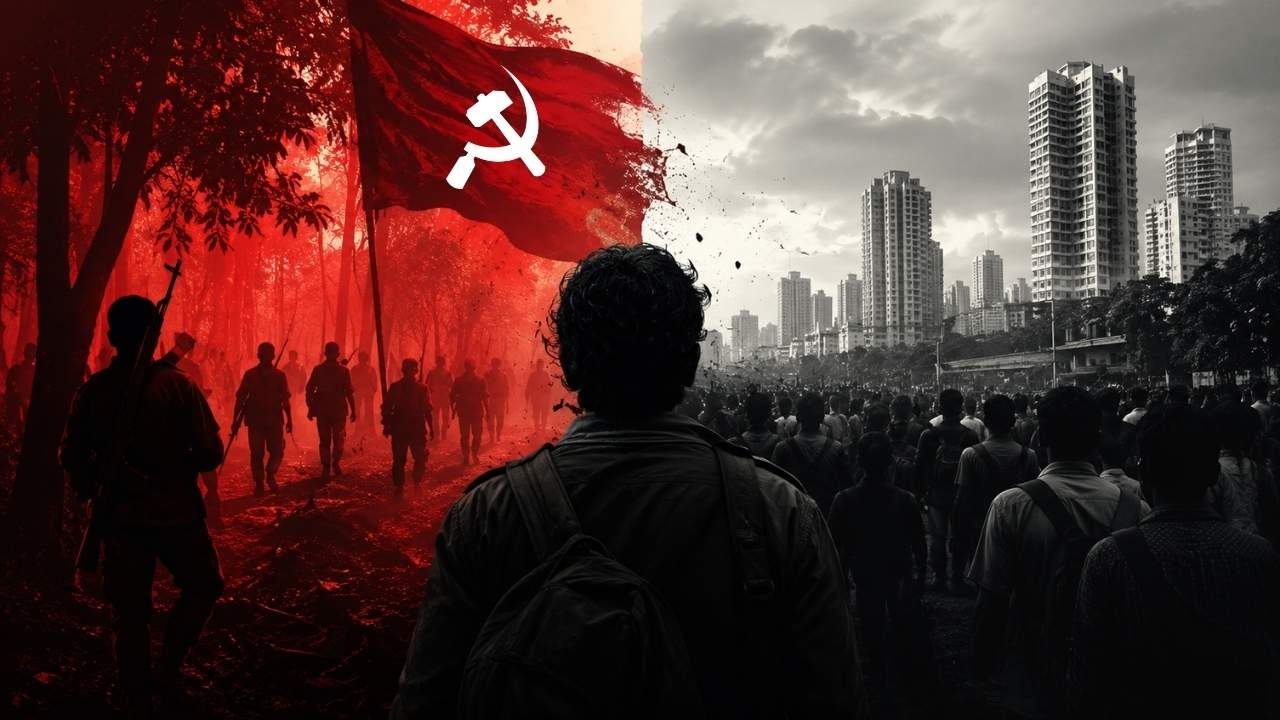
The term "Urban Naxals" describes a network of urban-based intellectuals, academics, journalists, activists, lawyers, and cultural influencers who advance or shield Maoist ideology while operating within mainstream institutions. Unlike armed Naxals, who wage armed insurgency in forests, Urban Naxals conduct ideological, narrative, legal, and institutional warfare from comfortable urban positions. They provide the "urban support base" through propaganda, legal defence, intellectual legitimacy, recruitment pipelines, and international advocacy. Notably, Maoist doctrine itself identifies such networks as essential for sustaining a protracted people's war.
Who are the Urban Naxals?
Urban Naxals are typically well-educated and well-placed individuals operating from positions of influence in academia, the media, NGOs, the legal system, and cultural institutions. They possess significant social and intellectual capital, allowing them to shape public opinion and institutional narratives from within the system. Their core ideology revolves around frameworks of class and caste struggle that consistently portray Hindu society and the Indian state as the primary sources of oppression, while presenting Jihad and class warfare as revolutionary disruptions that pave the way towards justice.
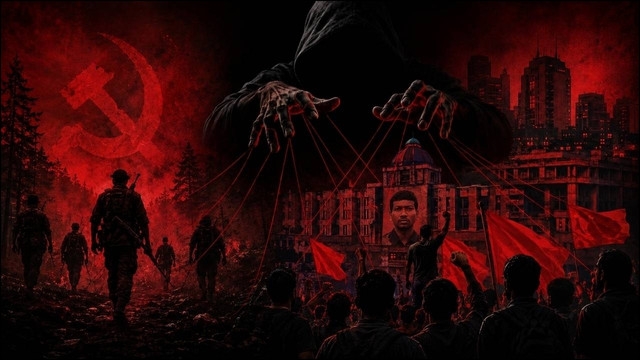
These figures often contextualise or downplay Maoist violence and armed insurgency, even as they aggressively amplify every instance of alleged state excess or majoritarian assertion. They actively defend individuals and causes linked to extremism or separatism, frequently serving as legal advocates, media defenders, or intellectual legitimisers. "Human rights", "secularism", and "social justice" often function as rhetorical shields for positions that fundamentally are anti-national and anti-Hindu in their broader thrust.
The Long March Through Academia and Institutions
Following independence, the humanities and social sciences in several elite universities came under strong Marxist influence. Textbooks and curricula emphasised class conflict, downplayed the civilisational achievements of Bharat, and portrayed medieval temple destructions or Islamic invasions through selective "syncretism" narratives. This approach created generations of students who viewed their own heritage with suspicion or guilt.
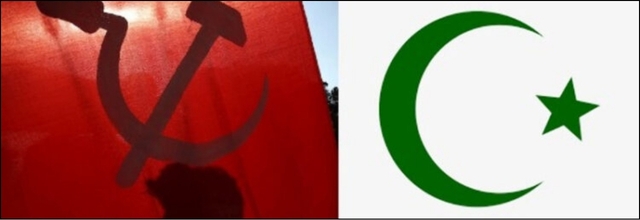
Several past events have made institutions such as JNU and Jamia Millia Islamia highly visible symbols of dissent against the very idea of India as Bharat. Protests featuring slogans such as "Bharat tere tukde honge" (Bharat will be torn to pieces), celebrations or justifications of Maoist ambushes on security forces, the glorification of Islamist terrorists and jihadis, and ideological training rooted in "critical theory" transformed parts of these campuses into breeding grounds for anti-national sentiment. Delhi University's Vice-Chancellor, Yogesh Singh, publicly warned in late 2025 about "professors polluting minds" and "urban Naxalism" operating through student groups such as Pinjra Tod, while naming academics who had previously faced charges in sensitive cases.
The mechanism behind this influence is ideological hegemony. It shapes syllabi, research grants, faculty recruitment, student unions, and campus discourse. Dissenting voices, particularly those expressing Hindu or nationalist perspectives, often face cancellation, while separatist narratives relating to Kashmir, caste, or "Brahminism" receive academic legitimacy. This conflict is not kinetic but cultural and generational. It weakens national cohesion, demoralises security forces, and provides intellectual cover for forces hostile to Bharat's interests.
Social Media as the Primary Battlefield
Urban Naxals and their aligned networks remain highly active across major digital platforms such as X, Reddit, Instagram, and YouTube. They exercise considerable influence over English-language legacy media commentary and consistently amplify narratives portraying Bharat under its current government as authoritarian and oppressive towards minorities. They equate Hindutva with fascism while minimising or justifying Islamist extremism and historical instances of temple desecration. They frequently internationalise domestic issues by taking them to Western academia and global media outlets, defend or humanise individuals accused of inflammatory anti-Bharat rhetoric, and organise or amplify protests that blend legitimate grievances with overtly anti-national slogans.
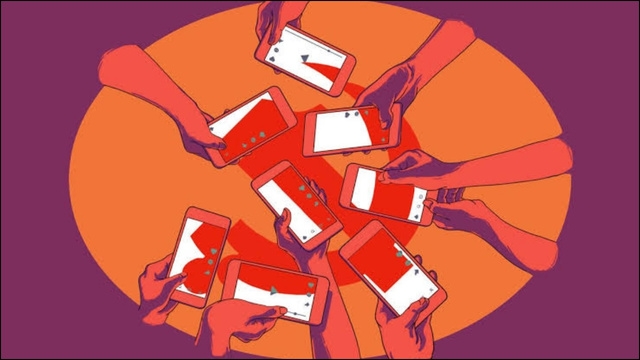
This sustained activity has created a powerful echo chamber in which anti-Bharat and anti-Hindu content spreads rapidly among urban youth and the diaspora. Counter-narratives defending Hindu civilisation or national security are routinely dismissed as "hate speech" or "communal propaganda". The asymmetry lies in the fact that criticism of Sanatan practices or government policies is often celebrated as courageous dissent and intellectual freedom, whereas even measured scrutiny of Islamic doctrines, conversion patterns, or Jihadi elements is immediately branded as bigotry, Islamophobia, or the "oppression of minorities". This selective outrage forms a central component of their narrative warfare strategy.
Double Standards on Women, Violence, and Religious Practices
A defining feature of this phenomenon is selective blindness. Urban Naxal-aligned voices have historically shown reluctance to confront systemic issues within sections of Muslim society, including triple talaq until political pressure resulted in reform, polygamy, unequal inheritance, honour-based control, and doctrinal provisions that treat non-Muslim women differently. At the same time, they aggressively intervene in Hindu practices, including temple management, festivals, personal laws, and educational content, under the banner of "reform" or "secularism", while treating comparable issues within minority communities as matters of cultural sensitivity or dismissing criticism as "Islamophobia".
When it comes to violence, Maoist ambushes that kill security personnel or Vanvasis are often contextualised as "resistance". Allegations involving Islamist grooming, conversion rackets, or targeted violence against Hindu women are frequently dismissed as isolated criminal acts or right-wing conspiracy theories. Conversely, Hindu self-defence or even verbal opposition is amplified as "lynching" or majoritarian terror. People often describe this as a defining characteristic of Urban Naxalism operating within urban spaces.
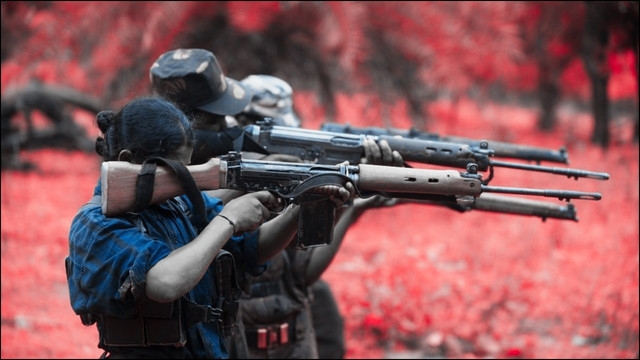
These Urban Naxals do not always operate through direct violence. Instead, they exercise influence through subtle yet highly effective narrative control that normalises one side's aggression while criminalising the other's survival instincts.
A particularly prominent recent episode emerged during the February to June 2026 podcast controversy involving journalist Arfa Khanum Sherwani of The Wire and retired JNU professor Nivedita Menon. Sherwani hosted the podcast in February 2026, but a clip that went viral in early June captured the two engaged in a mocking exchange that dismissed concerns surrounding "love jihad" as merely an expression of Hindu male insecurity and bebasi (helplessness). They speculated that Hindu women were attracted to Muslim men because of their perceived attractiveness, charisma, motorcycles, surma-lined eyes, and cultural appeal. These remarks reduced documented concerns relating to deception, identity concealment, and religious conversion to a joke about the supposed lack of appeal among Hindu men. The comments triggered widespread public criticism for trivialising victim testimonies and undermining the agency of both Hindu men and women. Sherwani later responded with a defensive video that suggested mockery remained the only available response, further intensifying accusations of elite dismissal and narrative protection.
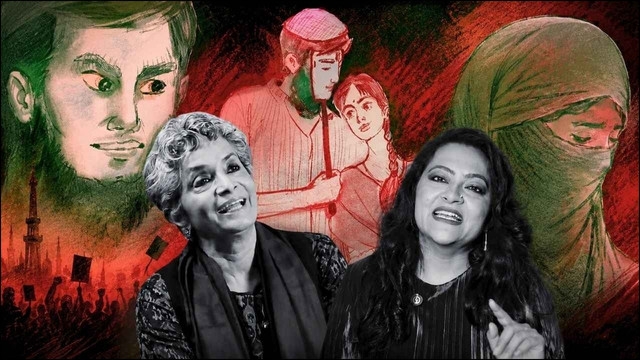
People also place this controversy within a broader pattern of cases they frequently cite. The 2022 Shraddha Walkar murder remains one of the most widely discussed examples. In that case, Hindu woman Shraddha Walkar was strangled and her body brutally dismembered by her live-in partner, Aaftab Poonawala, who stored the remains in a refrigerator before disposing of them over an extended period. The case attracted nationwide attention after previous complaints of abuse surfaced, while Walkar's father publicly alleged that the crime involved elements of love jihad.
In 2025, the Uttar Pradesh Anti-Terrorism Squad arrested self-styled spiritual leader "Chhangur Baba" (Jalaluddin Shah, also known as Karimulla Shah) and several associates in connection with what authorities described as a multi-crore organised conversion racket targeting Hindu women, particularly those from Scheduled Castes and economically weaker backgrounds. Enforcement Directorate (ED) investigations uncovered foreign funding channels and links to hundreds, possibly thousands, of victims.
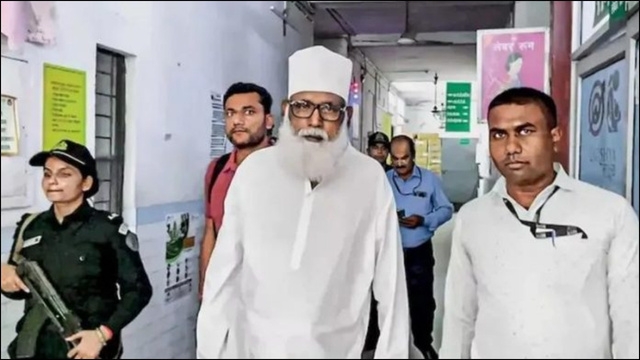
Campus discourse in several institutions has also witnessed sections of students and faculty contextualising or even celebrating Maoist "martyrs" following ambushes on security personnel, while strongly condemning counter-insurgency operations as examples of state repression. Additional high-profile interfaith cases involving allegations of deception, forced conversion, or violence following relationships continue to emerge periodically in states enforcing anti-conversion laws. Activist networks frequently portray these incidents as isolated personal crimes rather than examining whether broader doctrinal asymmetries may have contributed to recurring patterns.
Current and Future Trajectory of Urban Naxals
Urban Naxals pose a serious and persistent challenge because they do not operate openly like their armed counterparts. Instead, they shape elite discourse, influence impressionable young minds through universities and digital platforms, tie down state resources in prolonged legal battles, and lend international legitimacy to narratives portraying Bharat as intolerant or undemocratic.
Looking ahead, their influence could intensify significantly. Digital and AI-driven educational tools may amplify carefully curated "critical" content that distorts history and fosters alienation among younger generations. Tactical or ideological alliances with global Left-Islamist networks, which are often perceived as sharing anti-Hindu and anti-Bharat objectives, could create stronger transnational pressure. Demographic shifts, driven by unchecked conversion rackets and differential fertility rates, may also gain momentum when accompanied by narrative protection that discourages open policy debate or meaningful reform.
Written by
Kewali Kabir Jain
Journalism Student, Makhanlal Chaturvedi National University of Journalism and Communication
नैरेटिव डेस्क
नैरेटिव डेस्क