Naxal-Free Bastar Is Bringing Displaced Families Back Home
What does the return of displaced families reveal about Bastar"s recovery from decades of Naxal terror and stalled development?
The Narrative World 18-Jul-2026
Total Views |


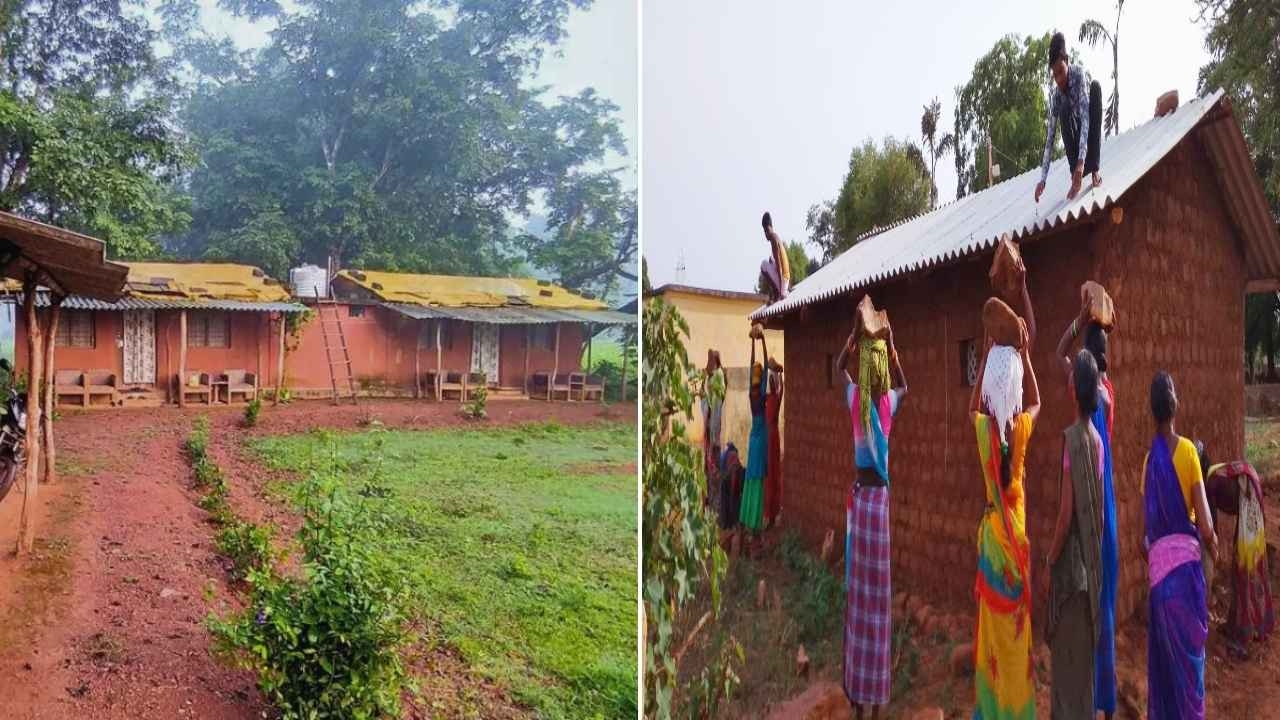
In the dense forests of Bastar, Chhattisgarh, a remarkable transformation is underway. Once synonymous with Naxal violence and fear, the region is now witnessing displaced families returning to their ancestral villages. The Chhattisgarh government, under Chief Minister Vishnu Deo Sai, is prioritising the restoration of roads, housing, schools, drinking water, and other essential infrastructure to support their rehabilitation.
The Long Shadow of Naxalism
For decades, the Naxal (Maoist) insurgency gripped large parts of Bastar's tribal heartland. Villages in districts such as Sukma, Bijapur, Narayanpur, Dantewada, and Kanker suffered from violence, extortion, and isolation. Schools were closed, roads remained unbuilt, and development stalled. Thousands of families fled their homes out of fear, leaving behind their ancestral lands with nowhere else to settle.
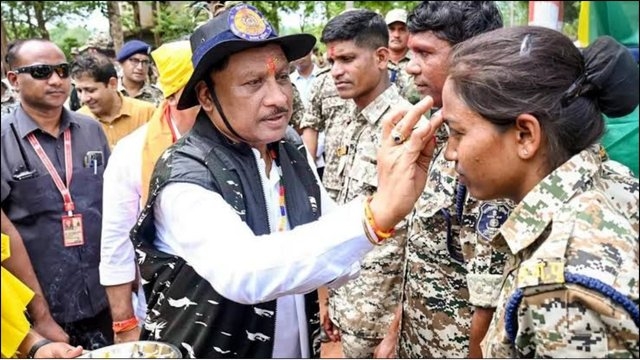
The formation of the BJP government in Chhattisgarh in December 2023 marked a decisive shift. Under Chief Minister Vishnu Deo Sai, the state adopted a holistic strategy that combined robust security operations with accelerated development. This was backed by the Central Government's strong push, including Union Home Minister Amit Shah's pledge in August 2024 to make India Naxal-free by 31 March 2026, a target that was achieved ahead of schedule. In March 2026, Amit Shah announced in Parliament that Naxalism was breathing its last breath.
Key Central Policies That Made the Difference
SAMADHAN Doctrine: Emphasising smart leadership, an aggressive strategy, actionable intelligence, technology, and development to address both the symptoms and the root causes of Naxalism.
Major security operations that neutralised top leaders and enabled area domination.
Infrastructure and welfare schemes such as the Pradhan Mantri Gram Sadak Yojana (PMGSY), Pradhan Mantri Awas Yojana (PMAY), Jal Jeevan Mission, and tribal-focused initiatives including PM-JANMAN and the Dharti Aaba Janjatiya Gram Utkarsh Abhiyan.
State Government Initiatives Under CM Vishnu Deo Sai
CM Sai's government transformed security camps into hubs of governance and development. The flagship Niyad Nellanar Yojana ("Your Good Village"), launched in February 2024, has been pivotal. It focuses on villages within a 5 to 10 km radius of security camps, with more than 54 new camps established across the five affected districts. These areas receive priority access to schemes from 17 departments, including roads, electricity, drinking water, health services, reopened schools, mobile towers, ration facilities, and Aadhaar cards. The approach ensures that the presence of security forces is accompanied by compassionate and inclusive governance.
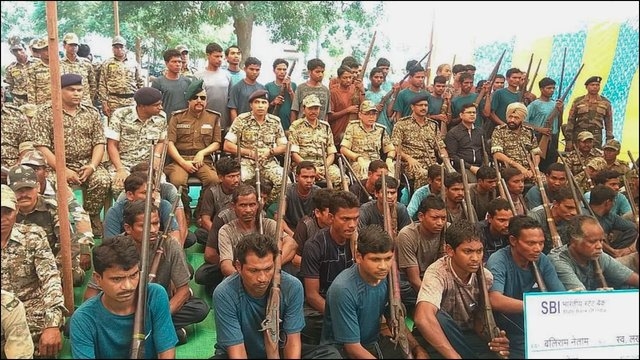
A revamped Surrender and Rehabilitation Policy offers surrendered Naxals ₹10,000 in monthly assistance for three years, land for housing (1 hectare in rural areas or 4 decimals in urban areas), up to 15,000 PMAY houses, and skill training. Naxal-free villages receive ₹1 crore for development. This has encouraged thousands of surrenders and facilitated reintegration into the mainstream.
In the past, when the Naxal menace was widespread across Bastar, many families were forced to leave their villages because of fear, violence, and insecurity. Now, as the district and the entire Bastar region steadily become Naxal-free, these families are returning to rebuild their lives. The government has made their rehabilitation a top priority by ensuring the provision of essential amenities and infrastructure.
Under the Pradhan Mantri Gram Sadak Yojana, 236 kilometres of roads have already been sanctioned under Phase 4 (Batch 1), while another 292 kilometres have been proposed under Batch 2 to improve connectivity across the region.
As one returning resident from the region shared:
"In the past, when the Naxal menace was prevalent here, many families moved to other regions due to fear or other reasons. Now that the district and the entire Bastar region are becoming Naxal-free and these families are returning, the government is working continuously on a top-priority basis to provide them with all necessary amenities."
Echoing this transformation, Fuldev Thakur, a resident of Koleng-Chhinggur village, said:
"Initially, there were 107 households here. About 60 to 70 families fled the area, but they have now returned to their original villages. Things are fine now. More than 30 families have already returned. People are coming back and trying to rebuild their lives. Previously, they were getting beaten up from all sides because of the Naxalites. That is why they fled. They also had no land elsewhere."
What Changed?
Under the previous Congress regime, coordination between security and development was weaker, allowing Naxalism to persist. The new double-engine approach introduced time-bound targets, intelligence-led operations, and simultaneous development initiatives. Security operations created safe spaces, schemes such as the Niyad Nellanar Yojana built public trust, and attractive rehabilitation policies encouraged surrenders.
The result has been reduced violence, the return of displaced families, the reopening of institutions, and visible progress in connectivity and basic amenities.
CM Sai envisions Bastar as the "crown jewel" of Chhattisgarh, a hub for tourism, industry, education, and opportunity once it is fully freed from the shadow of red terror.
Written by

Kewali Kabir Jain
Journalism Student, Makhanlal Chaturvedi National University of Journalism and Communication

नैरेटिव डेस्क
नैरेटिव डेस्क