CJP Exposed by Its Own Protesters? Viral Videos Raise Questions Over Leadership and Agenda
Are students leading this movement, or do viral videos suggest CJP has become a platform for larger political interests and conflicting narratives?
The Narrative World 23-Jul-2026
Total Views |


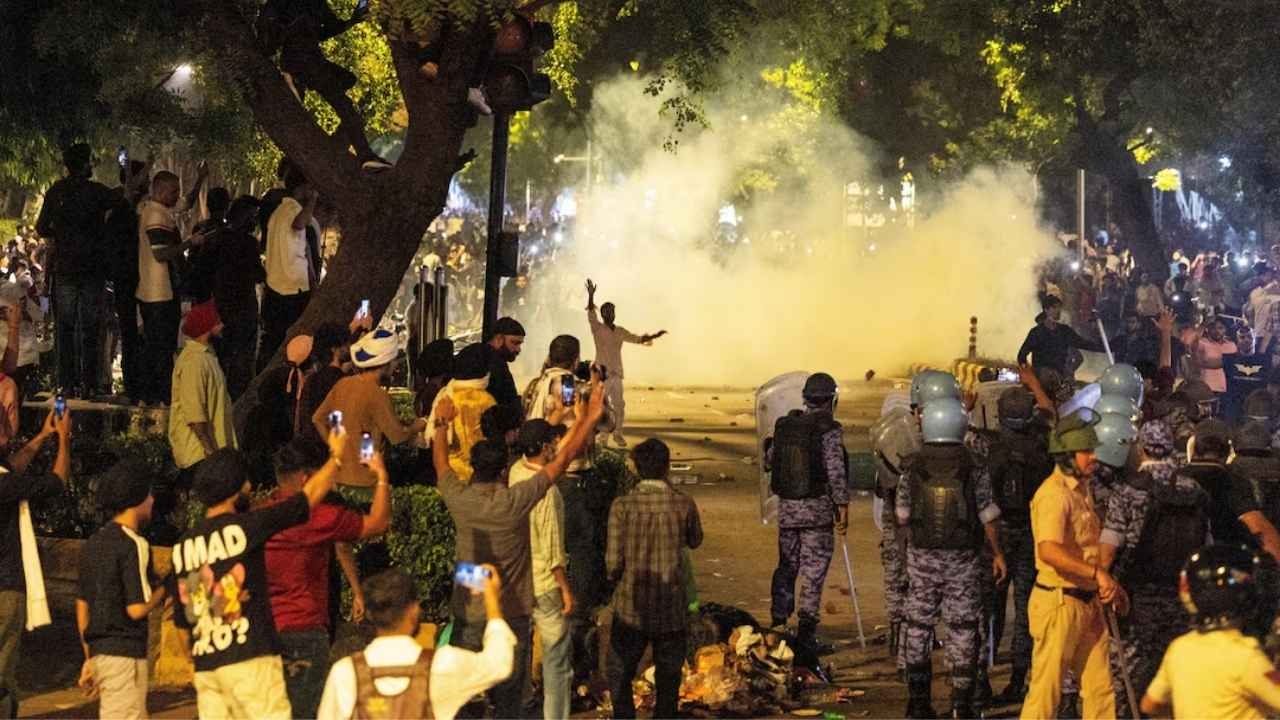
The CJP protest, which claims to represent students, has come under increasing scrutiny after videos from the demonstrations raised questions about its leadership, political narrative, protest conduct and whether students are being used for a larger political agenda.
What began as a protest presented as a movement for students is now facing serious questions about its leadership and direction.
People questioned the visible absence of so-called key figures during moments of confrontation. Abhijeet Dipke has been accused of remaining behind while students faced “lathi charge”, while questions have also been raised about the absence of Saurav Das from the protest. Vijeta Dahiya has also faced criticism over burger videos and visuals showing him appearing more interested in activities unrelated to the protest.
The question being raised is simple- If these individuals claim to be leading a movement for students, where are they when protesters are facing the most difficult situations?
The controversy has intensified after videos featuring CJP protesters themselves began circulating. In one video, a young participant reportedly says that the police were not at fault.
It wasn't the Delhi Police's fault. Some protesters provoked the crowd, which led to the police carrying out a lathi charge.
— Spider Update (@SpiderAlert24) July 21, 2026
---- Protester, At Jantar Mantar pic.twitter.com/uCw3jrvUSz
In another, a protester claims that people are being misled and that different political parties are playing their own political games.
CCP protest was irrelevant for the real students and NEET aspirants 🤡This guy exposed them!! pic.twitter.com/6ARnLRl9CO
— Sunanda Roy 👑 (@SaffronSunanda) July 21, 2026
If members of the movement themselves are questioning its direction, then a legitimate question arises- is the protest genuinely for students, or has it become a political platform?
The mention of Umar Khalid has further intensified the political debate surrounding the protest. Protesters argue that such references have contributed to concerns over the ideological and political narrative surrounding the movement.
NEET छात्रों के न्याय के नाम पर 'टुकड़े-टुकड़े गैंग' का नया ड्रामा! 🤡 परमिशन ली शिक्षा मंत्री के इस्तीफे की और पोस्टर लहरा रहे हैं उमर खालिद के।आम युवा अब इनका असली प्रोपेगेंडा समझ चुका है। यह कोई छात्र आंदोलन नहीं, बल्कि अर्बन नक्सलियों का नया अड्डा है! pic.twitter.com/RfAjbekv52
— Arun Yadav (@BeingArun28) July 21, 2026
Another video has also attracted attention over the use of terms such as “anti-national” and “anti-social” during the protest. This has raised questions over the tone of the demonstrations and whether the movement has remained within the boundaries of a peaceful protest.
The videos have also attempted to question the awareness of some protesters. In one instance, a participant appears to struggle while answering a question about Sonam Wangchuk. Another video features an individual presented as an IITian and NEET and JEE topper, with the footage being used to question the conduct of protesters during police action at jantar-mantar.
The larger question is whether a protest can continue to call itself peaceful when videos show allegations of provocation, confrontation, disorder and physical altercations.
One of the most serious allegations highlighted in the videos concerns a female journalist who was reportedly subjected to misbehaviour and harassment while carrying out her professional duties during the protest at jantar-mantar.
If a female journalist is harassed while doing her job, the incident deserves serious examination, regardless of the political identity of those involved. A movement demanding justice and accountability must also be willing to accept accountability for the conduct of its own participants.
This has also raised questions about political leaders and prominent faces associated with the movement. People have questioned the absence of Abhijeet Dipke, Rahul Gandhi and Priyanka Gandhi when allegations of misconduct against a woman emerged during the protest.
The criticism is based on a contrast - political leaders are often quick to support protesters when they are detained, injured or hospitalised, but questions are raised about why the same concern is not visible when allegations of harassment or misconduct are made against female journalist.
The controversy ultimately returns to the central question - is CJP genuinely a student-led movement, or are students being used as the visible face of a larger political campaign?
Conclusion
The CJP protest now faces a credibility test. A democratic movement has every right to question the government and demand accountability, but it must also maintain discipline and take responsibility for the conduct of its own protesters.
The videos circulating from the protest have raised serious questions about its leadership, political associations and commitment to peaceful protest. However, individual clips must also be examined in their full context, while allegations of harassment and misconduct must be investigated through due process.
The central question remains: Is CJP truly the voice of students, or has the student cause become a political tool?
Written by

Mokshi Jain
Sub-editor, The Narrative

नैरेटिव डेस्क
नैरेटिव डेस्क