Paper Leaks Meet Political Amnesia: Akhilesh Yadav's Sudden Rising Concern for Students
The Samajwadi Party previously institutionalised examination malpractice and is now attempting to present itself as a student saviour.
The Narrative World 01-Aug-2026
Total Views |


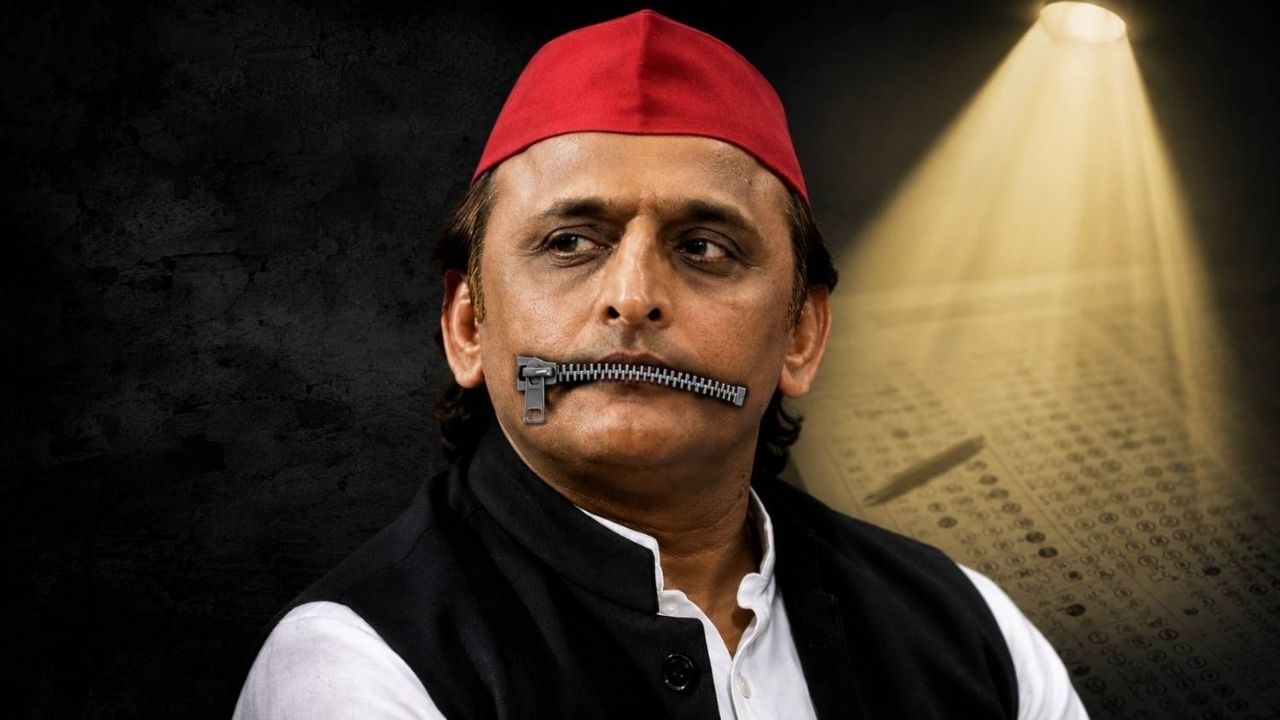
The recent super protests of opposition leaders and political activists over the NEET paper leak issue gathered a huge momentum, with several opposition leaders rushing to the microphone, presenting themselves as champions of the student cause. Among the most vocal were also the ex-chief ministers of Uttar Pradesh, Akhilesh Yadav, who blamed the ruling dispensation, claiming that paper leaks would continue "as long as the BJP remains in power," and portrayed the entire examination system as corrupt. The irony of this sudden solicitude is difficult to ignore. History shows that the culture of institutionalised malpractice in Uttar Pradesh's examination system has deep and deliberate roots in the politics of the Samajwadi Party.
The Anti-Copying Law and Its Deliberate Sabotage
In the early 1990s, the BJP government in Uttar Pradesh introduced a stringent anti-copying law. It treated the use of unfair means as a serious, non-bailable offence and empowered authorities to conduct surprise checks and make arrests at examination centres. The measure sought to end the mass-cheating culture that had long corroded the credibility of board and competitive examinations.
The Samajwadi Party opposed the law tooth and nail. It made the repeal of the anti-copying legislation an explicit election promise. When Mulayam Singh Yadav's government assumed office, it promptly scrapped the law which aimed to strengthen the future of Bharat.
Paper Leaks Under Akhilesh Yadav's Watch (2012–2017)
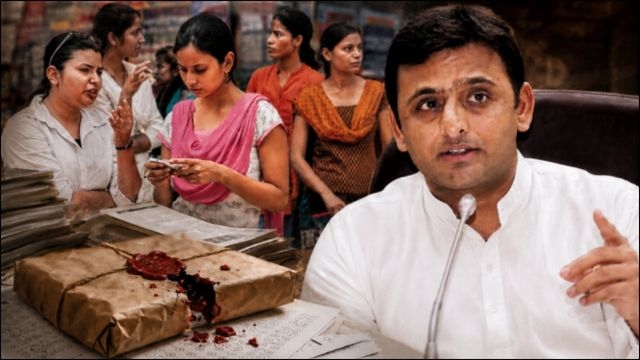
When Akhilesh Yadav became Chief Minister, the pattern continued. Two high-profile cases stand out:
- In June 2014, the Uttar Pradesh Combined Pre-Medical Test (UPCPMT/CPMT) was cancelled after the seals of question-paper boxes stored in bank strong rooms in Ghaziabad were found tampered with. More than one lakh medical aspirants were affected. A high-level probe was ordered, but the damage to the credibility of the examination was already done.
- In March 2015, the UPPCS (Provincial Civil Services) Preliminary Examination's General Studies Paper-I was leaked on WhatsApp before the exam could even begin. The paper had been photographed at an examination centre in Lucknow. The examination had to be cancelled, disrupting the aspirations of around five lakh candidates. The STF arrested three persons linked to the leak. Protests erupted in Allahabad, Lucknow and Kanpur, with students demanding a CBI probe.
Contrast this record with the sudden concern now displayed by the same political force. When paper leaks occur under the present dispensation, the Opposition rushes to the streets and the cameras. When the same problem afflicted their own governments, the response was limited cancellation, selective probes, and political silence on structural reform.
The Modi Government's Response: Justice, Protection, Reform
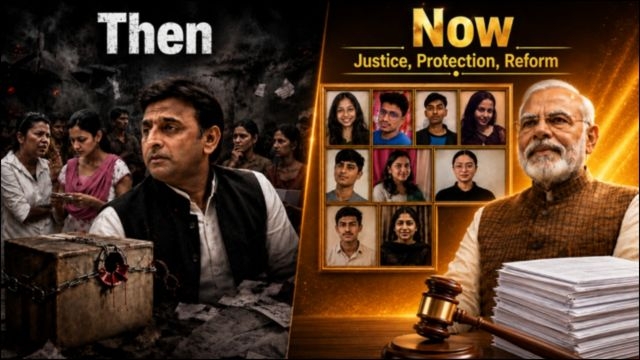
The Narendra Modi government has adopted a three-pronged approach: justice, protection, and reform. Immediate steps after the recent NEET-UG controversy included CBI investigation, registration of FIRs, and arrests. The re-examination was conducted in record time so that no student lost an academic year. Legitimate student demands have been engaged with and accepted where justified.
Longer-term measures are more significant. The Public Examinations (Prevention of Unfair Means) Act, 2024, the first dedicated central law of its kind, is being further strengthened through the 2026 Amendment Bill. The legislation provides for stringent penalties, including imprisonment of up to ten years and heavy fines. The government is pushing computer-based tests, end-to-end examination reforms through a high-powered committee, and technological safeguards developed in collaboration with premier institutions. This is a root-and-branch effort aimed at fixing the system once and for all rather than scoring political points.
The UPA government had an opportunity to enact a similar law as early as 2010. It failed to do so. Convictions remained rare precisely because the legal architecture was inadequate. The present government is correcting that historical lag.
Written by
Kewali Kabir Jain
Journalism Student, Makhanlal Chaturvedi National University of Journalism and Communication

नैरेटिव डेस्क
नैरेटिव डेस्क