Free Power and Muslim Quota : Revanth Reddy’s Vote-Bank Politics Exposed
By recasting Old City power theft and non-payment as a “secular” success, Revanth Reddy fuels charges of minority-centric vote-bank politics
Total Views |


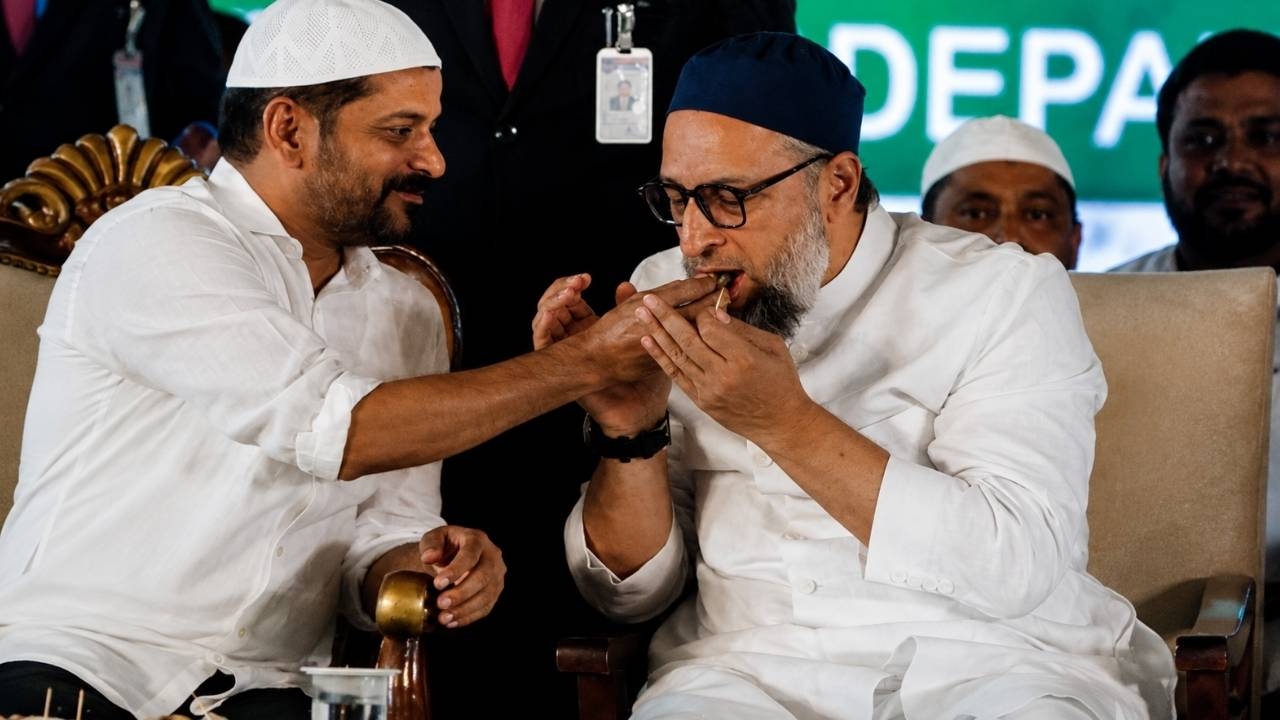
Telangana Chief Minister A. Revanth Reddy has stripped the veneer from Congress’s carefully crafted image of secularism. At the Minorities Excellence Summit on 13 August, Reddy defended and celebrated the implementation of a welfare scheme which now aims to provide electricity subsidy only to ‘Muslims’, he declared with evident pride, ‘stand as the biggest beneficiaries of the Gruha Jyothi programme that supplies 200 units of free electricity’.
Muslims ‘Declared’ As Primary Beneficiaries?
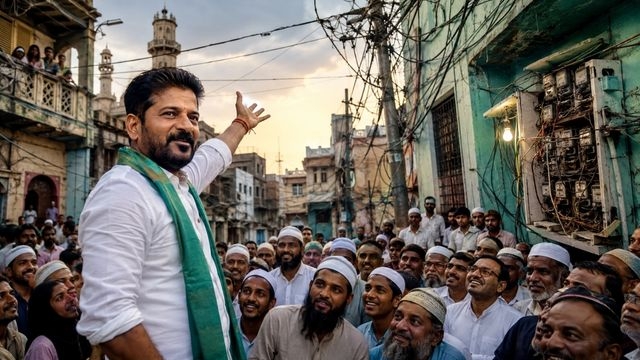
Reddy openly referenced the long-standing perception that residents of Hyderabad’s Old City, which comprises Muslims as the majority of nearly 65 per cent, had treated electricity bills as optional. “People say citizens in the Old City steal electricity and don’t pay bills. I can proudly say minorities have benefited the most from our 200 units free electricity scheme,” he told the gathering. What others had viewed as a chronic governance failure, the Chief Minister presented as proof of secular success.
The Old City’s Record of Losses and Political Shielding
Back in 2014, it was reported that around 50% of electricity supplied to the Old City is unaccounted for, with power pilferage being the main reason. The Central Power Distribution Company Limited (CSPDCL) admitted that it suffered losses of Rs 69 lakh daily, and yet refrained from acting against power thieves due to interference from Muslim-appeasing political parties.
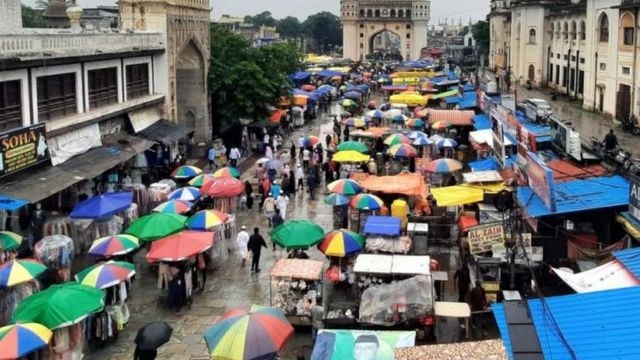
The CSPDCL officials back then had lamented that whenever their teams went to register cases against those involved in power pilferage, political representatives would intervene and stop them from doing their duty.
The official data suggests that successive reports documented massive Aggregate Technical and Commercial losses in the Old City. Power pilferage, meter tampering, and the deliberate placement of meters inside homes to obstruct inspection were widespread. Enforcement teams faced routine political interference. Annual losses running into hundreds of crores became an accepted cost of maintaining a dependable vote bank.
The Congress government under Reddy has not resolved the underlying problem - it has simply reclassified non-payment as entitlement and claimed credit for the outcome.
The Gruha Jyothi scheme, rolled out in February 2024 for white-ration-card holders, was considered to be the inclusive welfare scheme. Yet the Chief Minister’s own words now back the data that muslims are the largest beneficiary of the scheme.
Reservation as the Second Pillar of ‘Secularism’
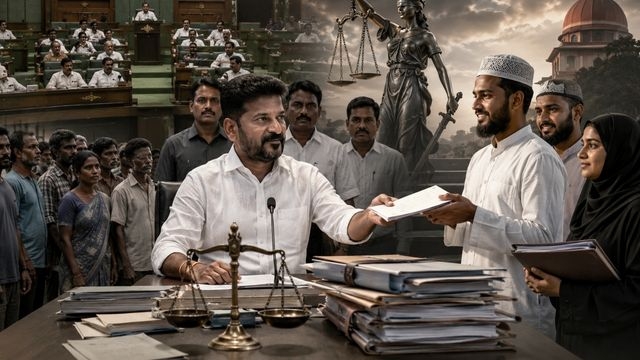
Reddy did not confine himself to electricity. Highlighting the 4% Muslim reservation as a hallmark of Congress’s secular ideology, Revanth Reddy has positioned this policy as a cornerstone of his administration’s minority-focused agenda, tracing it to the efforts of the late Y.S. Rajasekhara Reddy and Sonia Gandhi. Repeated attempts by Congress governments in undivided Andhra Pradesh to create a separate Muslim quota were struck down by the High Court for breaching the 50 per cent ceiling and for resting on inadequate data.
Only an interim Supreme Court order later permitted a narrowed 4 % quota for certain Muslim groups within the OBC framework. Congress continues to market this judicially constrained concession as moral triumph. The present Telangana government appears intent on going further. Reports indicate active consideration of raising the Backward Classes quota to 42 % with the clear objective of absorbing a larger share of the state’s 12.58 per cent Muslim population.
Parallel to this policy push, the induction of Mohammad Azharuddin as Minorities Welfare Minister despite the weak electoral performance of Congress’s Muslim candidate directs as another signal of preferential representation over performance.
Reddy’s address at the Minorities Excellence Summit read less like a governance review and more like a progress report delivered to a targeted constituency. Free power for those previously linked to systematic non-payment, institutionalised reservation, and symbolic appointments are presented as the essence of secularism. The language of equal eyes is retained for public consumption; the policy outcomes consistently tilt in one direction.
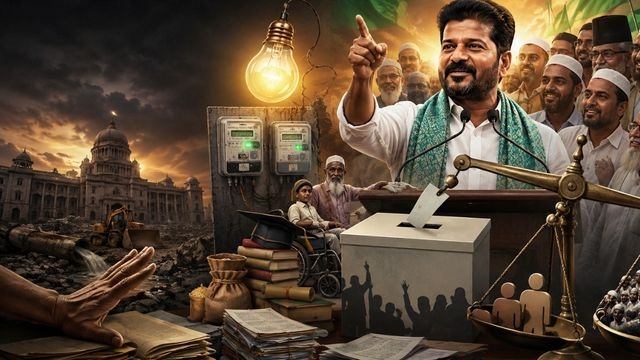
Uniform application of law and fiscal responsibility have been subordinated to the arithmetic of votes. When a Chief Minister publicly celebrates that the community associated with the heaviest power losses is now the largest recipient of free electricity, and simultaneously presses for expanded reservation, the claim of even-handed secularism becomes untenable. What Congress markets as secularism is, on closer examination of the data and the record, minoritism sustained by the expectation of electoral return.
Revanth Reddy’s rhetoric regarding equal treatment of communities stands in stark contrast to his policy actions. By championing initiatives that heavily favor Muslim constituents and aggressively seeking further reservation expansions, the Chief Minister appears to prioritize minority-centric vote-bank politics, undermining the party’s claims that such measures are rooted in genuine secularism.
Written by
Kewali Kabir Jain
Journalism Student, Makhanlal Chaturvedi National University of Journalism and Communication