Who Are "Dimagi Naxals" And How Do They Attack India’s Sovereignty?
PM Modi’s Red Fort Warning Exposes the Ideological Fifth Column Still Lurking in Academia, Media and Street
Total Views |


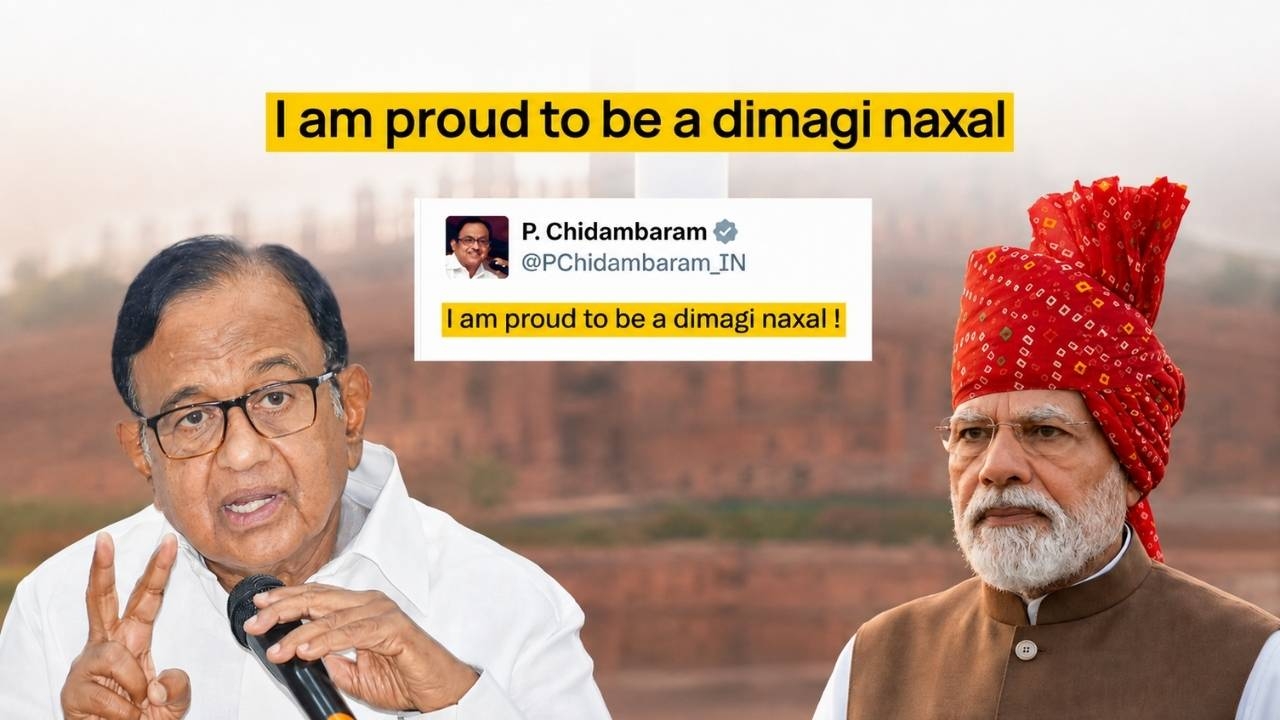
On India’s 80th Independence Day, Prime Minister Narendra Modi warned that while armed Naxalism has been pushed to the brink, the ideological ecosystem that sustains Maoist and separatist narratives remains a challenge to India’s unity, sovereignty and constitutional order.
On 15 August, from the historic ramparts of the Red Fort, Prime Minister Narendra Modi spoke of the decades-long Maoist insurgency that had kept large parts of India hostage to violence and the gun.
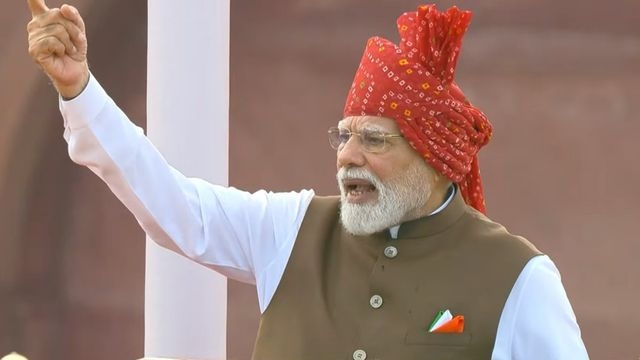
The government’s latest data shows just how dramatically that threat has declined – LWE violence fell from 1,936 incidents in 2010 to 234 in 2025, while civilian and security-force deaths fell from 1,005 to 100. On 31 March 2026, the government declared India effectively free from Left-Wing Extremism.
Yet the Prime Minister’s warning was that the battle cannot simply end with the disappearance of armed cadres. “The armed Naxals are gone, but these Dimagi Naxals are looking for an opportunity,” he warned, drawing attention to what he described as an ideological threat that survives beyond the jungle battlefield.
The phrase “Dimagi Naxal” refers, in this political context, to people or networks accused of providing ideological, intellectual or narrative support to Maoist or separatist causes. The concern is that an armed insurgency can weaken on the ground while its ideas continue to circulate through political mobilisation, academia, selected news media channels, social media and protest movements.
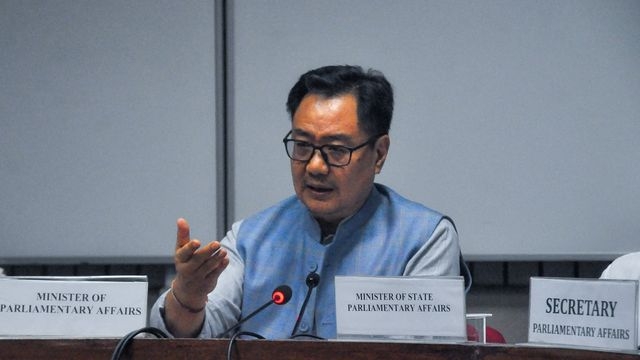
Union Minister Kiren Rijiju further explained the government’s interpretation of the term, saying it was not aimed at the Opposition as a whole. He described “Dimagi Naxals” as those who support Maoists and their ideology, undermine the Indian Constitution, back separatists, support Article 370 and advocate positions that could threaten India’s territorial integrity, including attempts to sever the Northeast from the rest of the country.
The term therefore represents, in the government’s framing, a living ideological threat to India’s territorial integrity and national unity.
Sharjeel Imam and the Chicken’s Neck Controversy
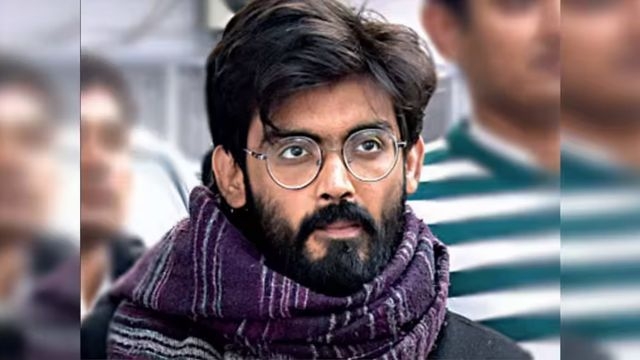
Consider Sharjeel Imam, the former jailed JNU student and one of the prominent organisers associated with the Shaheen Bagh protests.
In a speech circulated widely in January 2020, Imam spoke about mobilising five lakh people to cut off Assam and the Northeast from the rest of India by blocking the strategically vital Siliguri Corridor, popularly known as the Chicken’s Neck. He also spoke of permanently cutting Assam off from India, or at least doing so for a period of time.
The remarks triggered cases in multiple states, including allegations under the Unlawful Activities (Prevention) Act (UAPA).
This is precisely the kind of rhetoric that critics of the “Dimagi Naxal” phenomenon point to – the use of protest politics and identity-based mobilisation to advocate an action that could physically disrupt India’s territorial connectivity.
“Tukde-Tukde” Slogans and Terror Sympathies
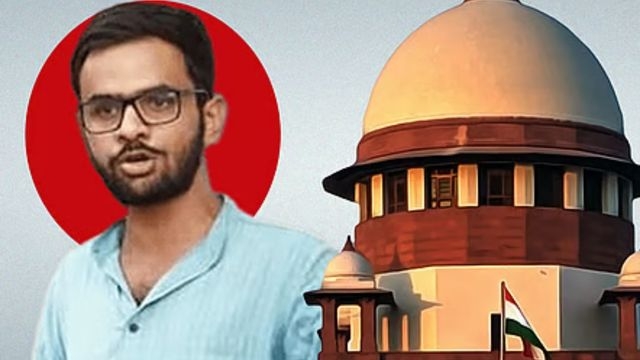
Then there is Umar Khalid – another JNU product, accused in the 2020 Delhi riots conspiracy case and February 2016 event organised around Afzal Guru and Maqbool Bhat.
Delhi High Court records from the proceedings relating to the JNU case documented slogans including “Afzal Guru Maqbool Bhatt Zindabad”, “Bharat ki barbadi tak jung rahegi”, “Indian Army murdabad” and “Bharat tere tukde honge – Inshallah”.
The court record also noted that posters for the 9 February event described it as being against the “judicial killing” of Afzal Guru and Maqbool Bhat, and that permission for the programme was withdrawn after authorities became aware of its nature.
These episodes became a defining flashpoint in the national debate over the limits of free speech, separatism, national security and glorifying terrorist like Afzal Guru, Maqbool Bhat or, in other contexts, Burhan Wani, while demanding “azaadi” for Kashmir or portraying Indian security forces as occupiers, amounts to laundering separatist narratives through academic and political mobilisation.
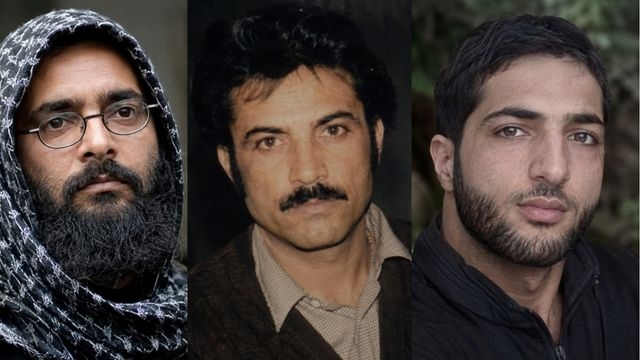
Maoist Sympathisers in the Power Corridors
The broader concept of the “Urban Naxal” has similarly been used to describe people accused of providing intellectual cover, online amplification or mobilisation support to violent Maoist organisations.
The Ministry of Home Affairs itself has warned that sections of intellectual opinion can fall prey to Maoist propaganda, while emphasising that CPI (Maoist) advocates armed insurgency to capture state power and is listed as a terrorist organisation under the UAPA. The MHA also records that tribals and economically marginalised communities have been among the biggest victims of Maoist violence.
This is where the ideological battle becomes important.
When security forces conduct operations against armed Maoists, these Dimagi Naxals will frame it as extra-judicial killings, but when roads, schools, connectivity and employment reach formerly accessible in the Naxal-affected areas such as Bastar and Gadchiroli, they will frame development as “corporate loot”.
The government’s point of view is that security and development have worked together to dismantle the ecosystem that sustained the insurgency. Official data backs up the scale of that decline : in 2025 alone, security forces neutralised 364 Naxals, arrested 1,022 and facilitated 2,337 surrenders.
The political controversy intensified after former Union Home Minister and Congress leader P. Chidambaram responded to Modi’s speech.
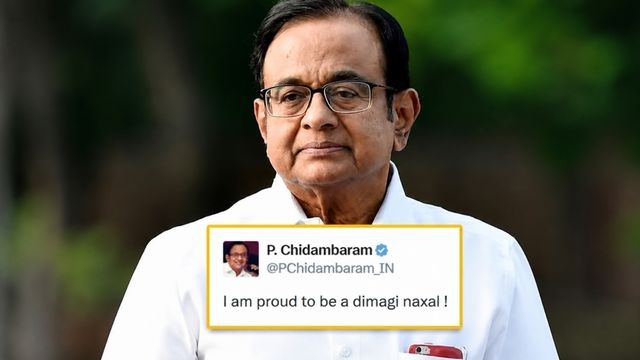
On 16 August, Chidambaram posted on X: “I am proud to be a Dimagi Naxal!” His remark triggered a sharp political backlash, with BJP leaders questioning the statement and linking it to the broader debate over the government’s definition of ideological Naxalism.
The statement also drew outrage from families of Naxal victims, including those who travelled from Bastar to Delhi to express their pain over what they saw as an insensitive political response to a maoist violence responsible for countless deaths.
During his own tenure as Home Minister, Chidambaram explored talks with Maoists conditional on the abandonment of violence, while Chidambaram distinguished between violent Naxals and sections of the Left-wing intellectual community.
That history illustrates the larger political divide : where one side sees legitimate dissent and civil-liberties advocacy, the other sees an ideological ecosystem capable of giving political and intellectual legitimacy to armed violence.
The Real Threat to Sovereignty
The “Dimagi Naxal” argument is ultimately not about people carrying guns in the jungle.
It is about what happens when an ideology survives after its armed wing has been weakened.
The government’s concern is that such an ecosystem can operate through universities, selected news media channels, NGOs, social media and protest platforms – using selective outrage, historical distortion, identity-based mobilisation and separatist narratives to challenge India’s territorial integrity.
The same argument is extended to opposition against the abrogation of Article 370, which the government describes as the full constitutional integration of Jammu and Kashmir, and to narratives that amplify local grievances into demands for secession.
It also includes that some so-called activists or ideological groups defend or glorify individuals associated with separatist or extremist movements while showing comparatively little attention to the security personnel and civilians killed by Maoist violence.
The broader ideological battle can also encompass narratives around issues such as “Love Jihad” and attacks on Indian cultural heritage, which critics argue can be weaponised to deepen social divisions.
_202608191136030894_H@@IGHT_360_W@@IDTH_640.jpg "DIMAGI NAXAL - (IMAGE 7)")
Yet there is an equally important constitutional safeguard – criticism of the government, protest, journalism, academic disagreement or advocacy cannot by itself be equated with Naxalism. The line must be drawn where evidence establishes support for violence, terrorism, secession or unlawful activity.
Under the Modi government, armed Left-Wing Extremism has been pushed to its weakest point in decades through a combination of security operations, development, infrastructure, rehabilitation and greater state presence. Official figures show that LWE violence has fallen by 88 per cent from its 2010 peak, while deaths have fallen by 90 per cent.
The battlefield has therefore changed
The question now is whether the ideological narratives that once helped sustain violence can also be defeated without weakening the democratic freedoms that India’s Constitution guarantees.
In a nutshell
India’s battle against Naxalism was never just about outgunning rebels in the jungle. It was a deeply rooted war of ideas, influence, and the moral legitimacy of using violence against the nation.
With armed Left-Wing Extremism now largely dismantled, the government is focusing on the ideological networks that could keep the violence alive. This shift forms the core of the “Dimagi Naxal” (Intellectual Naxal) warning.
However, building a democracy requires more than just labeling opponents. The true strength of the nation lies in exposing separatism, unconditionally rejecting political violence, protecting constitutional institutions, and ensuring that every accusation is strictly backed by legal evidence.
The guns in the forests may have fallen silent. The true test now is whether the ideology that once justified them can be stopped from taking root elsewhere.
Written by
Kewali Kabir Jain
Journalism Student, Makhanlal Chaturvedi National University of Journalism and Communication