Selective Outrage? CJP's Protests Took Centre Stage While Jharkhand's Students Were Abandoned
If student welfare mattered equally, why were Jharkhand"s starving students overlooked while CJP"s Jantar Mantar protests received relentless media attention?
The Narrative World 02-Aug-2026
Total Views |


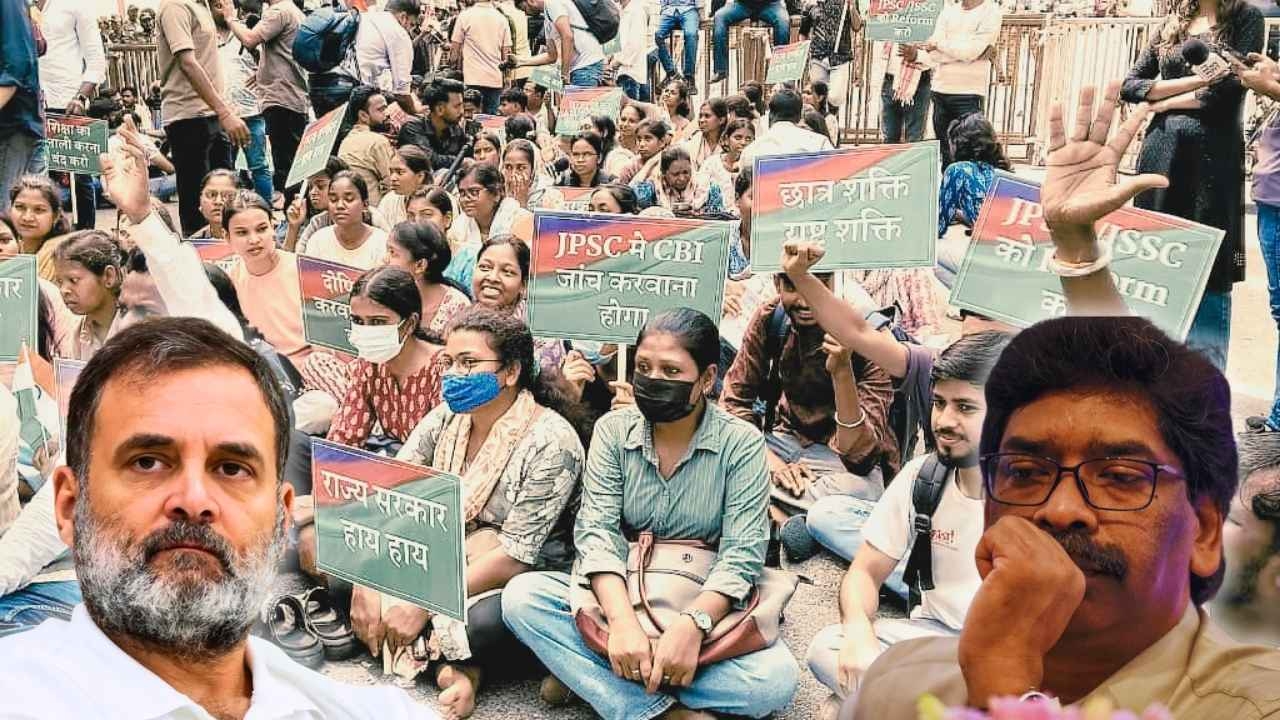
While the media turned Jantar Mantar into a 24x7 circus over the Cockroach Janta Party (CJP) protests against NEET irregularities and the Union Education Minister, another set of real students in Jharkhand has been quietly suffering for years. These are not meme-fuelled Gen-Z influencers or ideologically driven activists camping alongside national media crews. They are the sons and daughters of Jharkhand's poorest families, the actual students who depend on post-matric scholarships to pay their fees, buy books, and stay in hostels. The Jharkhand government under Hemant Soren has treated them with callous indifference. Scholarships have been delayed for two to three years.
CJP Got the Spotlight; Jharkhand Got the Cold Shoulder
The CJP agitation, born from online satire and amplified by anger over paper leaks, received saturation coverage. National television channels, English-language newspapers, and social media influencers treated every sit-in, every hunger strike, and every police action as high drama. The demand for the Education Minister's resignation became a national cause. The so-called movement's digital savvy, Instagram reels, and high-profile support ensured that it could not be ignored. When the minister eventually resigned and talks followed, the story was framed as a victory of youth power against the Centre.
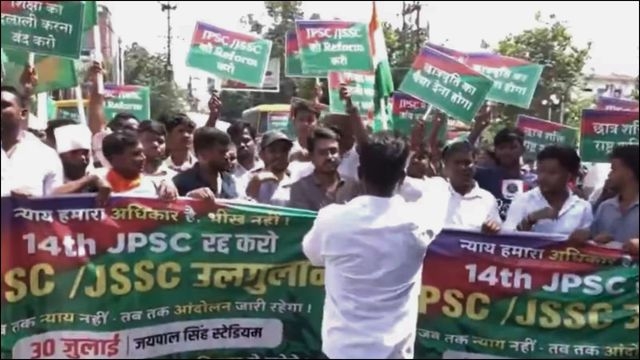
Contrast this with Jharkhand. For years, lakhs of students have waited for scholarships that never arrived on time, or often, at all. In 2025 alone, reports documented that while the state targeted benefits for more than 11 lakh OBC students across recent financial years, large numbers remained unpaid. Central shares were delayed or released only partially in some categories, but the state government itself under-provisioned funds, allowed irregularities in distribution, and prioritised political freebies. Students described being forced to drop out, take loans, or beg to continue their education. AJSU and other organisations even launched the "Siksha ke Liye Bhiksha" campaign.
Unfunded (vitt-rahit) schools and inter-colleges, which educate thousands of rural and tribal children, have also faced grant delays, portal glitches, arbitrary rejections, and the sudden withdrawal of support for dozens of institutions. Teachers and students under the Jharkhand State Unfunded Education Joint Struggle Front have repeatedly gheraoed government offices and organised mahadharnas, accusing the administration of technical sabotage and favouritism. Funds earmarked for grants have lapsed while institutions struggle to pay salaries and keep classrooms open.
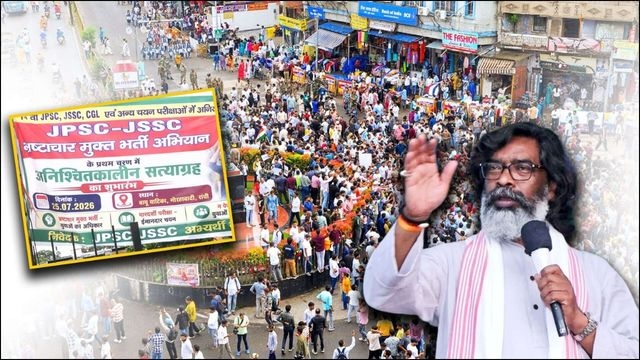
Most recently, aspirants protesting JPSC and JSSC paper leaks and recruitment irregularities have been camping in Ranchi since late July 2026. They lack electricity, cannot cook properly, and survive on public donations. Organisers described bringing their own utensils but were told they could not prepare food. This is Jharkhand's own "Jantar Mantar moment," yet it has remained largely a local story.
Reckless Governance, Not "Centre-State Blame Games"
The Hemant Soren government has perfected the art of deflection. When confronted with scholarship arrears, ministers point to delayed central releases. Yet the same government has managed to roll out high-visibility welfare schemes while education funding for the poorest has remained chronically mismanaged. Reports of 40% irregularities in scholarship distribution, underutilisation of allocated funds, and portal failures that leave tribal schools unable even to apply for grants point to administrative failure, not merely technical glitches.
These students are not abstract "youth". They are first-generation learners from villages in Gumla, Simdega, Khunti, Santhal Pargana, and other tribal belts. For them, a scholarship is the difference between continuing their education and returning to the fields or migrating in search of daily-wage work.
Written by

Kewali Kabir Jain
Journalism Student, Makhanlal Chaturvedi National University of Journalism and Communication

नैरेटिव डेस्क
नैरेटिव डेस्क