Bastar : From Red Corridor to Recovery Zone
Months after the government declared Bastar free from armed Naxalism, security forces continue to uncover hidden Maoist weapons, ammunition, explosives, cash and communication equipment across the region.


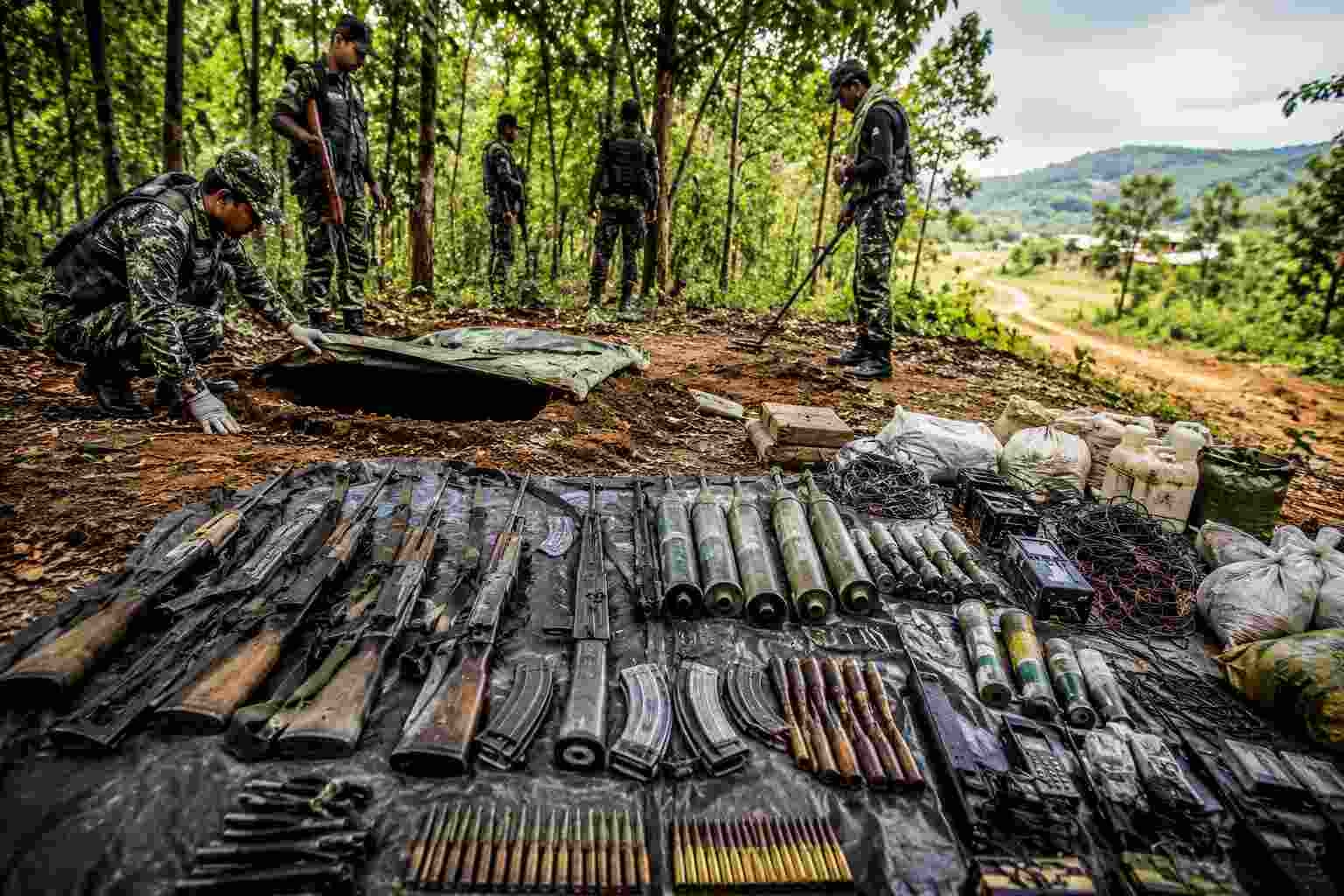
Months after Bastar was declared free of armed Naxalism, security forces continue to recover weapons, ammunition, explosives, cash and communication equipment from old Maoist dumps across Kanker, Narayanpur, Dantewada and Sukma.
On March 31, 2026, the Indian government declared a historic milestone after nearly six decades of violence, saying the country had effectively become free from Naxalism.
For generations, Maoist violence disrupted the lives of tribal communities, cutting off villages from roads, schools and the broader promise of development. For decades, the so-called Red Corridor referred broadly to districts across central and eastern India affected by Maoism and remained one of the country's most serious internal security challenges. The violence disrupted governance and development and claimed the lives of thousands of civilians and security personnel.

Once regarded as the core of India's Maoist terrorism, Bastar is witnessing a different kind of security operation after March 31. Instead of pursuing armed formations through the forests, security forces are now searching former Maoist strongholds for weapons, explosives, cash and communication equipment concealed in underground caches.
On March 31, Union Home Minister Amit Shah announced that the government's goal of making Bastar Naxal-free had been achieved and said the armed Maoist movement had ended. But the weapons accumulated during decades of terrorism did not disappear with the organisation's decline.
Since April, security personnel have recovered firearms, rifles, grenade launchers, hundreds of rounds of ammunition, explosives and large amounts of cash from hidden dumps across Kanker, Narayanpur, Dantewada and Sukma.
Intensive Search Operations Uncover Hidden Arms
Kanker
Between April 1 and May 14, personnel from the district police, District Reserve Guard (DRG), Bastar Fighters and Border Security Force (BSF) carried out intensive search and area-domination operations in remote and sensitive areas of Kanker.
According to the police, the seized weapons included one 7.62 mm SLR LMG (Self Loading Rifle-Light Machine Gun), one 5.56 mm LMG, five .303 rifles, 11 single-shot country-made guns, eight BGLs (barrel grenade launchers), five muzzle-loading guns, 15 single-shot 12-bore guns, two 12-bore country-made pistols, one .315-bore gun and one 7.65 mm pistol.
The forces also recovered 10 cooker bombs, one arrow bomb, 469 cartridges, 34 BGL shells, 46 kg of explosives and gunpowder, four walkie-talkies and a small gas-welding machine.
Narayanpur
In May, another major recovery was made in Narayanpur during a joint operation by the Narayanpur Police, District Reserve Guard (DRG), Special Task Force (STF), Indo-Tibetan Border Police (ITBP) and Border Security Force (BSF) in the forests of Abujhmad.
During the operation, the forces recovered Rs 1.01 crore in cash along with three AK-47 rifles, three SLR rifles, two .303 rifles and one .315 rifle.
A large quantity of live ammunition, magazines, BGL shells, detonators, Cordex wire, communication devices, batteries and electronic equipment was also seized.
Security personnel additionally recovered 12-bore guns, country-made pistols, walkie-talkies, communication sets and materials suspected to have been used in the manufacture of improvised explosive devices (IEDs).
The recoveries in Narayanpur continued in June. On June 26, security forces reported the recovery of arms and Rs 24 lakh in cash from two separate Maoist dumps in forest areas under the Orchha and Chhotedongar police stations.
In the Tekla forested hills under Orchha police station limits, security personnel unearthed a Maoist dump containing firearms, ammunition, communication equipment and other material hidden in the forest.
The recovered cache included an INSAS (Indian Small Arms System) rifle, two INSAS magazines and 21 rounds, two SLR rifles, four SLR magazines and 63 live rounds, two .303 rifles, two .303 magazines and 65 live rounds, two 30-OC guns, nine magazines and 36 live rounds, a BGL launcher, a single-shot gun, three detonators, two scanners and 28 rounds of 6.7 mm ammunition.
Dantewada
In July, another major cache was uncovered in Dantewada, once one of the most violence-affected districts of the Bastar region. According to information provided by surrendered Maoists, security forces recovered arms, explosives, cash and a gold biscuit during an anti-Naxal operation.
On July 12, security personnel launched a search operation in the forests of Todma village under the Barsur police station limits. During the operation, the forces seized a 116-gram gold biscuit worth around Rs 16 lakh, Rs 2 lakh in cash, an INSAS rifle, 16 INSAS magazines, four AK-47 magazines, 23 SLR magazines, five 12-bore guns and three BGL launchers.
Sukma
The latest major recovery came on August 24, this time from Sukma, a district that for years stood at the centre of Maoist violence in southern Bastar. Acting on intelligence provided by surrendered Maoist cadres, Sukma district police unearthed a large cache of weapons and explosives hidden in the forested Bhandarpadar-Munurkonda belt. The operation resulted in the recovery of 23 firearms, 492 live rounds, six BGL launchers, grenades and a substantial quantity of explosives.
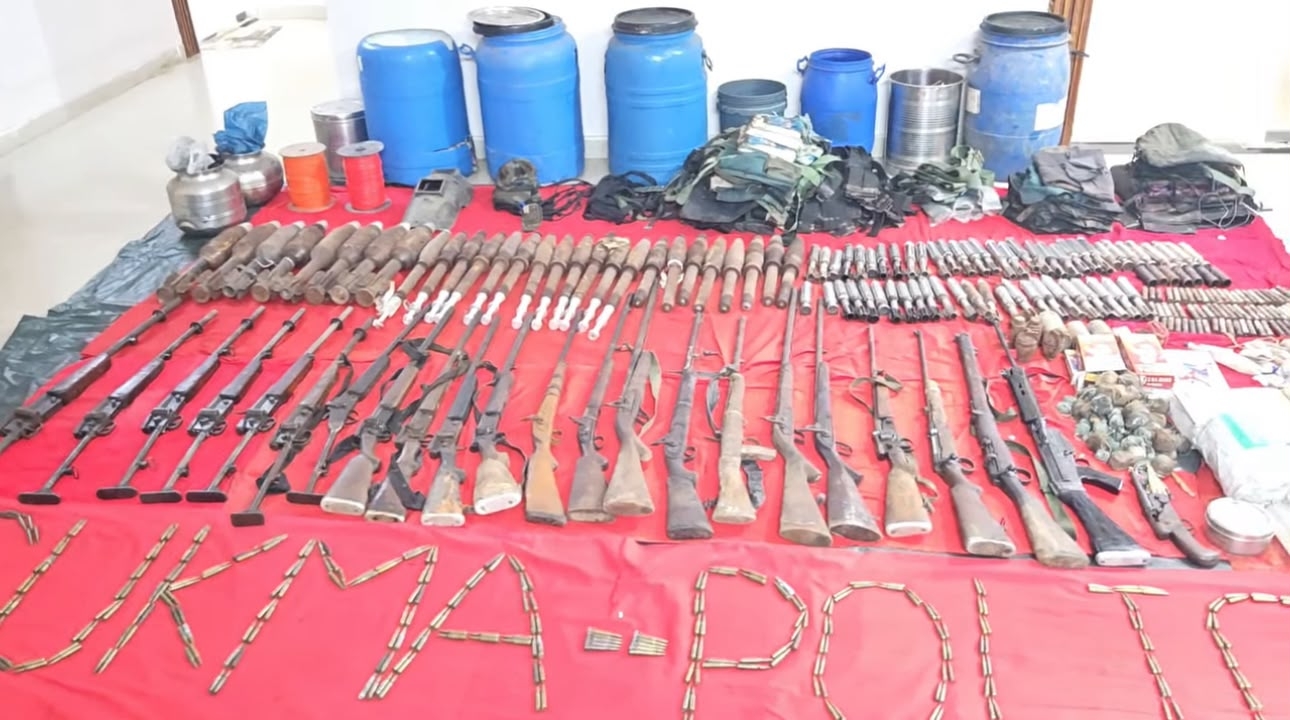
The recoveries included an SLR rifle, two .315-bore rifles, an .410 musket, six-barrel grenade launchers, five 12-bore rifles, seven muzzle-loading guns and other country-made weapons. Police also recovered 45 AK-47 rounds, 196 SLR rounds, 89 INSAS (Indian Small Arms System) rounds, 97 rounds of .303 ammunition, 20 rounds of .315 ammunition and 45 rounds of 12-bore cartridges, taking the total to 492 live rounds.
The recovery, nearly five months after the March 31 declaration, illustrates how widely weapons and explosives had been dispersed and concealed across the region during the Maoist insurgency.
From Red Corridor to Recovery Zone
The transformation is particularly significant for Bastar. For years, the region's identity in national security discussions was tied to terms such as Red Corridor, Maoist stronghold and Naxal-affected zone. The government now wants that identity replaced by development, connectivity and normal administration. But before that transition is complete, the forests still have to be cleared of what decades of terrorism left behind.
Every recovered rifle, grenade launcher, explosive cache and ammunition box represents another remnant of the conflict being removed from the ground. The guns of the insurgency may have fallen silent, but clearing its remnants remains an important security task.
Bastar's transition from Red Corridor to recovery zone will ultimately be measured not only by the absence of armed Maoist violence, but also by how completely these hidden arsenals are removed and former affected zones are brought into an era of security, administration and development.
Article by
Geetanjali Naik