From Red Corridor to Growth Corridor : Bastar’s Historic Transformation Towards Bastar 2.0
After decades of Maoist violence, Bastar is emerging as a model of security-led development under CM Vishnu Deo Sai’s roadmap for a new growth corridor.
Total Views |


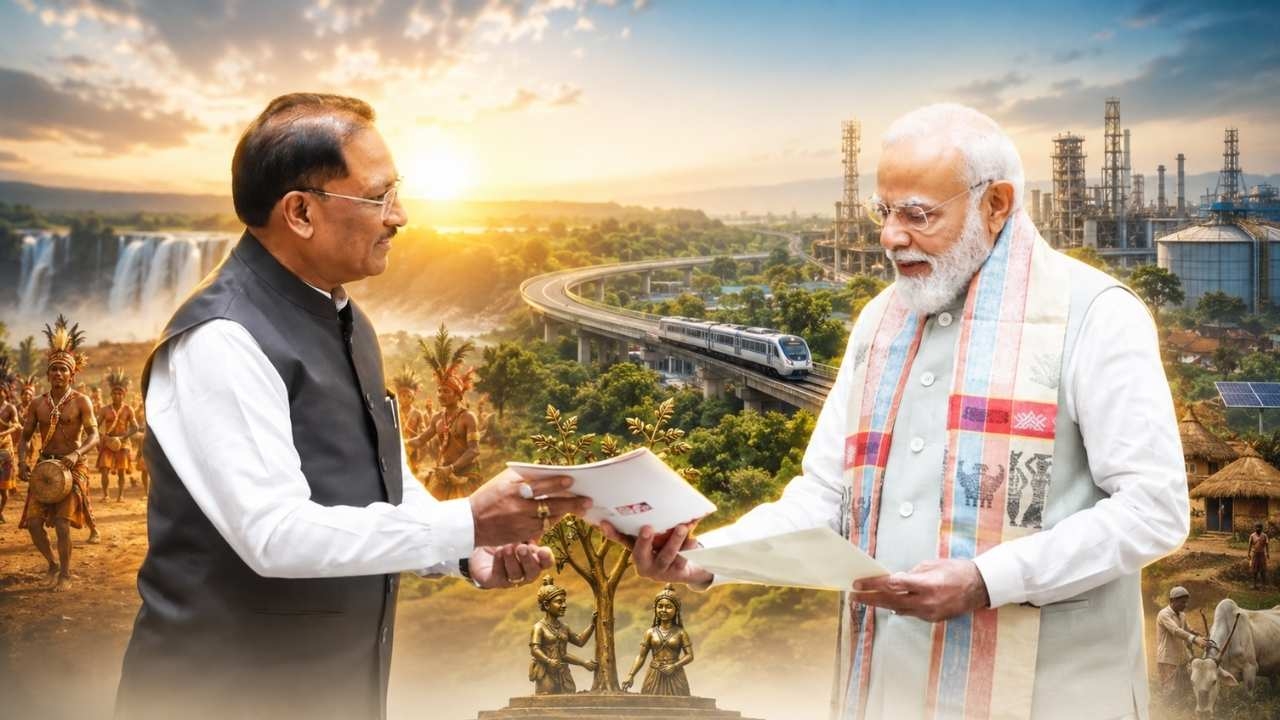
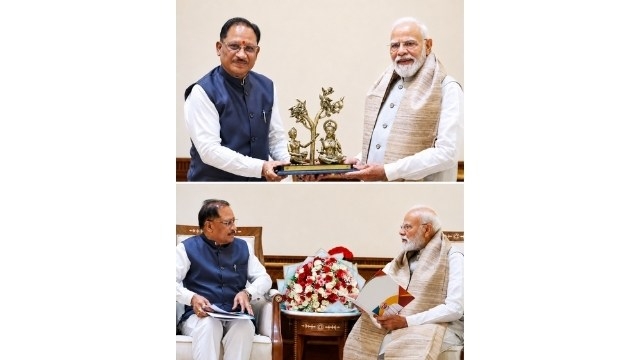
On the 31st of July , Friday, Chhattisgarh Chief Minister Vishnu Deo Sai presented Prime Minister Narendra Modi with a multi-sectoral roadmap symbolising one of Bharat’s most profound turnarounds. Once the epicentre of Left-Wing Extremism, where the red flag of Maoist violence sought to separate a vast tribal heartland from the national mainstream, Bastar is today emerging as a bridgeway to growth. The meeting underscored a Rs 10,500 crore gas-based urea plant in Rajnandgaon, permanent grid connectivity for 461 security-sensitive villages, and an All India Institute of Ayurveda, which would be settled up either in Bastar or Raipur.
The Shadow of Red Terror and the National Resolve
For decades, Bastar spanning roughly 42,000 square kilometres across seven districts functioned as the core of the Dandakaranya Special Zonal Committee’s operations. Where the red terror destroyed schools, roads, didn't let infrastructure to grow and even choked the supply of ration. And an end to this was brought with a decisive shift when the Union Home Minister Amit Shah’s resolve to make India Naxal-free by 31 March 2026 provided the operational and psychological framework to terminate LWE. Coordinated action by Central Armed Police Forces, state police units including the District Reserve Guard and Bastar Fighters, and intelligence agencies delivered results and got LWE terminated.
In 2025 alone, 256 Maoists were neutralised in encounters in the Bastar division while more than 1,500 cadres surrendered. Cumulative figures since early 2024 show over 2,700 surrenders in the division, with senior leaders including DKSZC-level cadres joining the mainstream.
By March 2026, official assessments declared nearly 96 percent of Bastar free of Maoist influence. The number of LWE-affected districts nationally shrank dramatically.

Vishnu Deo Sai’s Vision: Security with Sensitivity
Chief Minister Vishnu Deo Sai, himself a tribal - rooted in the region’s soil, brought a distinctive sensibility to governance. Assuming office in December 2023, his administration recognised that kinetic operations alone could not erase decades of alienation. The twin pillars became clear in his policies to establish the state’s presence through security camps deep in the forests, and simultaneously ensure that every camp became a node of service delivery.
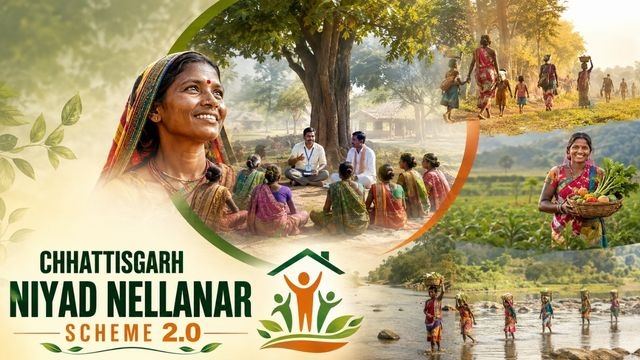
The flagship instrument has been the Niyad Nellanar Yojna (Your Good Village) scheme, later expanded into Niyad Nellanar 2.0 and complemented by Bastar Munne (Pioneering Bastar) Abhiyan.
MUST READ - Shaheedi Saptah Fades as a New Bastar Emerges!
These programmes have taken saturation coverage of Central and state schemes into 5,542 villages, benefiting nearly 39 lakh people. Concrete outcomes include ration cards for 6.79 lakh families, Jan Dhan accounts for 17 lakh individuals, Aadhaar enrollment for 24.66 lakh, Ayushman cards for 22 lakh, individual forest rights titles for 1.18 lakh, and Kisan Credit Cards for 3.89 lakh farmers. Under the Mukhyamantri Swasth Bastar Abhiyan, more than 34 lakh people have undergone health screenings.
Education, long a casualty of violence, is being revived by the government; Of 458 schools closed in 240 affected villages, 421 have been reopened; 36 new schools have been approved.
“Education Cities” modelled on the successful Dantewada complex are under development in Orchha (Abujhmad) and Jagargunda, offering residential facilities and competitive examination coaching to tribal youth who previously had limited access to opportunities.
Housing support is substantial: 1.76 lakh Pradhan Mantri Awas Yojana units approved for the division, plus 15,000 houses earmarked for families affected by Naxal violence and for surrendered cadres.
Mobile connectivity has also reached thousands of villages; bus services under the Mukhyamantri Bus Sewa Yojana have connected 425 villages for the first time; all-weather roads cover the overwhelming majority of habitations.
Perhaps the most evocative symbol of the new phase is the conversion of security camps into Shaheed Veer Gundadhur Seva Deras. Of roughly 200 camps in Bastar, 70 are being transformed into multi-service centres offering banking, Aadhaar and ration services, skill training, forest produce processing (tamarind, traditional rice), and access to hundreds of government schemes. The first such centre, inaugurated by Home Minister Amit Shah at Netanar, the birthplace of the tribal freedom fighter Gundadhur.
Bastar 2.0: Blueprint of Transformation
Sai’s “Bastar Roadmap 2.0” aims higher, from connectivity projects form the backbone; the Rs 3,513 crore Jagdalpur-Raoghat railway line, the final stretches of the Raipur-Visakhapatnam Expressway, expanded operations at Jagdalpur airport, and the proposed Indravati River barrage expected to irrigate 32,000 hectares.
Dairy development on the Amul model, with cattle distribution and cooperative strengthening, seeking to raise household incomes. Forest produce value addition, tourism leveraging Bastar’s unique cultural heritage (including the expanded Bastar Pandum), and carefully calibrated industrialisation has become a torchbearer for Bastar 2.0.
The state’s Industrial Development Policy 2024-30 has already attracted investment proposals of nearly Rs 8 lakh crore across core manufacturing and sunrise sectors like AI data centres, semiconductors, hyperscale infrastructure, electronics, and more.
Special incentives for Bastar, including higher subsidies in Group-3 blocks (which cover most of the region), royalty reimbursements for core industries, and salary subsidies for units employing surrendered Naxals, reflect a deliberate attempt to turn former conflict zones into engines of growth without disrupting tribal life or ecology.
Badalta Bastar : Bastar 2.0
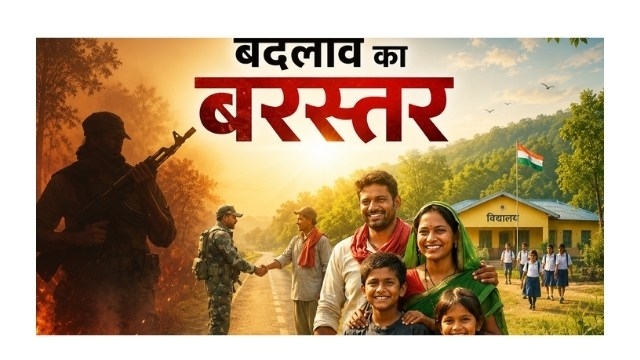
The transformation of Bastar is the product of politics at the highest level, the courage of security forces, the cooperation of local communities who ultimately rejected the false narrative of the Maoists, and a governance model that refuses to treat tribal regions as permanent peripheries. Chief Minister Sai’s repeated emphasis on trust-building, last-mile delivery, and cultural pride evident in the promotion of Bastar’s traditions at national platforms has been a spine for the Bastar 2.0.
Written by
Kewali Kabir Jain
Journalism Student, Makhanlal Chaturvedi National University of Journalism and Communication