When Conversion Replaces Tribal Gods, Festivals and Identity
How Christian Conversion Dismantles Tribal Festivals, Ancestral Rituals, Social Leadership and Indigenous Identity.
Total Views |


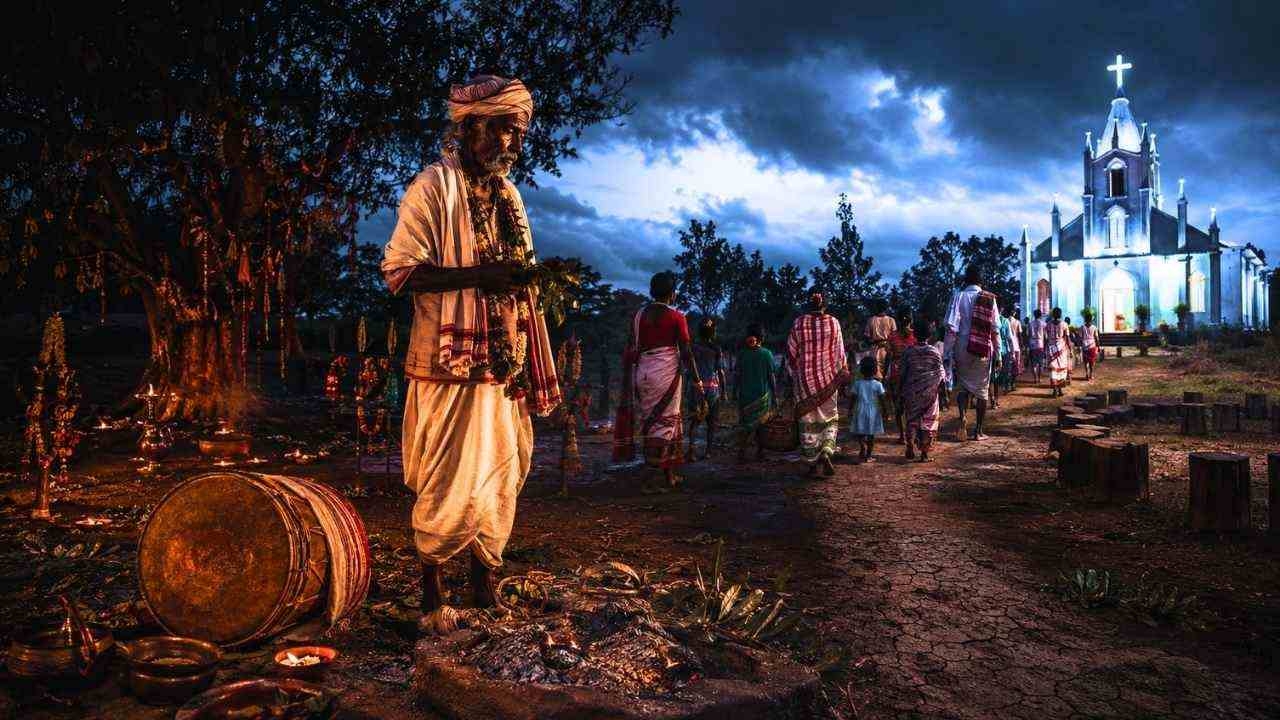
Across India’s tribal regions, Christian conversion is reshaping ancestral worship, festivals, rituals and traditional leadership through missionary networks, raising concerns about indigenous identity, social cohesion and civilizational continuity.
India’s tribal communities represent one of the oldest continuous civilizational streams on the subcontinent. Their identity is an integrated whole of nature worship, ancestral rituals, sacred groves, oral traditions, customary law, social organization under traditional leadership, and a worldview rooted in the soil, forests, rivers, and mountains of Bharat.
When individuals or groups undergo conversion particularly to Christianity, through missionary networks, their faith too gets sacrificed. The ‘sacrifice’ frequently produces a cascading transformation of festivals, rites of passage, symbols, community leadership, and collective self-understanding.
From a civilizational perspective that prioritizes indigenous continuity over imported universalist claims, this process amounts to cultural displacement and the progressive hollowing out of the very distinctiveness that Scheduled Tribe protections were designed to safeguard.
Life of a Tribal Before Conversion
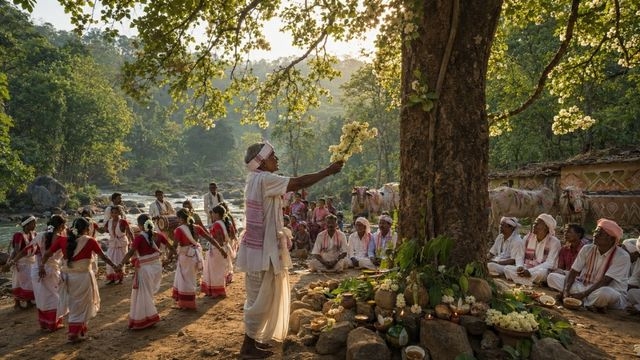
Traditional tribal faith systems across central and eastern India (Jharkhand, Chhattisgarh, Odisha, Madhya Pradesh, parts of Gujarat,and the Northeast) center on animism and ancestor veneration, a very sacred part of Sanatana Dharma. Deities such as Singbonga, Dharmesh, Bara Deo, Budha Dev, Gram Devta, and Van Devi inhabit sacred groves, hills, and water bodies rather than constructed temples.
Festivals like Sarhul (sal tree flowering and spring renewal), Karma (agricultural and youth rites), Sohrai (cattle and harvest thanksgiving), and Bhagoria are inseparable from the agricultural and ecological cycles.
Marriage, birth, death, and dispute resolution follow customary councils led by Mundas, Manjhis, or village elders. Language, clan exogamy, and collective memory reinforce a bounded community that has historically maintained distance from Abrahamic exclusivism while sharing deep civilizational affinities with the broader Sanatana teachings of nature reverence.
Missionary Expansion and the Pattern of Change
Christian missionary activity among Indian tribals intensified under colonial patronage after the Charter Act of 1813 and continued post-Independence. The Madhya Pradesh government’s Niyogi Committee Report (1956), chaired by retired Chief Justice M. Bhawani Shankar Niyogi, remains a foundational document for it. After extensive field inquiry, the Committee documented that schools, hospitals, and orphanages frequently served as instruments of proselytization; foreign funds sustained aggressive campaigns; and mass conversions of tribal created minority pockets with potential for social disruption.
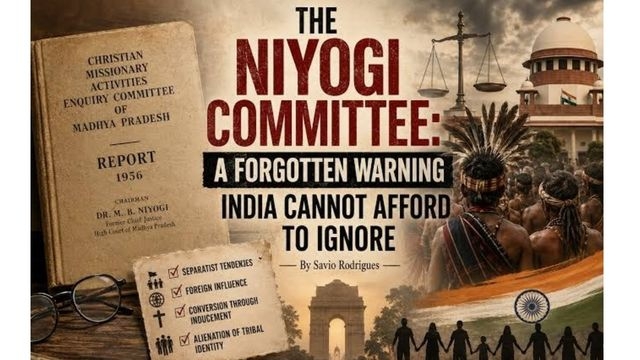
It observed that evangelization appeared linked to a broader agenda of disrupting non-Christian social solidarity and noted the political implications of creating Christian-majority tribal zones. The report recommended restrictions on proselytizing missionaries and on the use of material inducements by missionaries.
Ground-level accounts from recent decades confirm the cultural consequences. In converted villages of Jharkhand’s Simdega and West Singhbhum districts, traditional tree and animal worship is abandoned as “superstition.” Ancestral gods such as Singbonga are replaced by Jesus Christ. Festivals like Sarhul, Karma, and Sohrai decline or disappear while the churches multiply, sometimes three or four in a hamlet of twenty houses.
Marriage and death rituals shift toward church-prescribed forms. Social authority moved from traditional village councils and Mundas toward pastors and church hierarchies. Converts often retain Scheduled Tribe certificates for reservation benefits while simultaneously claiming minority status too, producing double benefits for them. Conversion changes gods and leads people to abandon festivals, marriage rites, and even pride in ancestral language and customs.
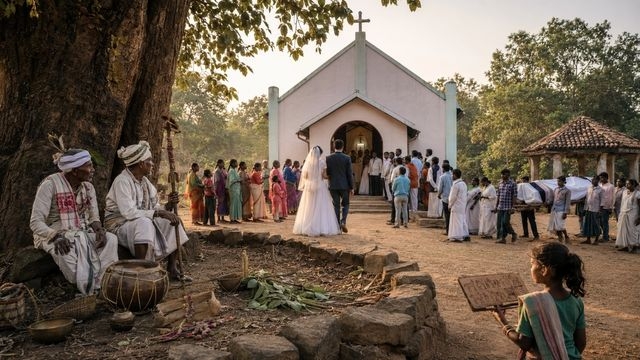
The Santhals in West Bengal, Oraons and Mundas in Chotanagpur, Chenchus and Lambadis in Telangana, and various groups in the Northeast and central India have become prey to the similar trap. Studies record the discontinuation of traditional festivals, the erosion of oral traditions and nature rites, and the emergence of social divides between converts and non-converts.
Cultural Changes After Religious Conversion Among Major Tribal Communities
Religious conversion has produced clear cultural shifts among India’s major tribal communities. Among the Santhals of West Bengal and Jharkhand, traditional festivals such as Baha Bonga, Sohrai, Sakrat Parab, and Magh Bonga, along with nature worship at sacred groves (Jaher), have largely been abandoned. Christian converted people replace these with Christmas, Easter, and church-centered lifecycle rites, creating a social divide with non-Christian Santals.
In the Oraon community of Chotanagpur, festivals like Sarhul, Karma, and Sohrai lose their traditional significance. Ancestral deities such as Singbonga and Dharmesh are discarded.
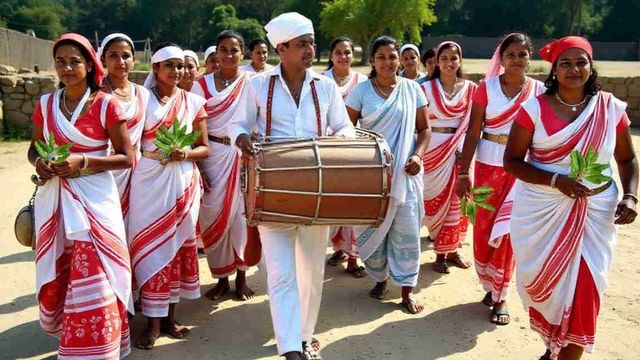
Many converted Christians adopt church weddings (sometimes with limited traditional elements) and shift social authority from village priests (Pahan) to pastors. Sacred groves frequently fall into neglect.
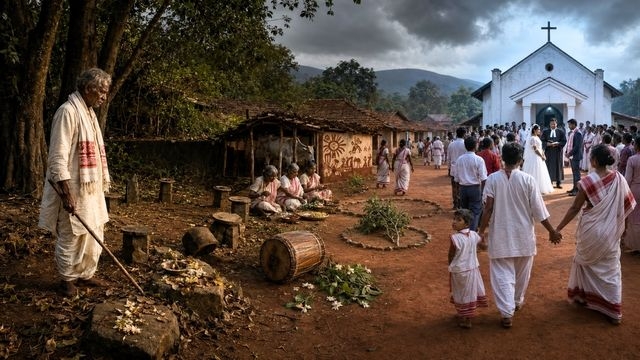
Mundas show a similar pattern. Tree and animal worship, Kuldevta puja and traditional festivals decline. Converts in Simdega openly state that ancestral practices have ended, while churches multiply and traditional leadership weakens.
Among the Chenchus of the Telangana Nallamala forest, high rates of Christian conversion have led to the abandonment of forest-based deity worship, animal sacrifices, and village festivals. Church attendance replaces earlier ecological and ancestral rituals.
The systematic erosion of festivals, sacred sites, and customary leadership through religious conversion carries serious political risks. When large sections of tribal communities abandon their indigenous identity, they often realign socially and electorally with organized minority networks.
This weakens the vote base that has historically supported parties rooted in cultural continuity. Over time, concentrated populations in Janjatiya belts can alter demographic equations, influence local power structures, and demand dual benefits with ST reservations plus minority privileges.
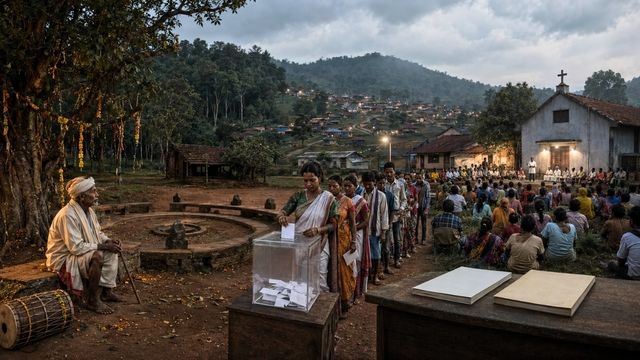
Such shifts attempt to threaten social cohesion, dilute indigenous political agency, and create long-term challenges to national integration in India’s sensitive tribal regions.
Protecting tribal identity requires preserving ancestral faith, languages, festivals, sacred landscapes, and traditional institutions while ensuring that every religious choice remains free from coercion, deception, or material inducement. Civilizational continuity depends on empowering tribal communities to safeguard their heritage on their own terms.
Written by

Kewali Kabir Jain
Journalism Student, Makhanlal Chaturvedi National University of Journalism and Communication