The Long Shadow of Conversion: How Christian Missionaries Reshaped Bharat’s Demography and Diluted Its Civilizational Core
From Portuguese Goa to the tribal Northeast, organized missionary conversions changed tribal identities, regional demography and Bharat’s civilizational landscape.
Total Views |


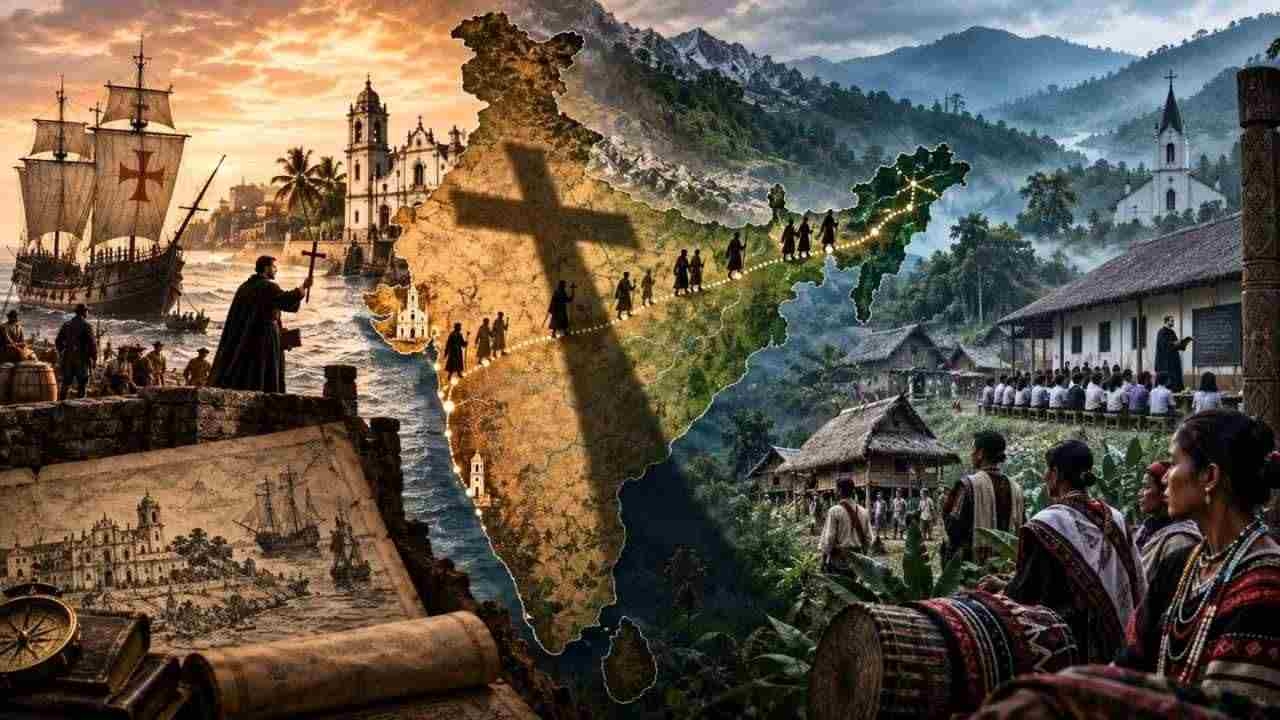
Across India, Christian missionary networks expanded from Portuguese-ruled Goa in the sixteenth century to tribal regions of the Northeast under British rule, using conversion, education and welfare to reshape local identities, demographics and political alignments.
Christian missionary activity in India is not a recent phenomenon of “charity” or “service.” It is a centuries-long project of religious expansion that began with colonial power and kept continuing through institutional networks, education, healthcare, and targeted outreach among tribals and so-called lower castes.
From the Portuguese coastal strongholds to the American Baptist footholds in the Northeast, the pattern has stayed with entering along with superior resources, undermining tribal culture as “heathen” or “demonic,” creating dependency through schools and relief, and then engineering mass shifts in identity. The result is measurable demographic change in strategic regions and a persistent challenge to India’s civilizational continuity and national cohesion.
Early Beachheads: From the old Fathers to Portuguese Force
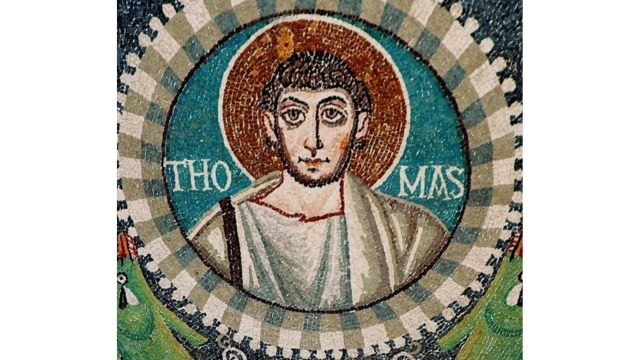
History claims that the Apostle Thomas arrived on the Malabar Coast around 52 AD and founded communities that evolved into the Syrian Christians of Kerala. This early presence remained limited and largely endogamous. The real expansion began with European colonialism.
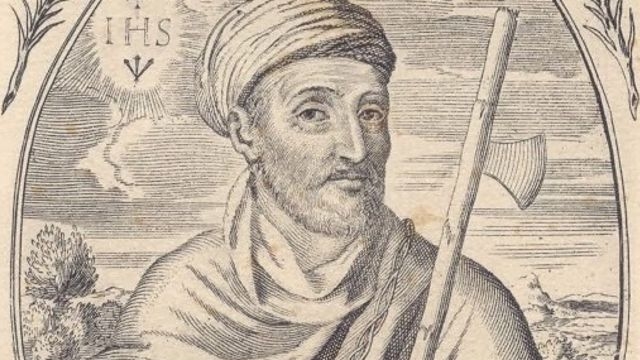
Portuguese arrival after Vasco da Gama’s 1498 voyage brought aggressive Catholic missionary work. Francis Xavier, the Jesuit Co-founder, landed in Goa in 1542. He focused on the Paravar fisherfolk along the Pearl Fishery Coast and is credited with large-scale baptisms, estimating around 30,000 in his Indian work, with claims of thousands in single months among coastal communities.
Xavier viewed Hindu practices harshly and in 1546 urged the Portuguese king to establish the Goa Inquisition to enforce orthodoxy among converts and suppress residual “pagan” customs. The Inquisition operated from 1560 to 1812, investigating tens of thousands (records indicate roughly 19,000-25,000 cases), enforcing Portuguese cultural norms, demolishing temples, and driving migrations.
Forced or incentivized conversions, orphan seizures, and bans on non-Christian public practice turned parts of Goa into a Catholic enclave. By design, this created a loyal Christian population aligned with colonial interests.
Robert de Nobili later adapted tactics in Madurai (from 1606), adopting Hindu customs and Sanskrit learning to target people with high nobility to aid cultural accommodation that was still aimed at conversion. These efforts remained concentrated on coasts and Portuguese territories until the British period opened the interior.
Protestant Surge and the Tribal Frontier
The British era unlocked systematic Protestant missions. William Carey of the Baptist Missionary Society arrived in 1793 (working from Danish Serampore due to East India Company restrictions). Carey’s direct convert numbers were modest around 700-1,400 over decades but his Bible translations into multiple Indian languages, printing presses, and educational institutions laid institutional groundwork. The Charter Act of 1813 legalized missionary activity, accelerating the flow.
Mass movements accelerated among so-called “depressed classes” and tribals in the 19th and early 20th centuries. In South India, Nadars (Shanars) in Tirunelveli, Malas and Madigas in Andhra, and others converted in groups, often during famines or under social pressure, seeking status elevation or material aid. Karl Rhenius and others built networks of villages, schools, and “refuge” communities.
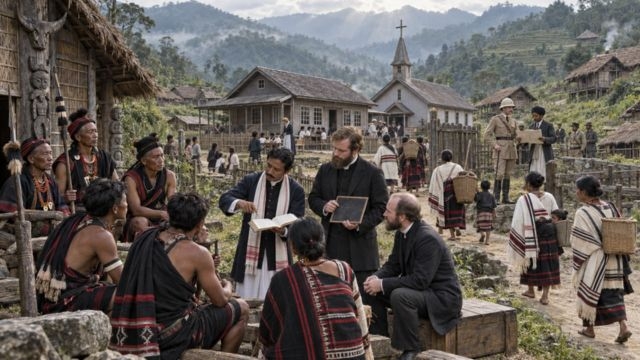
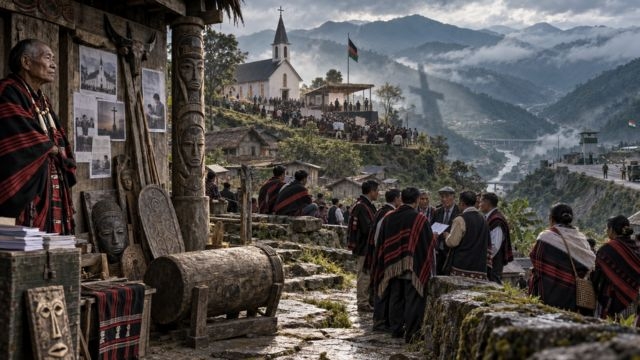
The most dramatic transformation occurred among Northeast tribals. The American Baptist missionaries targeted the Nagas. Miles Bronson made early contacts in the 1840s; E.W. Clark and Assamese evangelist Godhula established the first lasting foothold among the Ao Nagas in the 1870s, founding “villages of refuge” like Molungyimsen.
Similar work by Welsh Presbyterians among the Khasis (from the 1840s) and Arthington Aborigines Mission (J.H. Lorrain and F.W. Savidge) among the Mizos (1890s) followed. British administrators sometimes viewed conversion as a civilizing and pacifying tool against “savage” hill tribes.
The results were near-total in several groups. Nagas moved from under 1% Christian in the late 19th century to roughly 45% by 1951, over 80% by 1981, and around 90% by 1990, today Nagaland is nearly 88% Christian. Mizoram and Meghalaya followed similar trajectories (Mizos and Khasis exceeding 80-95% in many accounts). Arunachal Pradesh rose from under 1% Christian in 1971 to over 30% by 2011. And these involved in sustained foreign funding, vernacular Bible translation, boarding schools that severed children from traditional practices, and the framing of tribal culture or nature-worship traditions as backward.
Christians From Marginal to Concentrated Power
Census data shows the national picture and the regional distortion. In the undivided subcontinent around 1881-1901, Christians were under 1-1.2%. In post-Partition India:
- 1951: ~8.3-8.4 million (2.3%)
- 1961: ~10.7 million (2.4-2.6%)
- 1971: ~14.2 million (2.6%)
- 2011: ~27.8 million (2.3%)
The national share has remained roughly stable at 2-2.6% because overall population growth and higher fertility among other groups offset absolute increases. Absolute numbers rose from about 2.3-2.7 million around 1901 to nearly 28 million. Growth was fastest in the early post-Independence decades among tribals and certain South Indian communities.
Even Pew Research and census analyses note that religious switching is rare overall in India, yet localized mass shifts among Scheduled Tribes produced Christian majorities in Nagaland, Mizoram, and Meghalaya, with significant shares in Manipur (41%) and Arunachal (30%).
In the Northeast excluding Assam and Tripura, the Christian share climbed from low single digits in 1901 to over 68% by 2011. This is not random demographic drift, it is the outcome of targeted missionary concentration on groups with weaker Sanskritization or organized Hindu institutional presence.
Demographic Engineering and Its Political Consequences
These shifts matter because they are geographically concentrated in sensitive border regions and among communities whose traditional cultures were closest to Sanatana. Once converted, many communities adopted a new identity that often prioritized ecclesiastical networks over older kinship and civilizational ties.
Separatist movements in Nagaland and parts of the Northeast drew on this Christian identity; “Nagaland for Christ” rhetoric has coexisted with demands that challenge the Indian state’s territorial and cultural claims. Missionary literature and church structures frequently positioned tribal practices as idolatrous, accelerating cultural erasure.
Foreign funding through churches and NGOs has long raised questions of external influence on domestic politics, education, and social fault lines. Anti-conversion laws in several states respond to documented patterns of inducement, allurement, and aggressive proselytization, particularly among vulnerable populations. Hindu nationalist tradition argues that sustained demographic change in tribal belts weakens the civilizational majority, creates parallel loyalties, and complicates decisive national policy on issues ranging from border security to cultural preservation.
When large sections of a population in strategic zones orient toward global Christian networks rather than Indic civilizational continuity, the state’s ability to act purely in India’s long-term interest is constrained by minority vetoes, international advocacy, and internal identity politics.
The historical record mentions that major faces such as Francis Xavier, Robert de Nobili, William Carey, E.W. Clark, and the Welsh and Baptist missions drove the process. They succeeded most among groups least integrated into classical Hindu social structures.
National Christian percentages appear modest, yet the looking into the regional majorities and the institutional infrastructure they created continue to shape demography, culture, and politics. India’s response, strengthening indigenous institutions, enforcing transparency on foreign funding, and protecting tribal cultural rights without apology remains essential if the civilizational core is not to be further diluted by any foreign design.
India’s modest national Christian share obscures deep demographic and cultural transformations in several tribal and border regions.
Protecting indigenous traditions requires cultural investment, transparent foreign funding and firm safeguards against coercive or induced conversions.
Written by

Kewali Kabir Jain
Journalism Student, Makhanlal Chaturvedi National University of Journalism and Communication