Mecca on Red Alert: Saudi Arabia Issues First-Ever Aerial Threat Warning as Iran-Backed Houthi Terrorists Escalate Attacks
The unprecedented alert has exposed how Iran-backed Houthi terrorist attacks are pushing the conflict closer to Saudi Arabia’s most sensitive and strategically vital areas
Total Views |


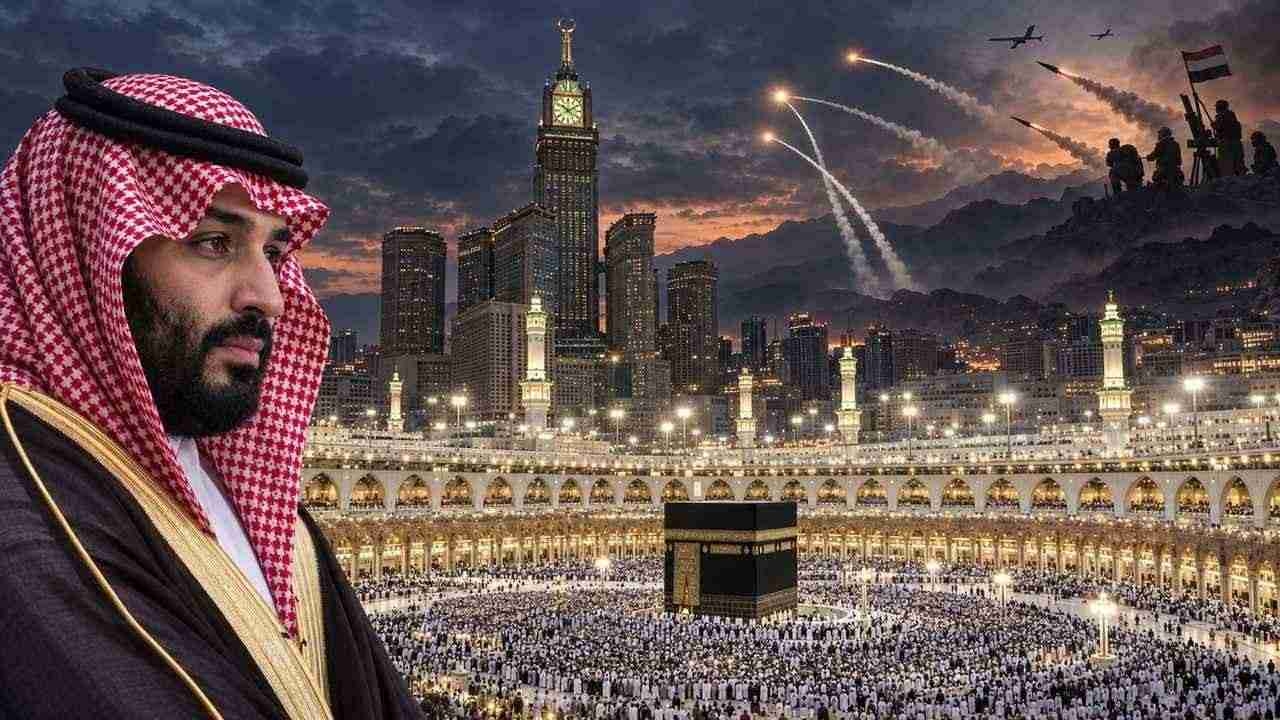
Saudi Arabia issued an unprecedented aerial threat alert for Mecca on September 15 after Iran-backed Houthi missile and drone attacks intensified, prompting warnings across western cities and exposing growing risks to the kingdom’s security infrastructure.
Saudi Arabia placed the Islamic holy city of Mecca under an unprecedented aerial threat alert on 15 September after intensified missile and drone assaults by the Iran-backed Shia Houthi terrorist group raised serious concerns about the kingdom’s security. The Saudi Civil Defence issued short-lived alerts across several western coastal areas, including Mecca, Jeddah and Taif, before announcing that the immediate danger had passed.
This marked the first reported aerial threat warning for Mecca, underscoring the expanding reach of attacks launched from Yemen by the Houthi militants. Although no impact was reported in the holy city itself, the activation of the alert followed repeated missile and drone strikes targeting Saudi territory.
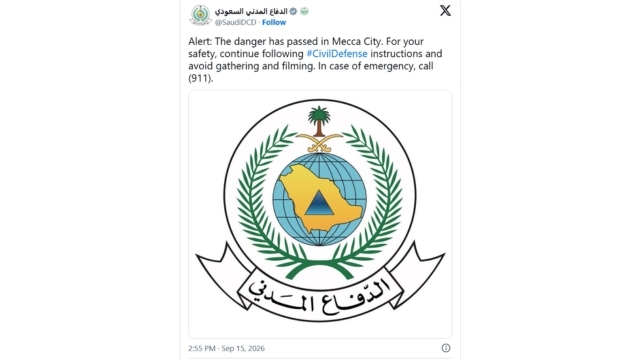
Saudi Civil Defence later confirmed on X that the danger had passed in Mecca and advised residents to follow official safety instructions, avoid gatherings and refrain from filming. People were directed to contact the emergency number 911 in case of need.
The alert came in the wake of one of the most intense Houthi assaults in recent years. On 14 September Houthi militant group launched a large-scale attack involving ballistic missiles and drones. Saudi authorities reported casualties and damage, with oil-related facilities set ablaze and 13 people wounded.
The security situation disrupted air movements in western Saudi Arabia. Reports indicated that air traffic bound for Prince Mohammad bin Abdulaziz International Airport in Medina was halted amid the heightened threat. Meanwhile, two military sources stated that a Houthi attack in western Yemen on 15 September killed eight government soldiers. The Houthis also claimed responsibility for another major assault involving “dozens of ballistic missiles and drones” aimed at King Khalid Air Base in Khamis Mushait in southern Saudi Arabia.
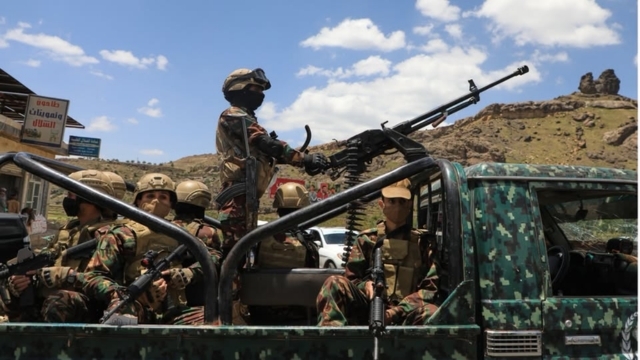
The latest escalation follows renewed fighting between the Houthi terrorists and Saudi-backed Yemeni government forces. The conflict sharpened in July after the Houthis announced a maritime blockade against Saudi Arabia and began targeting shipping in the Red Sea. Hazem al-Assad, a member of the Houthi politburo, declared that the group’s response would continue and intensify so long as Saudi Arabia persisted in what he termed aggression against the Yemeni population.
The widening confrontation has heightened concerns over the Bab al-Mandab Strait, a critical maritime passage linking the Red Sea with the Gulf of Aden. On 15 September, Qatar warned that any closure of the strait could have severe international consequences, with a Qatari Foreign Ministry official describing such a move as “catastrophic for the entire world.”
US President Donald Trump rejected a request from the Saudi Crown Prince for American intervention and claimed that the Houthis had contacted Washington asking the United States not to become involved.

With the Iran-backed Houthi terrorist group pressing its missile and drone campaign and the threat now extending towards Saudi Arabia’s western cities, the Mecca alert has highlighted the increasingly direct security challenge confronting the kingdom.
How Instability in Muslim-Majority States Affects the International Order
The international order today is significantly affected by political instability across several Muslim-majority states, particularly in the Middle East. However, this instability cannot be attributed to Islam or Muslims as a whole. It is better understood through the interaction of sectarian tensions, weak institutions, authoritarian politics, external intervention, economic interests, and regional power competition.
One important factor is the long-running Sunni-Shia rivalry. In countries where sectarian identity overlaps with political and geopolitical competition, it has contributed to conflicts, proxy warfare and social fragmentation. These conflicts can weaken state institutions and create space for militant organizations and non-state armed groups.
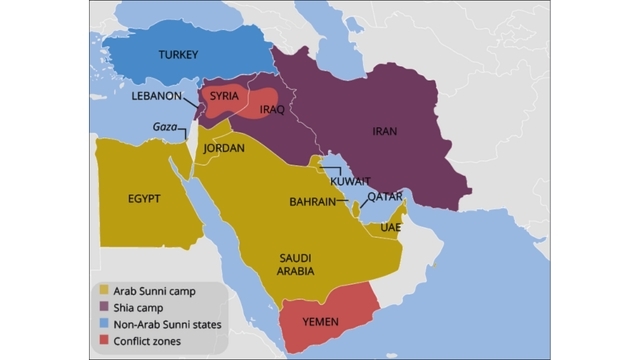
Energy politics is another major factor. The Middle East remains central to global oil and gas markets, while important maritime routes such as the Strait of Hormuz connect the region to the wider global economy. Political crises or military confrontations can therefore affect energy prices, shipping and global economic stability.
Weak governance, unemployment, limited educational opportunities and radicalisation can further deepen instability. At the same time, external powers have historically intervened in the region for strategic, security and economic reasons, sometimes intensifying existing rivalries.
The result is an international environment shaped by recurring security crises, refugee movements, terrorism concerns, energy uncertainty and great-power competition.
The challenge, no doubt remains rooted in Islamic terror , along with its complex political and institutional problem whose consequences extend far beyond the borders of the countries where these conflicts originate.
Written by

Kewali Kabir Jain
Journalism Student, Makhanlal Chaturvedi National University of Journalism and Communication