Hyderabad Liberation: Why Communists Kept Fighting India After the Nizam Surrendered
Even after Hyderabad joined the Indian Union, Communist guerrillas continued their armed revolt against the Indian state for nearly three years.
Total Views |


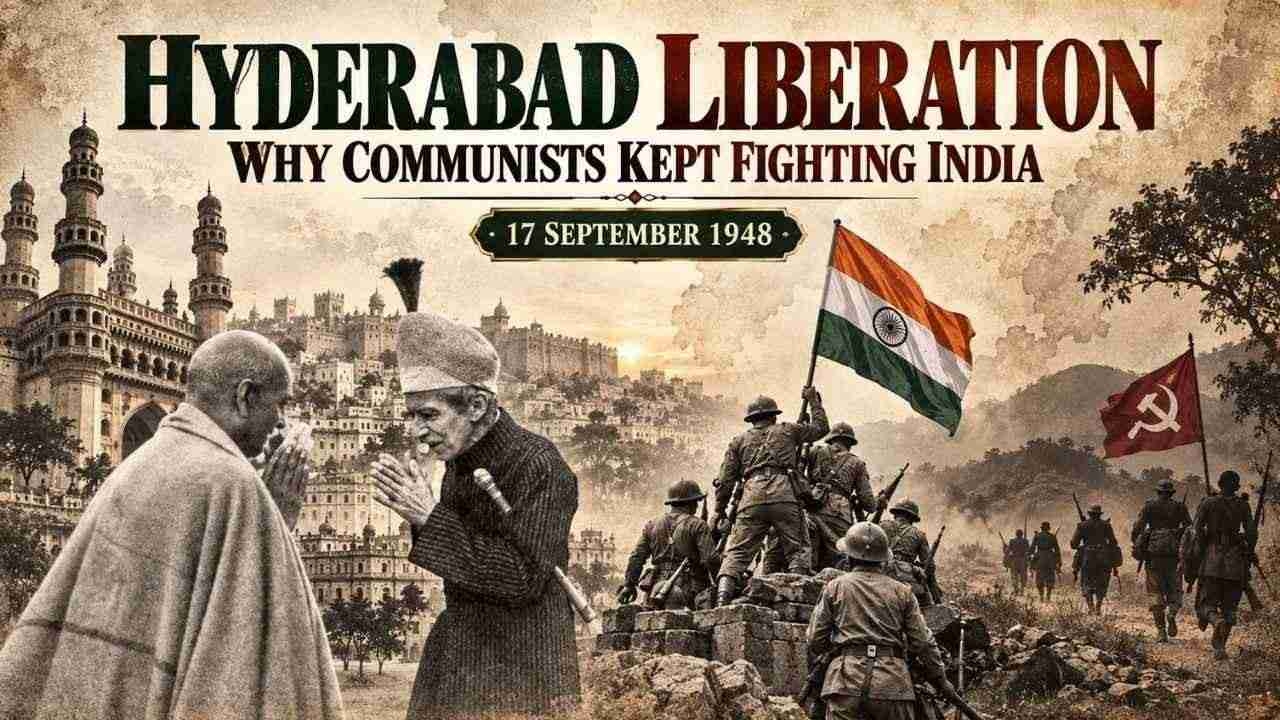
After Hyderabad joined India on September 17, 1948, CPI guerrillas continued fighting Indian forces across Telangana for nearly three years, pursuing an armed revolutionary campaign until their withdrawal in 1951.
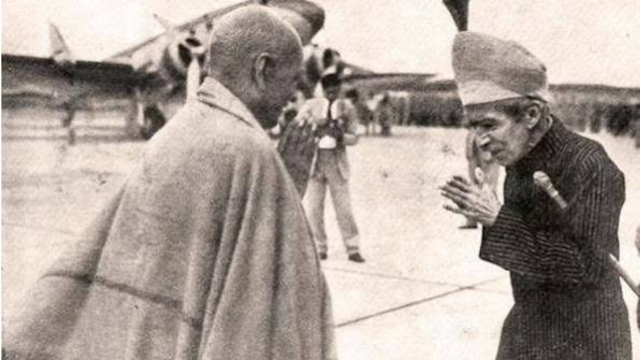
September 17 remains a landmark in India’s journey to territorial integrity. On that day in 1948, the seventh Nizam of Hyderabad, Mir Osman Ali Khan, formally surrendered to Sardar Vallabhbhai Patel and announced the merger of his state with the Indian Union. Operation Polo, executed with clinical precision in under five days, ended the Nizam’s designs to stay independent or lean towards Pakistan and crushed the Razakar terror that had unleashed murder, rape and arson across the countryside.
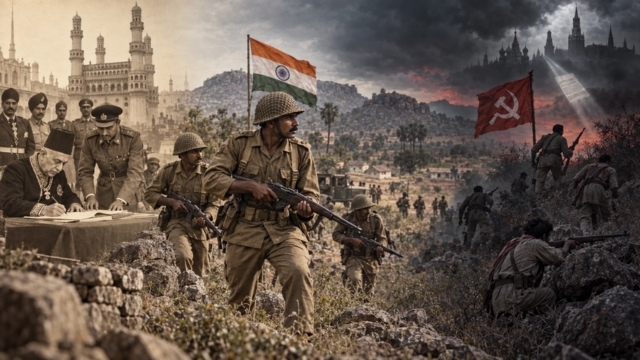
Yet the story did not end with the Nizam’s capitulation. The Communist Party of India (CPI) continued its armed violence against the Indian Army for nearly three more years. Only in late 1951, after direct counsel from Moscow, did the party announce a ceasefire. That prolonged resistance against the very forces that had liberated Hyderabad raises fundamental questions about the real objectives of the so-called Communist leadership.
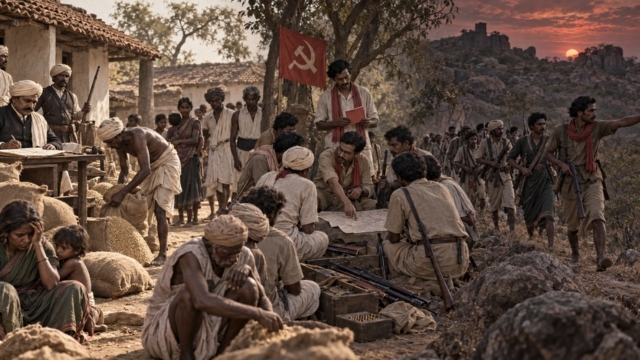
The Telangana armed struggle initially emerged from resistance to the Nizam’s feudal and repressive rule. The Andhra Maha Sabha had mobilised Telugu-speaking people against linguistic discrimination and the Nizam’s administration in Hindu-majority Hyderabad. Taking advantage of the growing unrest, communists expanded their influence within the movement and eventually assumed control of its radical leadership.
They transformed the agitation into an organised armed insurrection by forming “dalams”, procuring weapons and directing violent operations. Many poor peasants joined the struggle because of their suffering under forced labour, illegal levies, landlord exploitation and state repression, even as the Communist Party pursued its wider revolutionary objective.
Once the Nizam surrendered and Hyderabad became part of India, the stated goal of the struggle had been achieved. The logical course was to lay down arms, accept the pardon offered by the Indian Army, and allow the newly established civilian administration to settle land and agrarian questions. Communists refused. They claimed the fight must continue to protect peasants who had seized land from returning landlords. Protection of lawful rights is the duty of a constitutional government, not of private armed squads. By rejecting the Army’s offer of amnesty and persisting with violence, the party chose confrontation over integration.
Communist leader Ravi Narayana Reddy recognised the changed reality after Operation Polo and urged withdrawal. He was branded a revisionist. The central leadership pressed on. B.T. Ranadive had already dismissed Indian independence as a “jhoot” and called for armed rebellion modelled on Telangana to overthrow the Nehru government. The undeclared aim was clear: To carve out a Red enclave in the Deccan on the lines of the Soviet or Chinese model.
The end of the adventure came only after a secret delegation of Chandra Rajeswara Rao, Makineni Basavapunnaiah, Ajoy Ghosh and S.A. Dange travelled to Moscow and met Stalin, Molotov, Malenkov and Suslov. The Soviet leadership questioned the continuation of guerrilla war against the Indian state after Hyderabad’s merger and advised immediate withdrawal. The Indian Communists obeyed. The episode laid bare the party’s primary allegiance to the Indian people or Constitution, but to the international Communist movement headquartered in Moscow.
Several questions remain unanswered even after nearly eight decades. Where did the arms come from? Who financed the prolonged insurgency? Who provided military training? Was there contact with Chinese leadership? These issues deserve rigorous historical inquiry free from ideological apologetics.
The Telangana armed struggle after 17 September 1948 stands as the first clear anti-national act of the Communist Party in independent India. It established a template of violence and parallel authority that later found expression in the Naxalite violence. While the armed groups have been largely neutralised, the ideological successors those who continue to romanticise “people’s war” and delegitimise the Indian state still require firm ideological and political response.
Remembering the full truth of Hyderabad’s liberation, including the Communist Party’s post-surrender war against the Indian Army, is essential if history is not to be rewritten by those who once sought a Red dictatorship on Indian soil.
Written by

Kewali Kabir Jain
Journalism Student, Makhanlal Chaturvedi National University of Journalism and Communication